
The Parent Toolkit Collection
Have Questions?
We'll review your message and get back to you within 48 hours.


Sale Price:£49.95
Original Price:£74.95
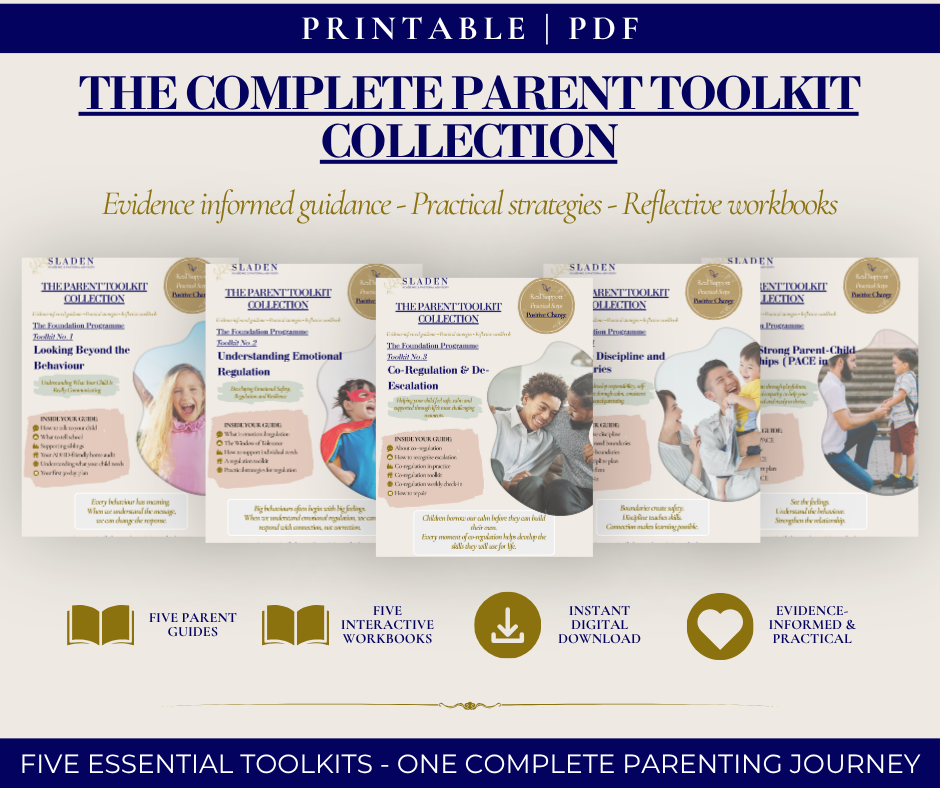
The Foundation Programme Bundle includes all five Parent Toolkits in one complete digital collection, taking you on a step-by-step journey from understanding behaviour to building strong, lasting relationships with your child.
Rather than searching for quick fixes, this evidence-informed programme helps you understand why children behave the way they do, how to respond with confidence and what practical strategies you can use to support them through every stage of development.
Together, the five toolkits provide over 200 pages of professional guidance, practical activities and interactive workbooks that you can revisit whenever you need them.
Learn why behaviour is communication and discover how understanding your child's needs is the first step towards lasting positive change.
Explore how children's brains and bodies respond to stress, overwhelm and big emotions, and learn practical ways to support emotional regulation.
Develop practical strategies to help your child feel safe, regulate their emotions and reduce conflict during challenging moments.
Discover how to set clear expectations, teach responsibility and use positive discipline without relying on punishment.
Bring everything together through the PACE approach and learn how strong relationships create the foundation for emotional wellbeing, resilience and lifelong learning.
📘 A professionally written Parent Guide
📖 A matching Interactive Workbook
✔ Practical activities and reflection exercises
✔ Real-life parenting examples
✔ Evidence-informed strategies
✔ Printable PDF format
✔ Instant digital download
Buying each toolkit individually would cost £124.95.
By purchasing the complete Foundation Programme, you'll receive all five toolkits for just £99.96 — a saving of £24.99 (20% off).
That's the equivalent of getting Toolkit One completely free.
The Foundation Programme is ideal for parents and carers who want to:
Better understand their child's behaviour.
Respond with greater confidence and consistency.
Strengthen emotional regulation and resilience.
Build calmer family relationships.
Develop practical, evidence-informed parenting strategies.
Create lasting positive change through connection and understanding.
Whether your child has additional needs, is awaiting assessment or you're simply looking to feel more confident in your parenting, this collection provides a structured learning journey that you can complete at your own pace.
✔ Complete all five Parent Guides
✔ Complete all five Interactive Workbooks
✔ Over 200 pages of practical resources
✔ Download immediately after purchase
✔ Revisit any section whenever you need it
Developed by Sladen Advisory using professional experience alongside recognised, evidence-informed approaches to behaviour, attachment, emotional regulation, positive discipline, SEND and trauma-informed practice.
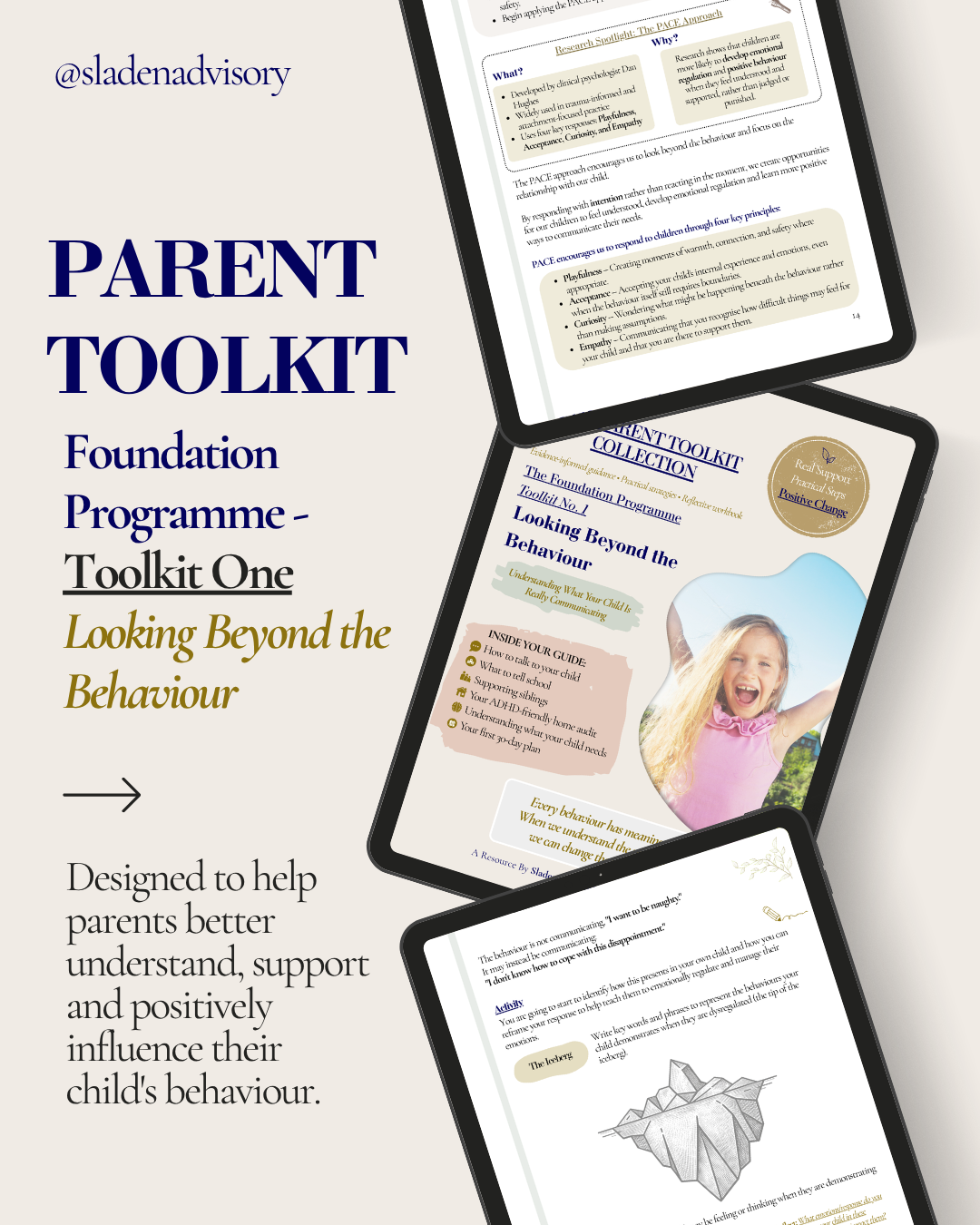


Foundation Programme - Toolkit One
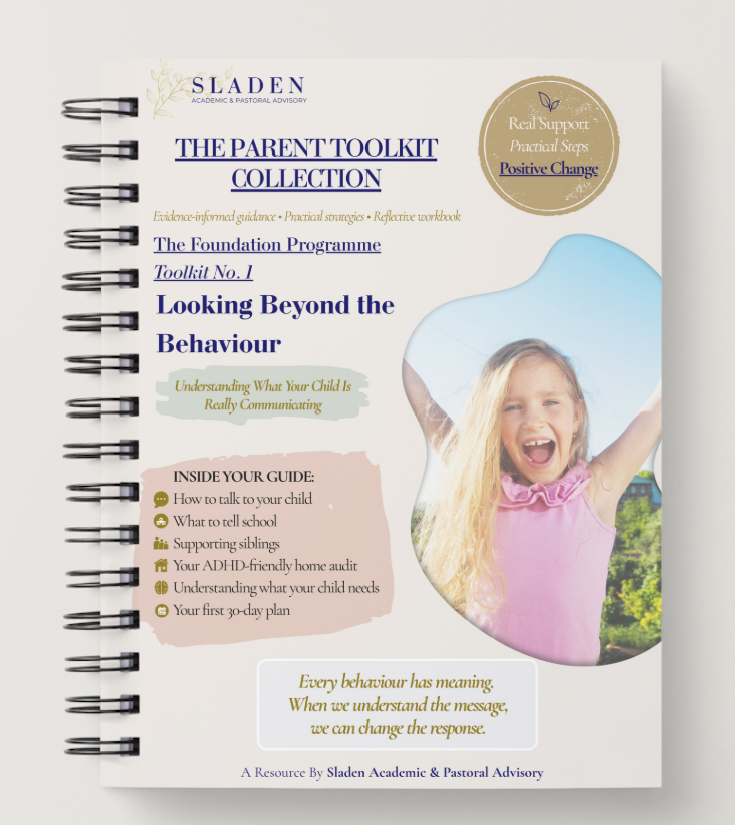
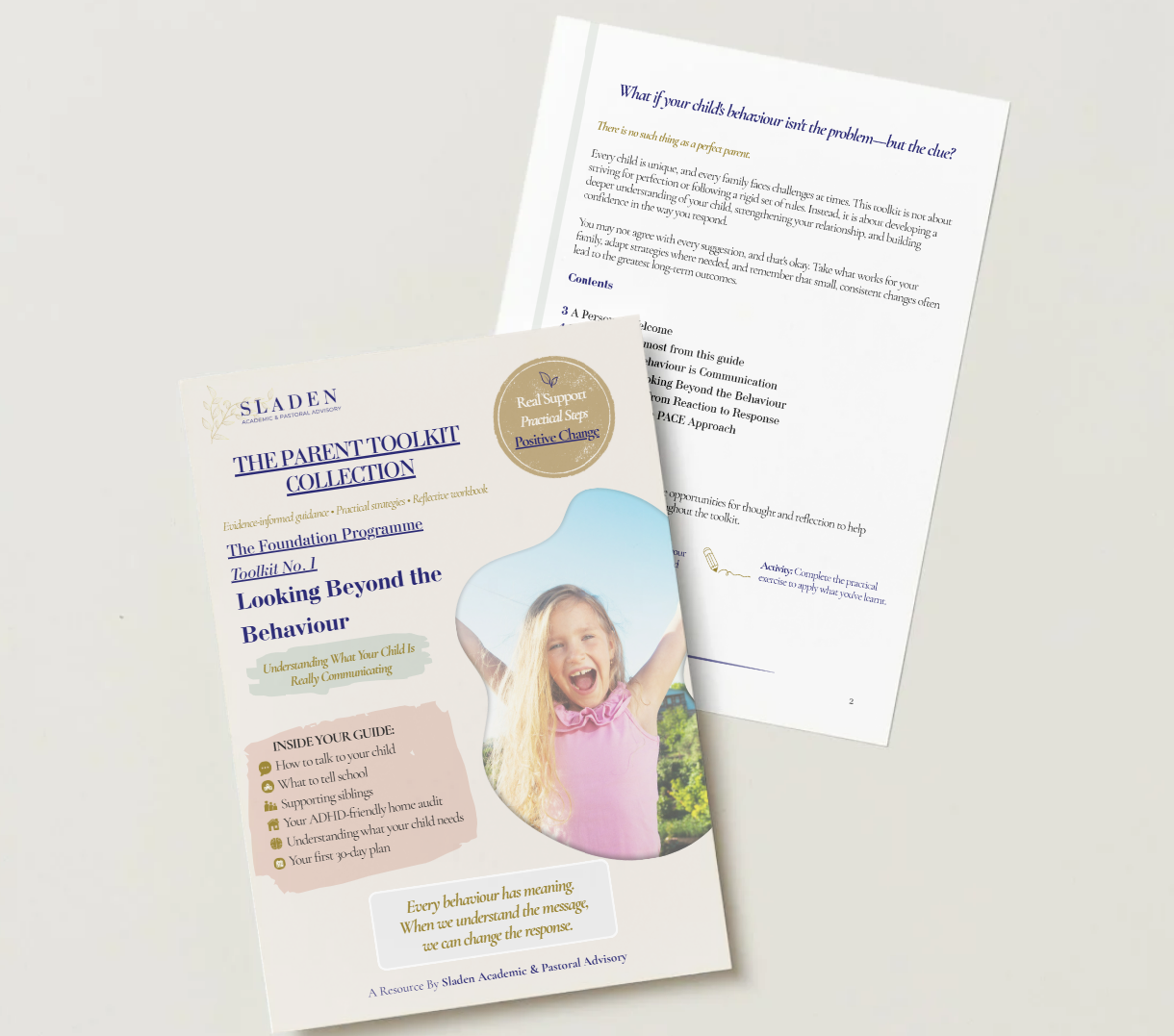
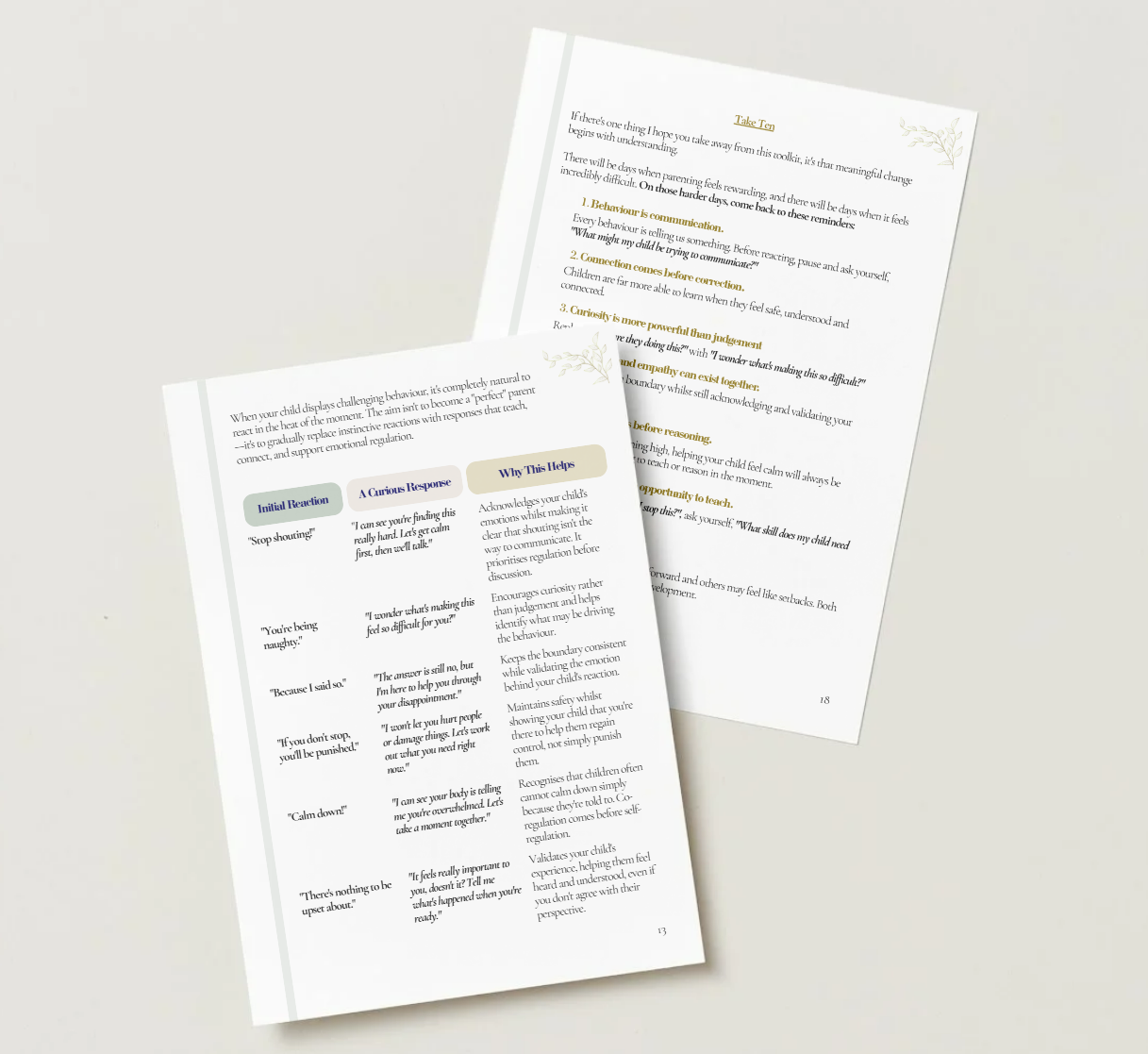
Looking Beyond the Behaviour
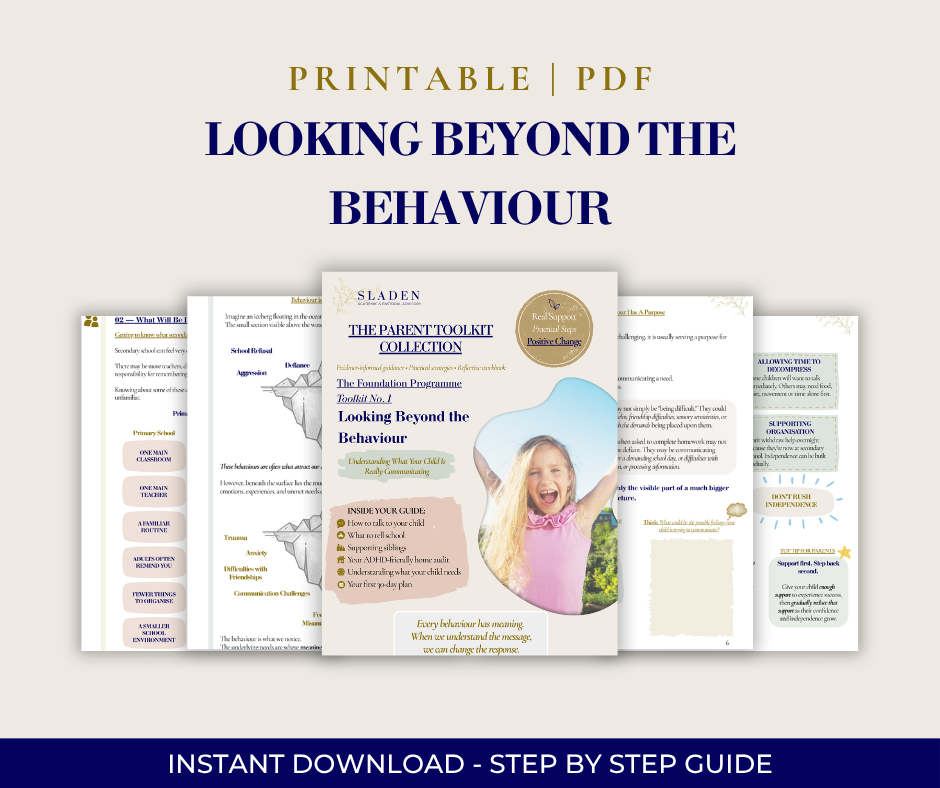
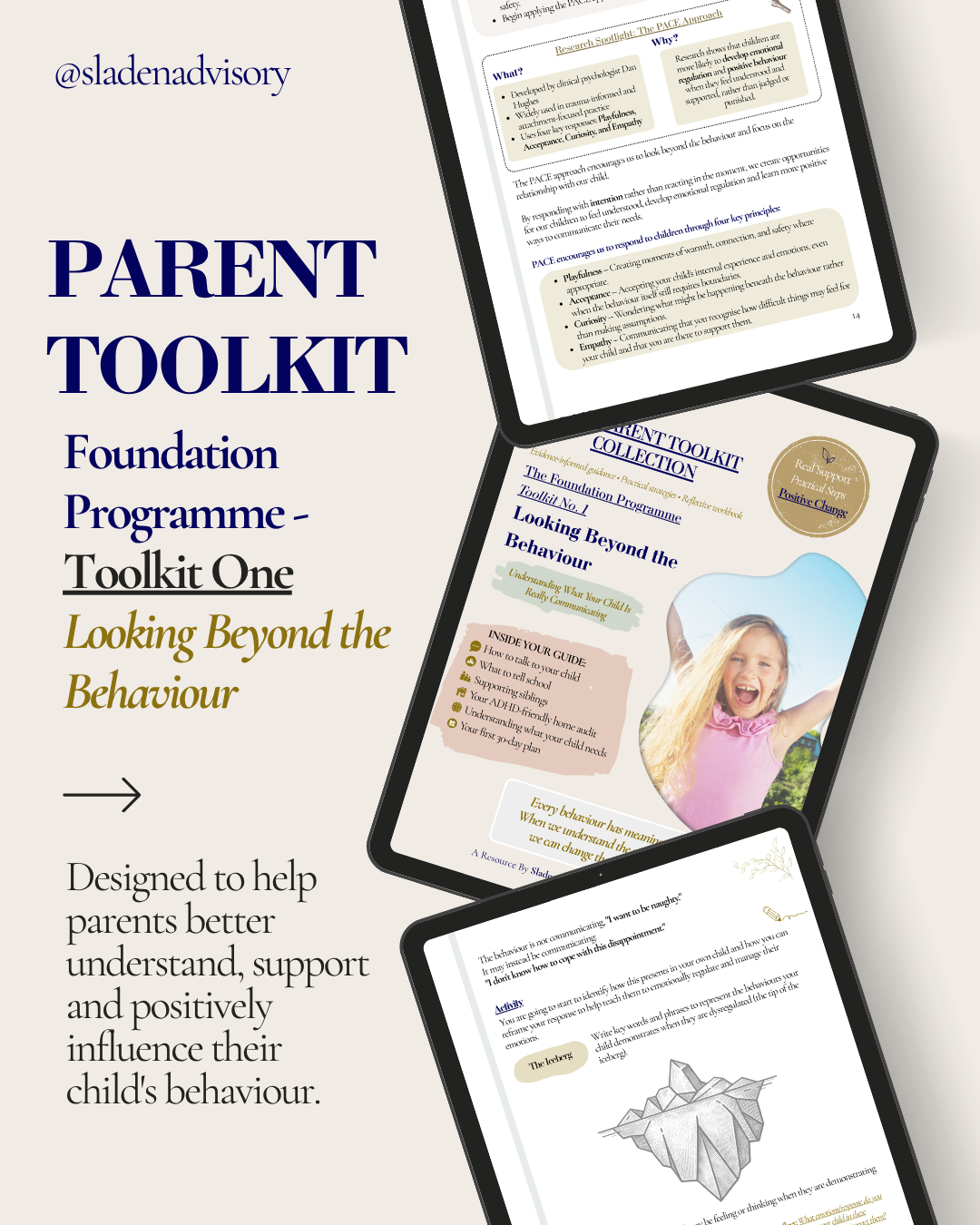
Looking Beyond the Behaviour is the first guide in the Parent Toolkit Collection; a series of practical, evidence-informed resources designed to help parents better understand, support and positively influence their child's behaviour.
Rather than simply telling you what to do, this toolkit explains why behaviour happens and gives you practical activities to help you apply your learning in everyday family life.
This toolkit includes 50 pages split into two printable PDF downloads:
📘 Parent Guide
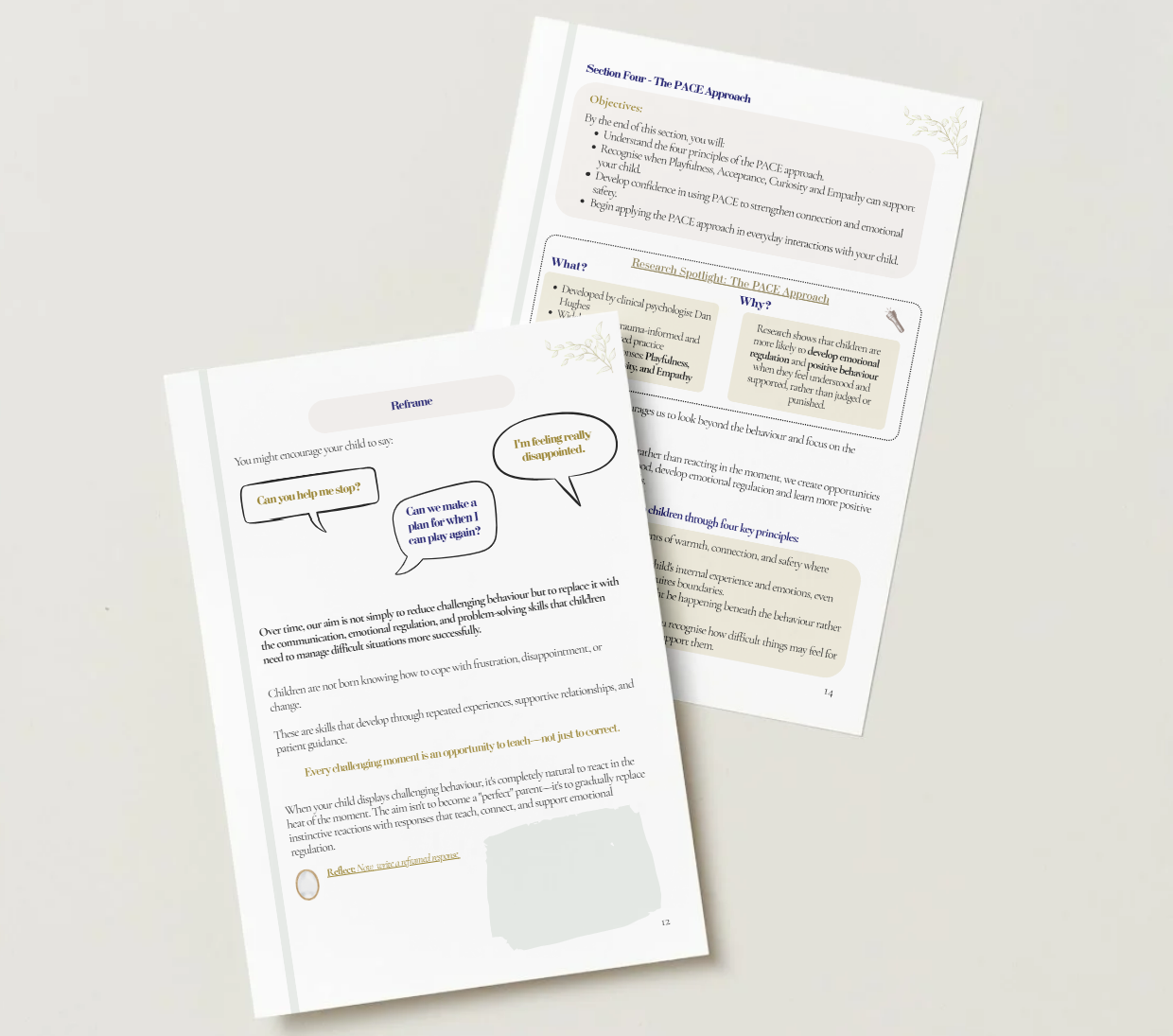
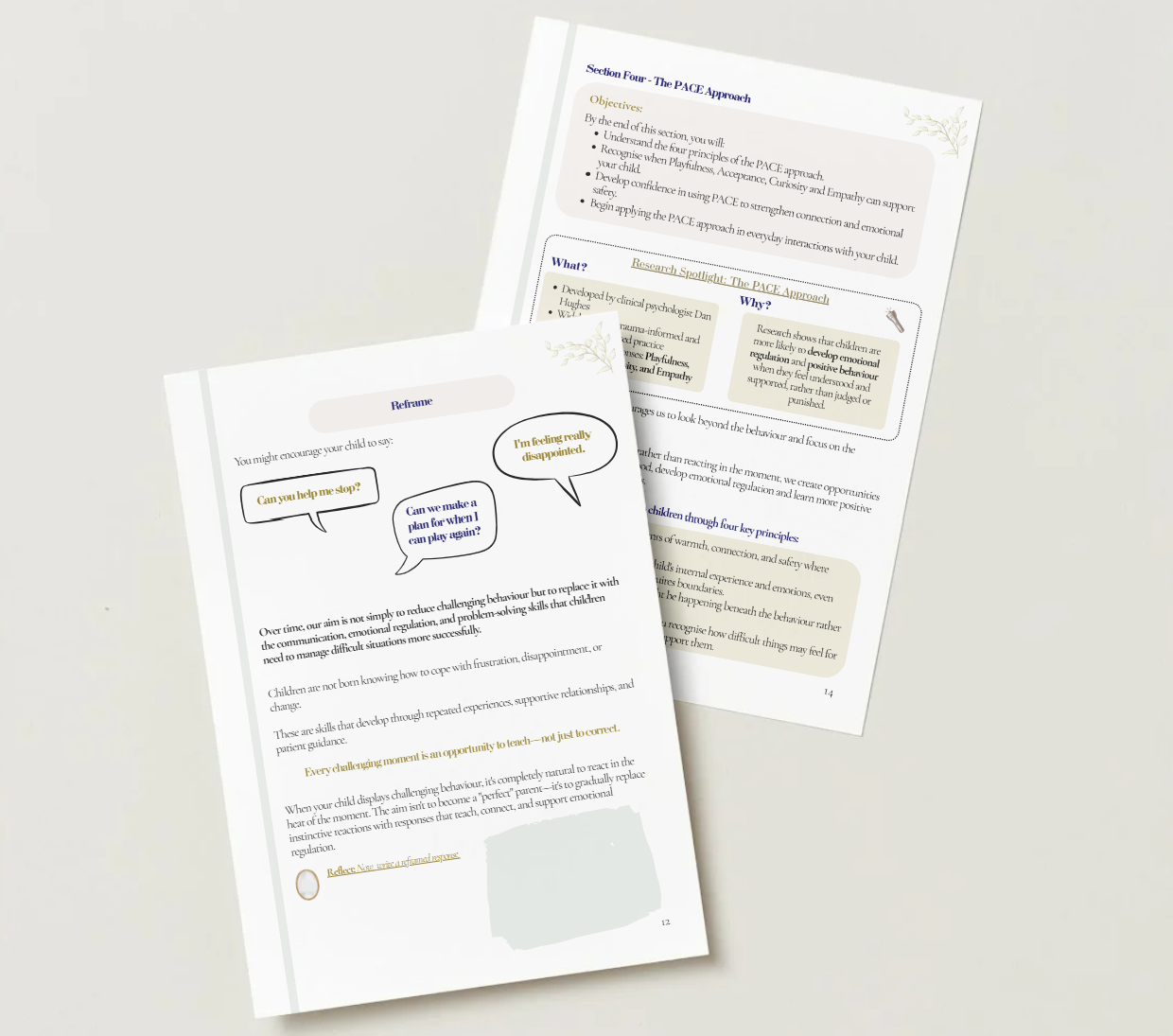
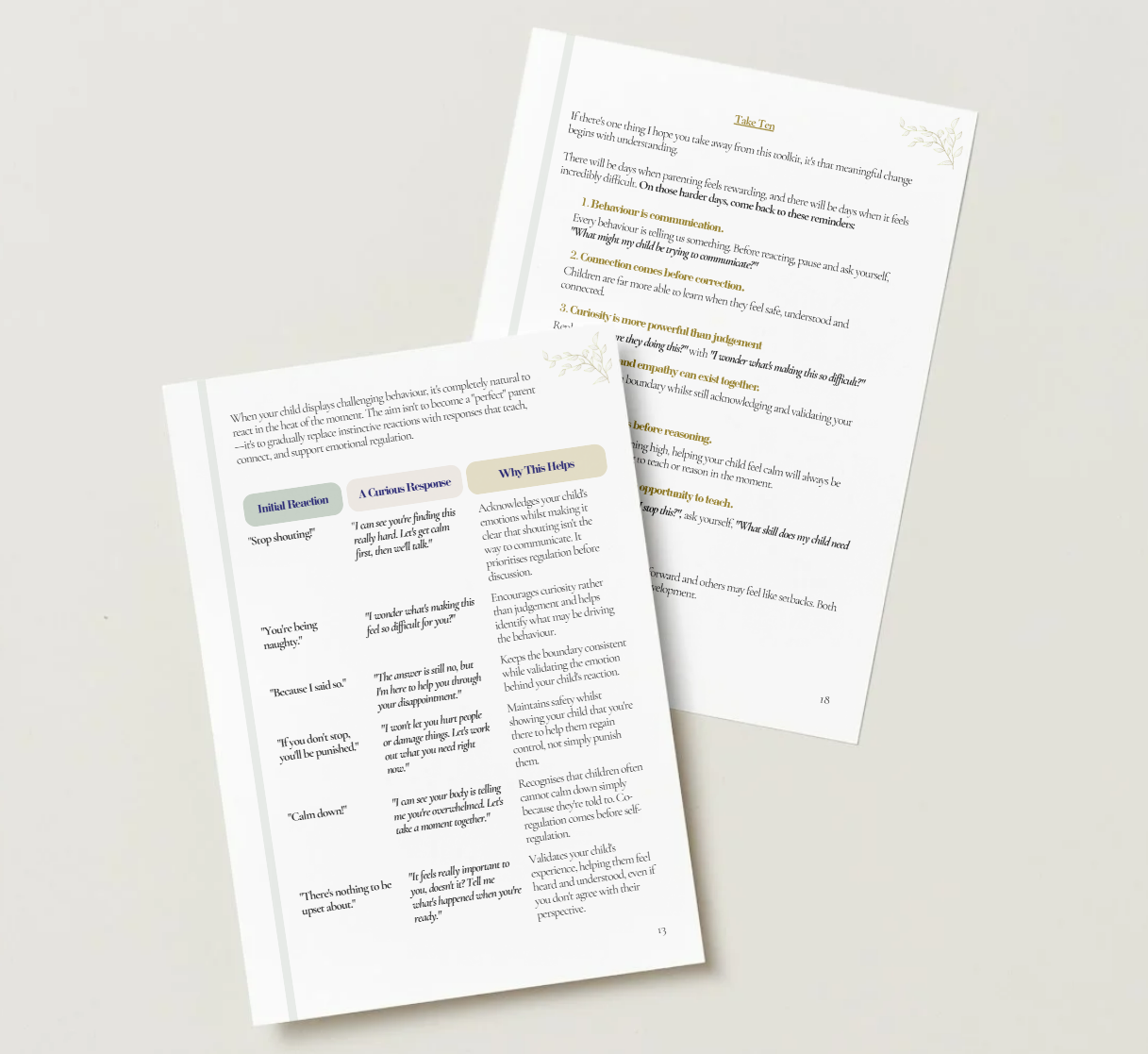
A professionally written guide combining research, practical strategies and real-life examples to help you understand behaviour through a different lens. Drawing on evidence-informed approaches, including the PACE framework and collaborative problem-solving principles, the guide explores why behaviour occurs and how understanding it is the first step towards creating positive change.
📖 Interactive Workbook
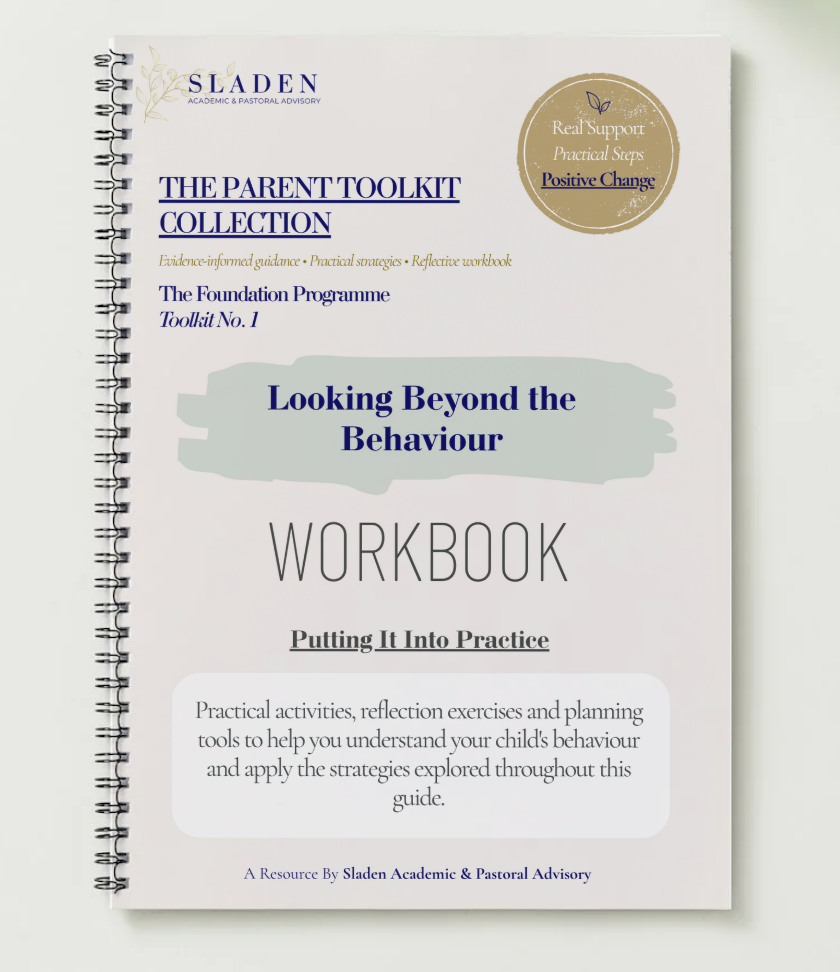
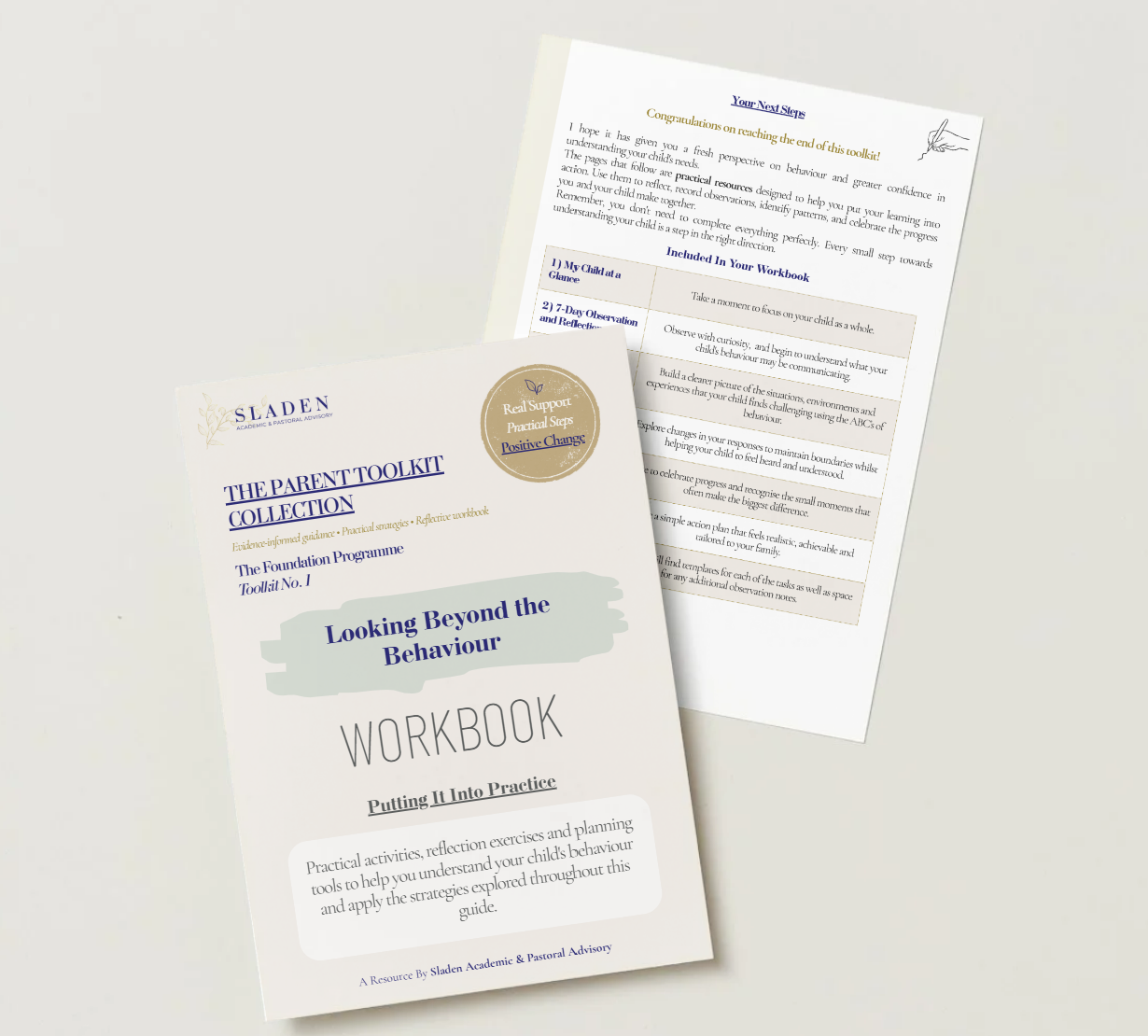
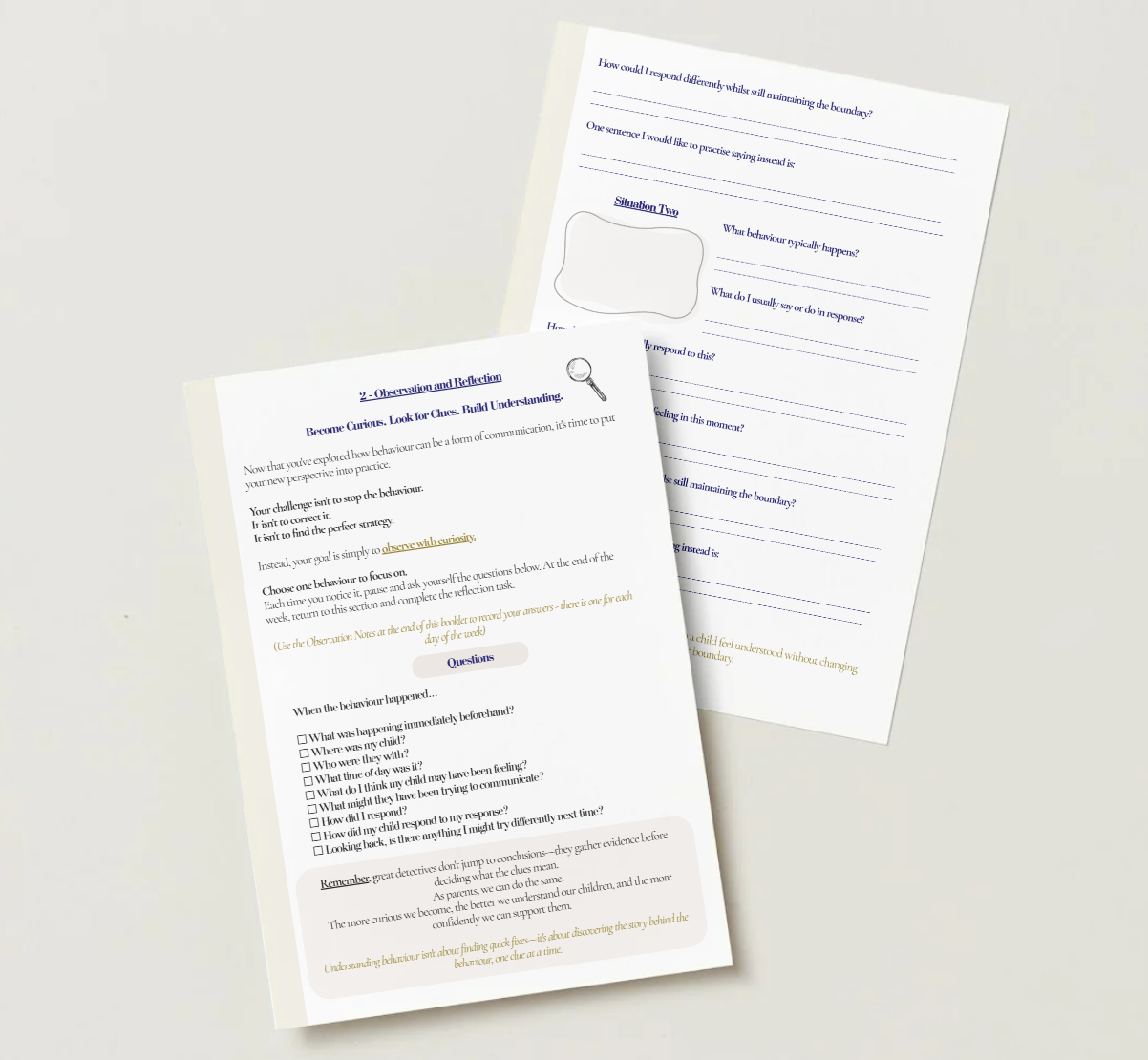
A companion workbook filled with practical templates, guided activities and planning tools designed to help you put the theory into practice. From behaviour observation and ABC tracking to action planning and reflection exercises, the workbook supports you in applying your learning to your own child and family.
Why behaviour is a form of communication.
How to identify patterns, triggers and unmet needs.
Practical ways to observe and understand behaviour.
How your responses can influence behaviour over time.
How to use the PACE approach to strengthen connection whilst maintaining boundaries.
How to create realistic action plans to support lasting change.
This resource is ideal for parents and carers of children who are displaying behaviours that they find difficult to understand or manage. Whether your child has additional needs, is awaiting assessment, or simply needs additional support, this toolkit will help you develop the knowledge and confidence to respond with greater understanding and purpose.
A Personal Welcome
How to get the most from this guide
Section One - Behaviour is Communication
Section Two - Looking Beyond the Behaviour
Section Three - From Reaction to Response
Section Four - The PACE Approach
Take Ten
Templates and Notes(Workbook) with 7 activities including:
My Child at a Glance
7-Day Observation and Reflection
Understanding The Triggers
From Reaction to Response Planner
Celebrate the Wins
My Next Steps
Tasks & Notes
This is the first and most important toolkit in the Parent Toolkit Collection.
Before we can change behaviour, we first need to understand it.
Everything that follows in the collection builds on the knowledge and skills introduced in this guide, making it the perfect place to begin your journey.
Instant Digital Download
✔ Printable PDF format
✔ Two professionally designed resources included (Guide + Workbook)
✔ Download immediately after purchase
✔ Complete at your own pace and revisit whenever you need it
Developed by Sladen Advisory using professional experience alongside recognised, evidence-informed approaches to behaviour, SEND and trauma-informed practice.



Foundation Programme - Toolkit One
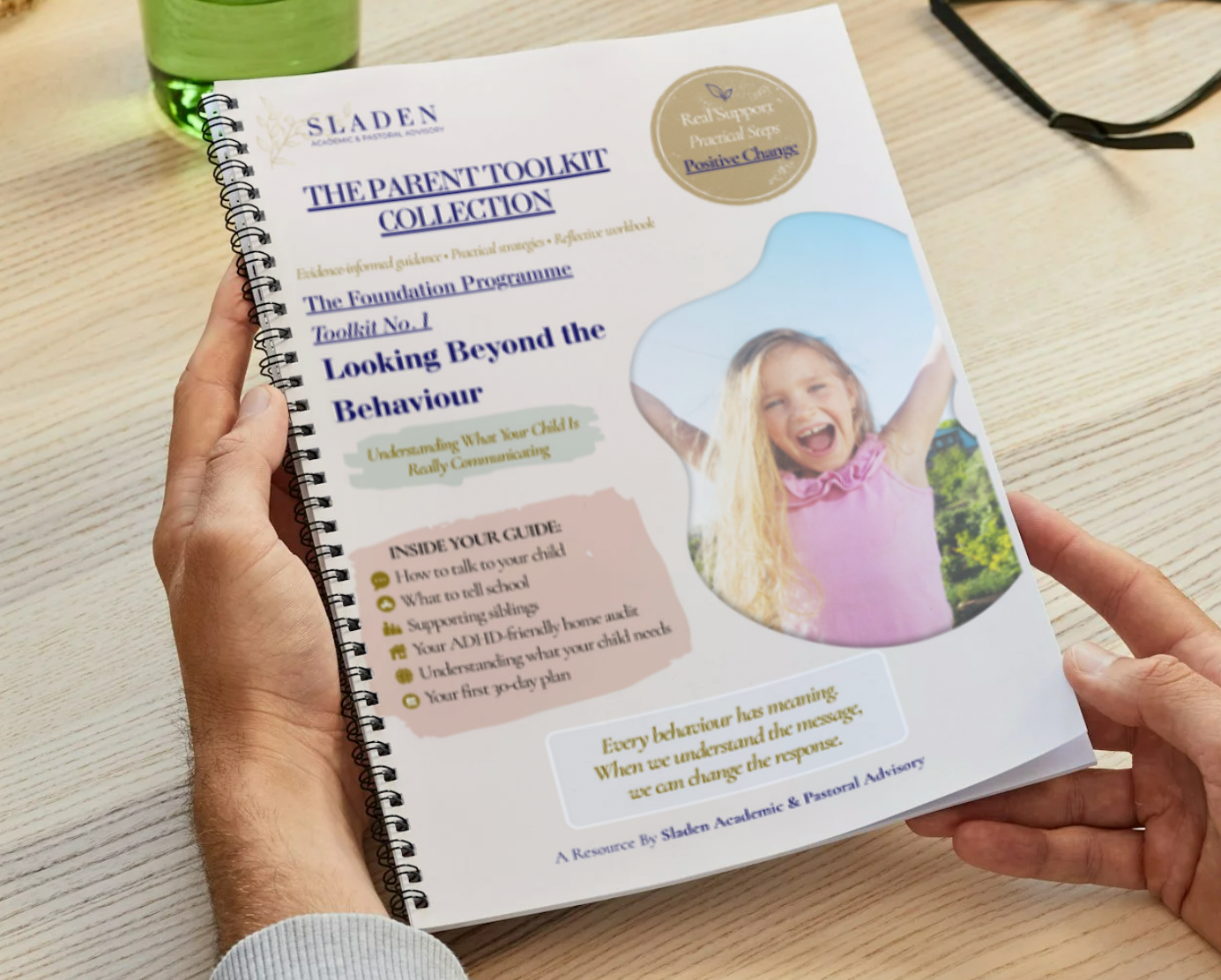
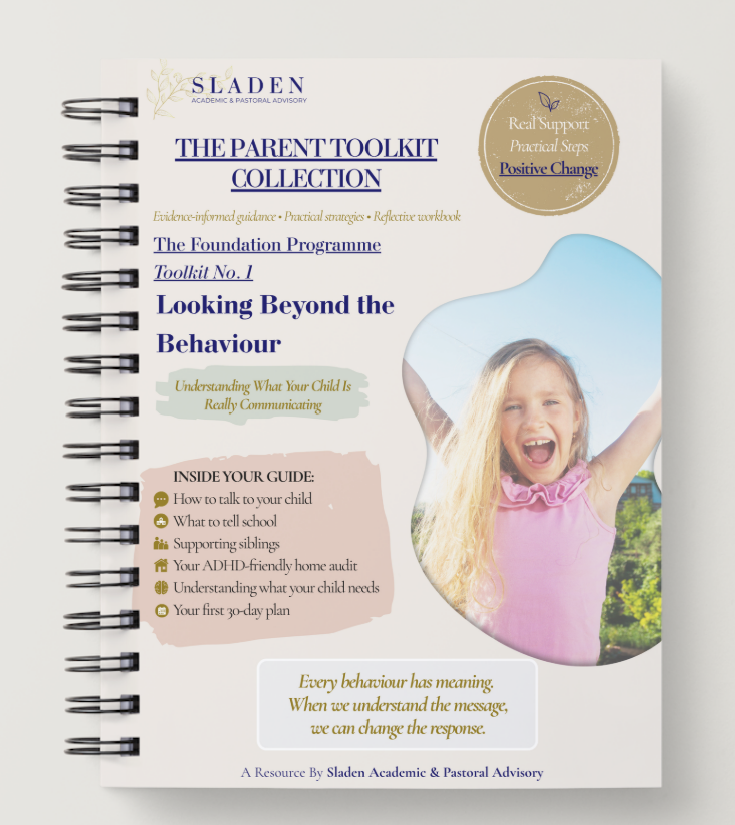
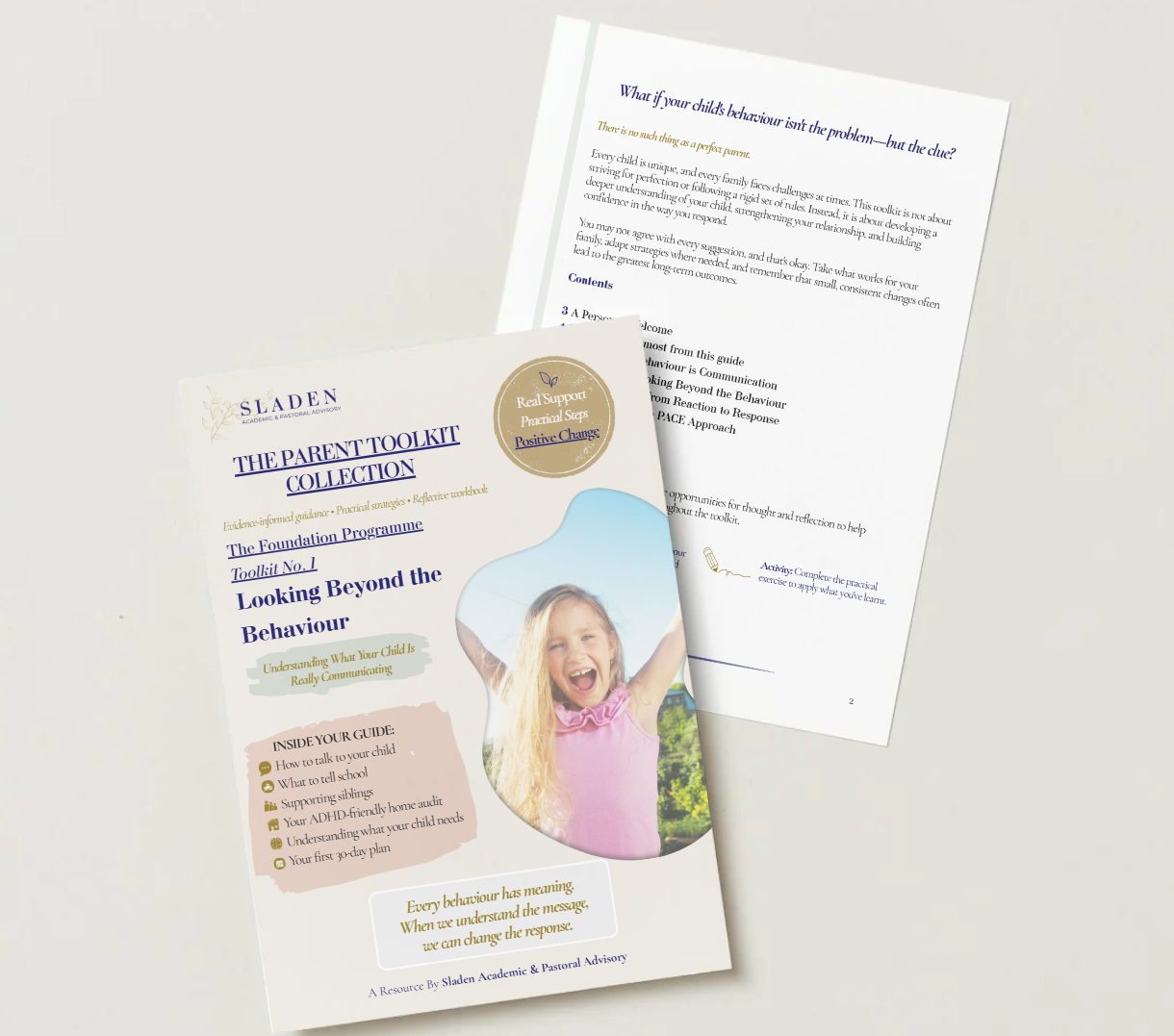
Looking Beyond the Behaviour
Looking Beyond the Behaviour is the first guide in the Parent Toolkit Collection; a series of practical, evidence-informed resources designed to help parents better understand, support and positively influence their child's behaviour.
Rather than simply telling you what to do, this toolkit explains why behaviour happens and gives you practical activities to help you apply your learning in everyday family life.
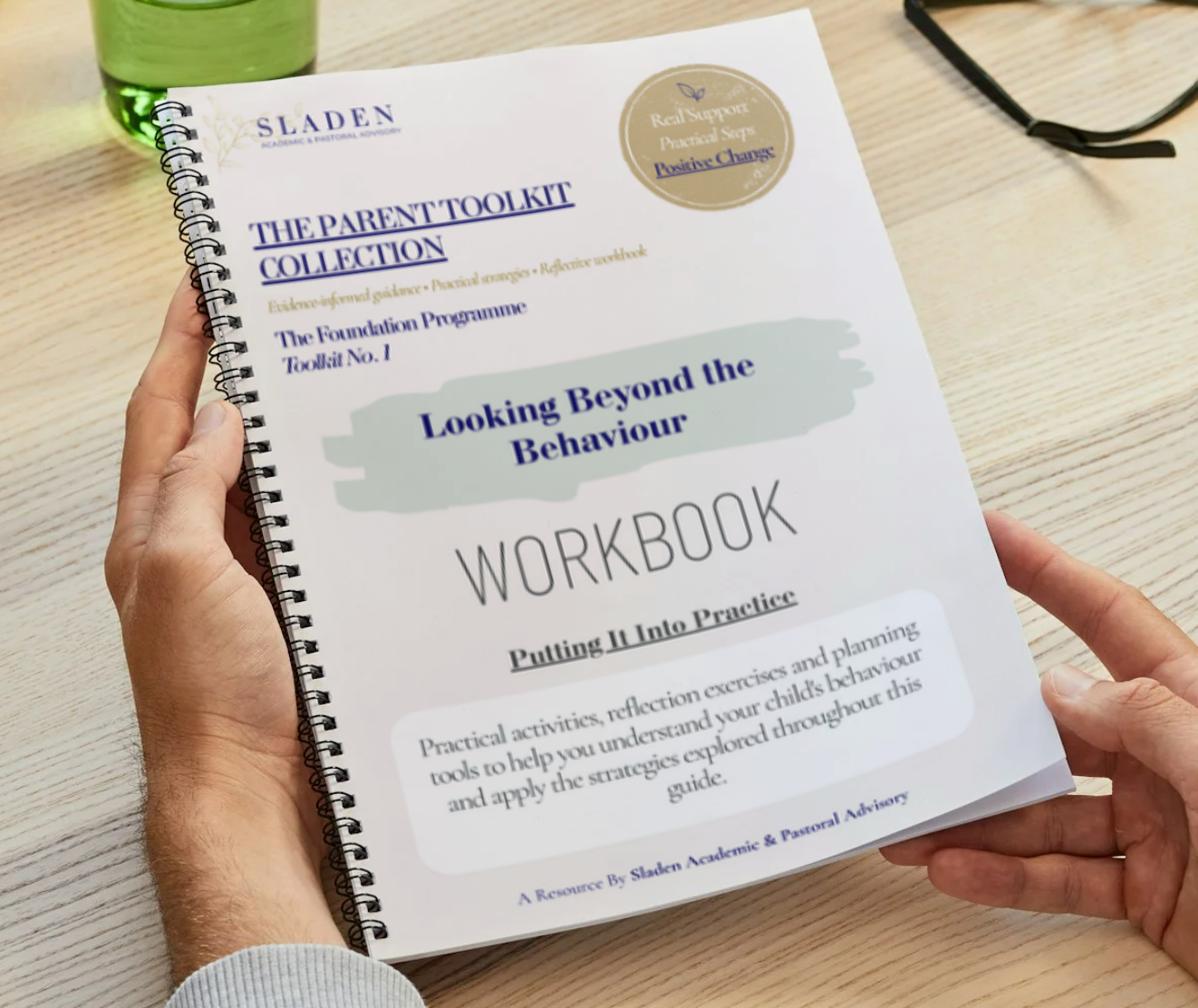
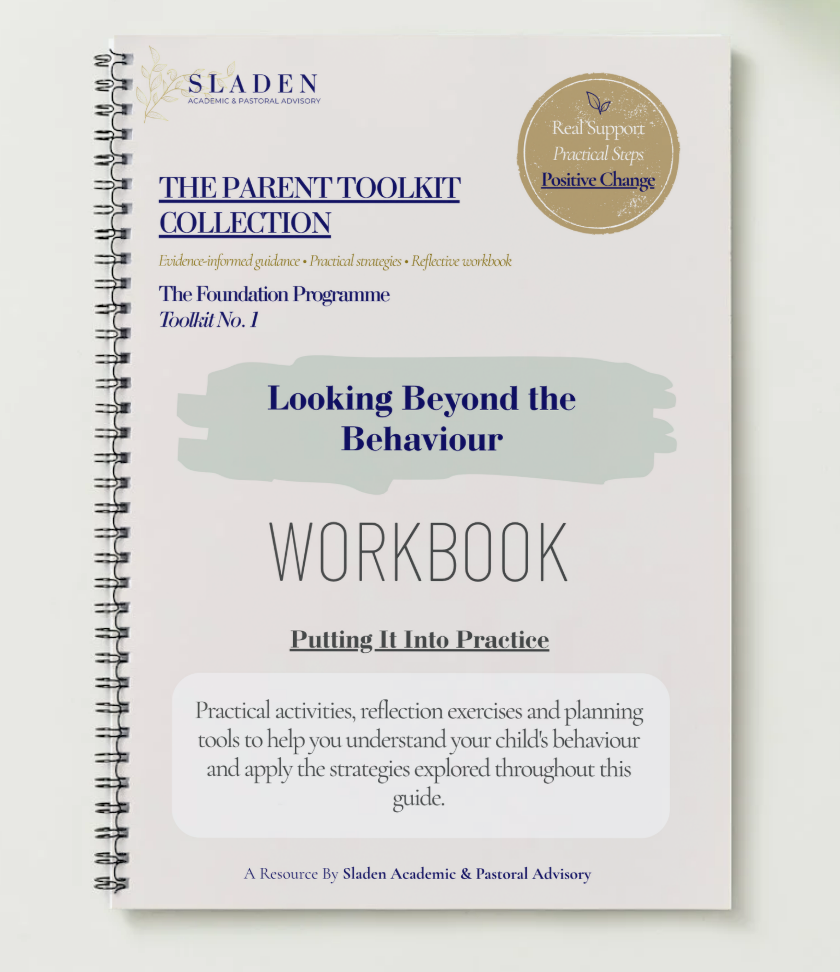
This toolkit includes 50 pages split into two separate spiral-bound workbooks.
📘 Parent Guide
A professionally written guide combining research, practical strategies and real-life examples to help you understand behaviour through a different lens. Drawing on evidence-informed approaches, including the PACE framework and collaborative problem-solving principles, the guide explores why behaviour occurs and how understanding it is the first step towards creating positive change.
📖 Interactive Workbook
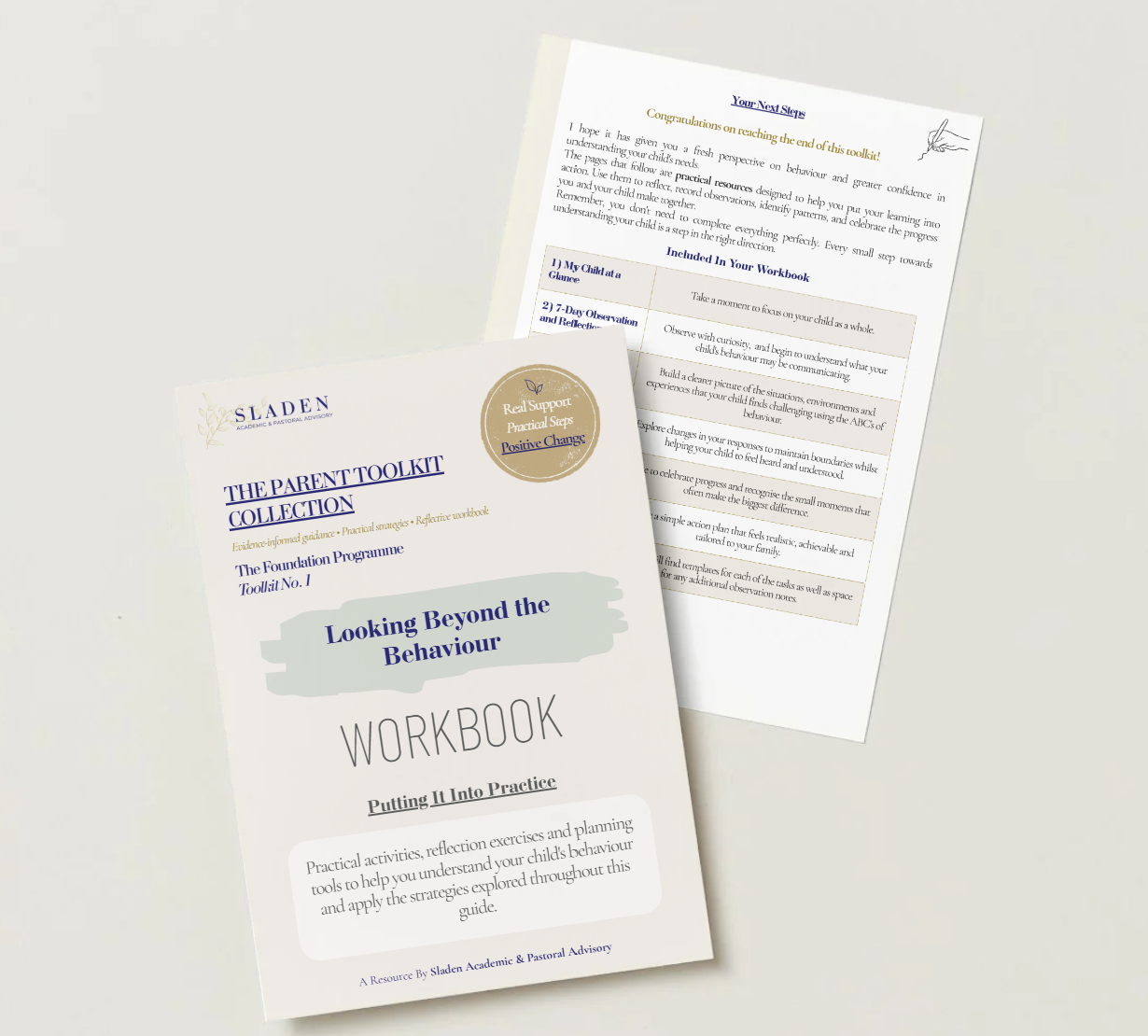
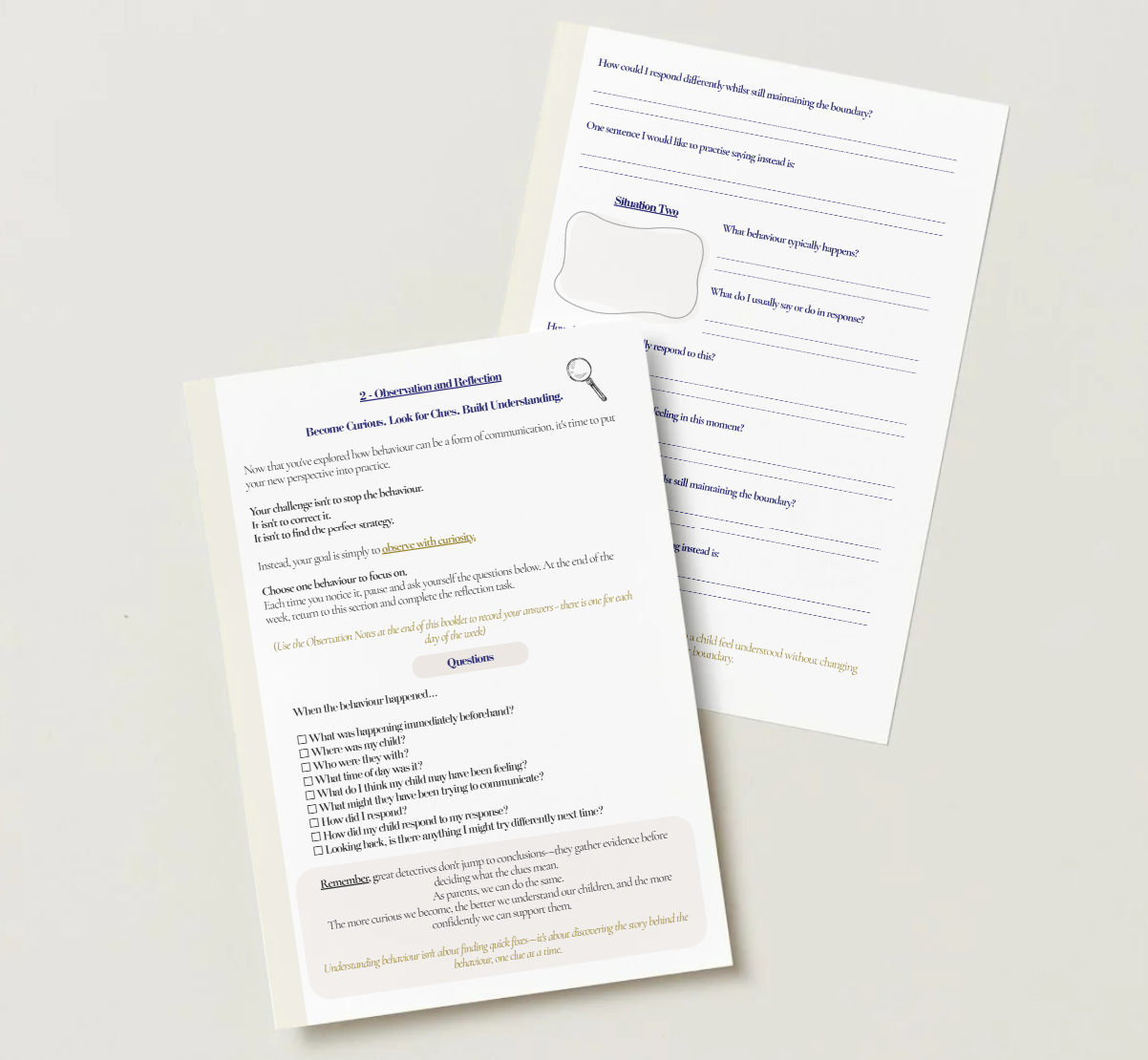
A companion workbook filled with practical templates, guided activities and planning tools designed to help you put the theory into practice. From behaviour observation and ABC tracking to action planning and reflection exercises, the workbook supports you in applying your learning to your own child and family.
Why behaviour is a form of communication.
How to identify patterns, triggers and unmet needs.
Practical ways to observe and understand behaviour.
How your responses can influence behaviour over time.
How to use the PACE approach to strengthen connection whilst maintaining boundaries.
How to create realistic action plans to support lasting change.
This resource is ideal for parents and carers of children who are displaying behaviours that they find difficult to understand or manage. Whether your child has additional needs, is awaiting assessment, or simply needs additional support, this toolkit will help you develop the knowledge and confidence to respond with greater understanding and purpose.
A Personal Welcome
How to get the most from this guide
Section One - Behaviour is Communication
Section Two - Looking Beyond the Behaviour
Section Three - From Reaction to Response
Section Four - The PACE Approach
Take Ten
Templates and Notes(Workbook) with 7 activities including:
My Child at a Glance
7-Day Observation and Reflection
Understanding The Triggers
From Reaction to Response Planner
Celebrate the Wins
My Next Steps
Tasks & Notes
This is the first and most important toolkit in the Parent Toolkit Collection.
Before we can change behaviour, we first need to understand it.
Everything that follows in the collection builds on the knowledge and skills introduced in this guide, making it the perfect place to begin your journey.
Delivery time is up to two weeks as items are made to order.
Developed by Sladen Advisory using professional experience alongside recognised, evidence-informed approaches to behaviour, SEND and trauma-informed practice.



Foundation Programme - Toolkit Two
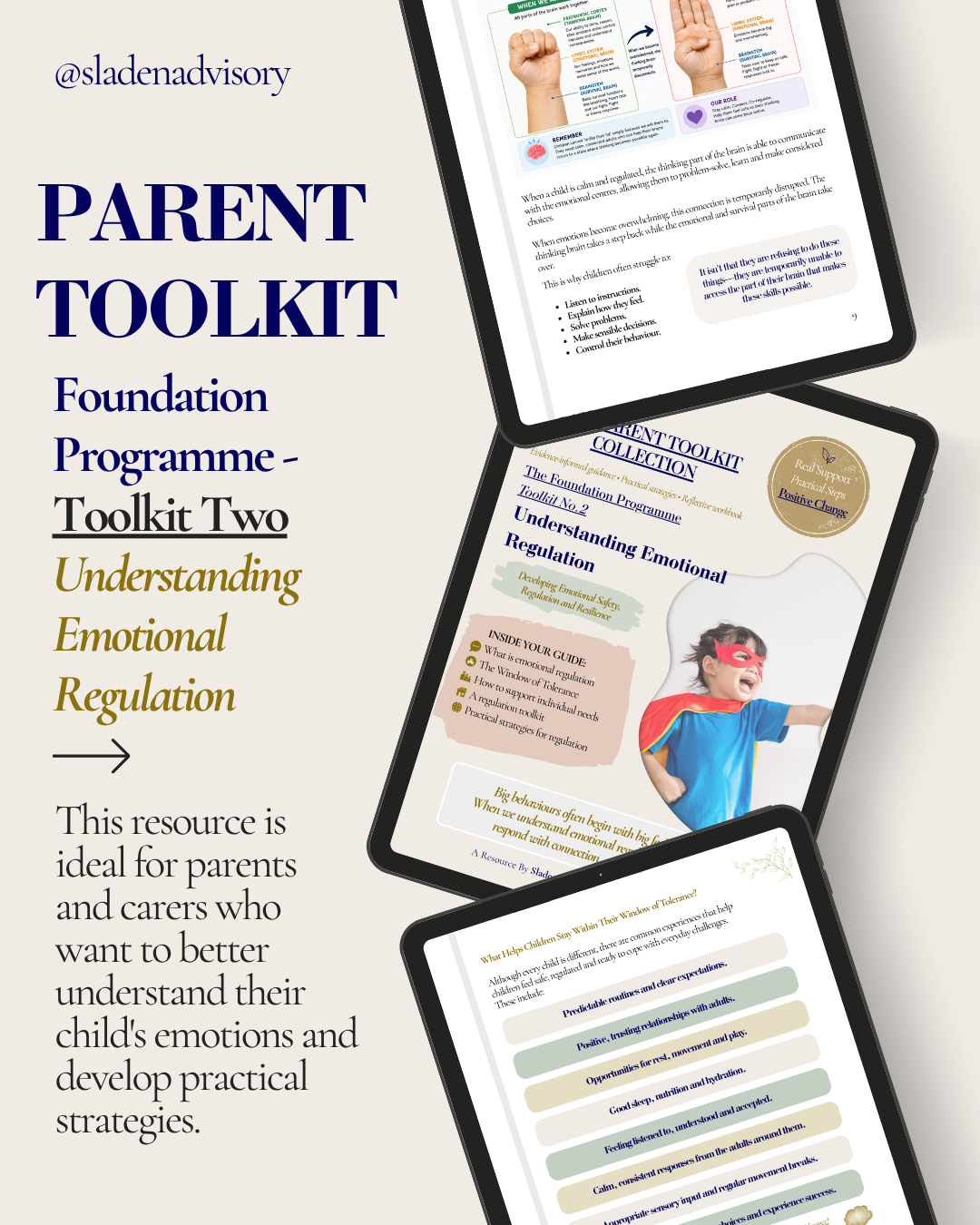
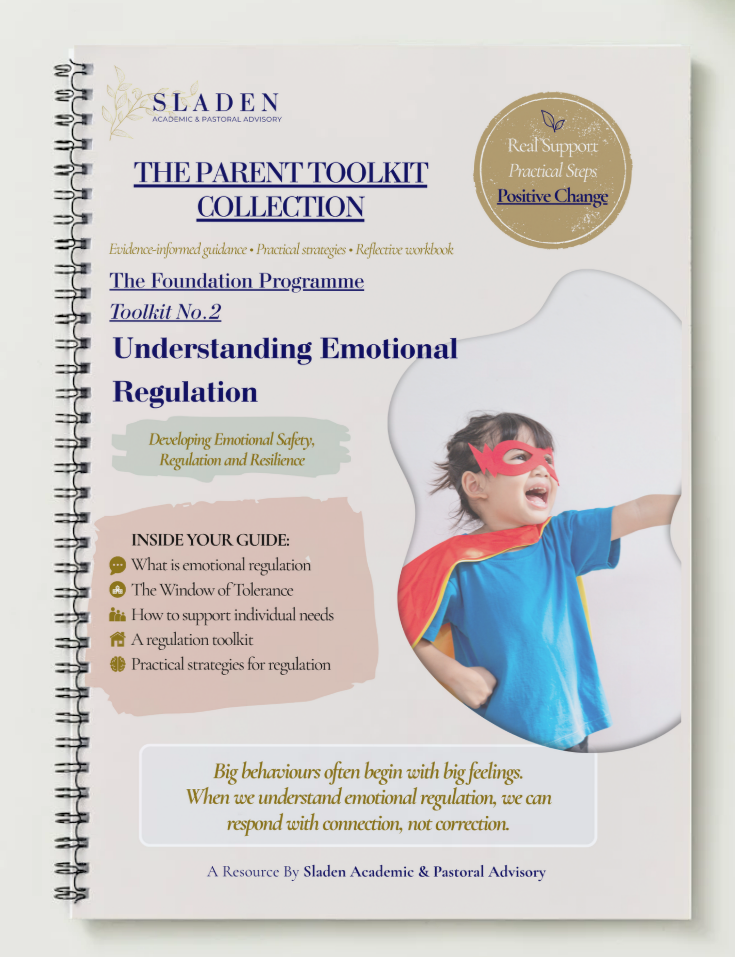
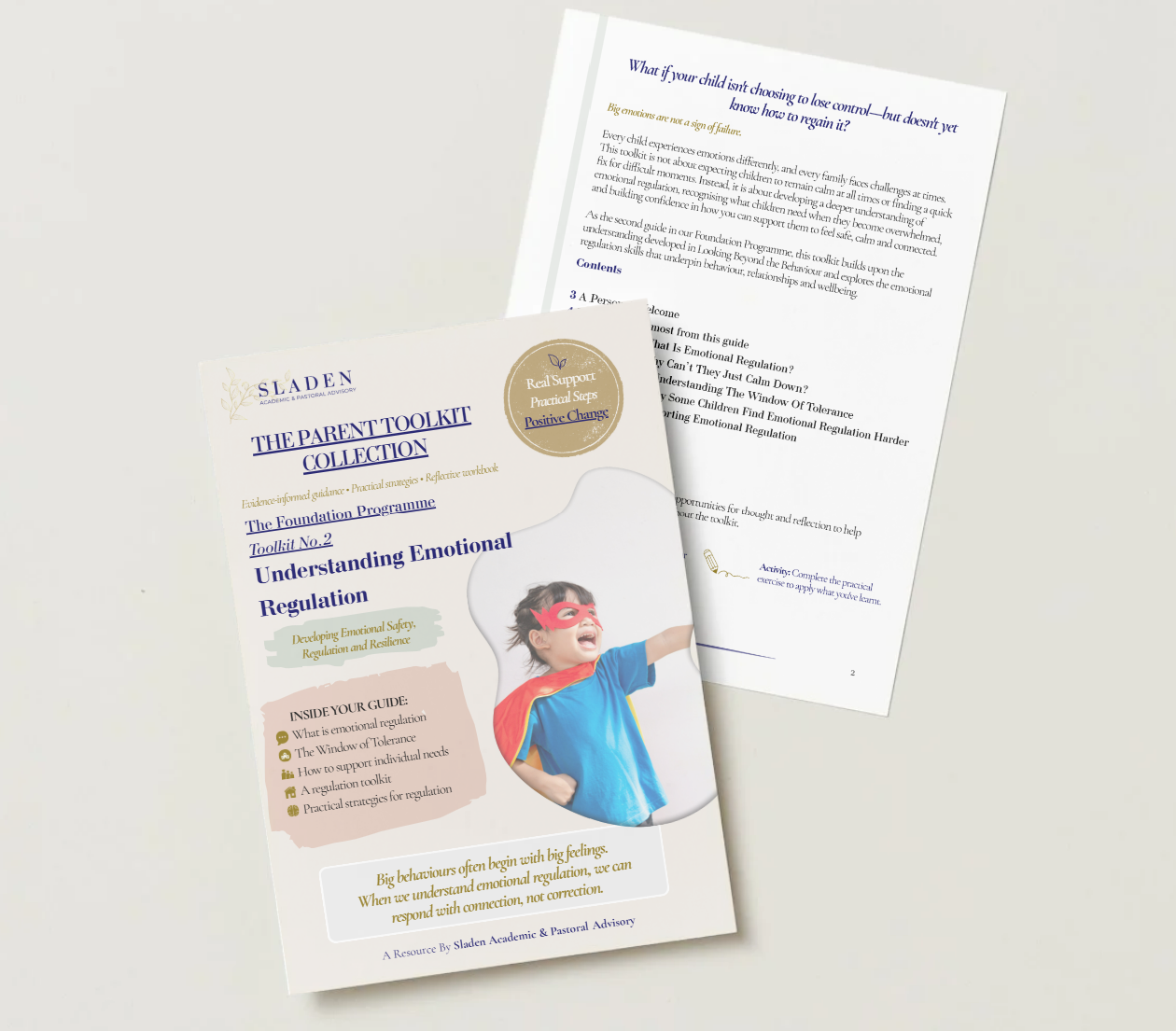
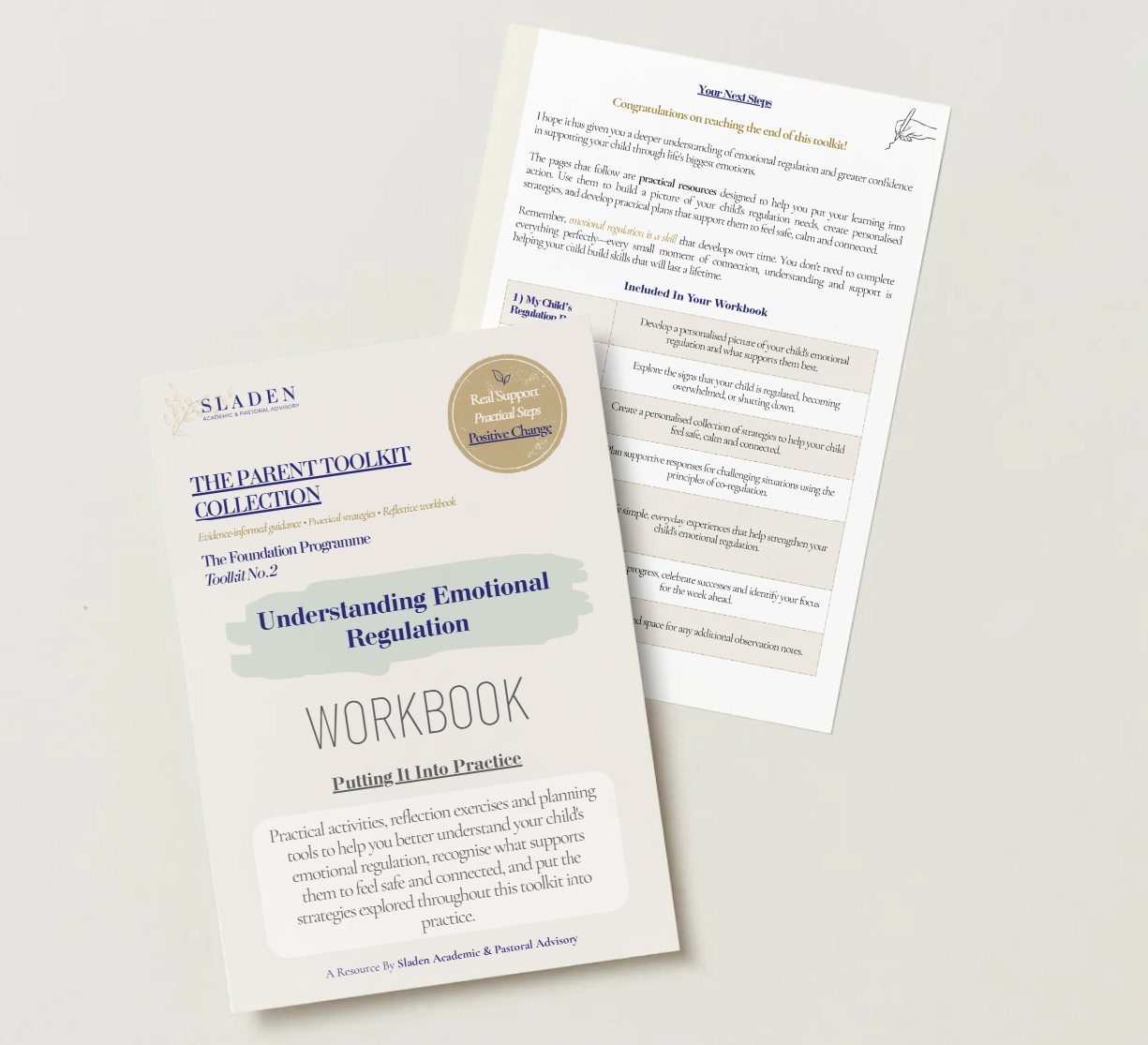
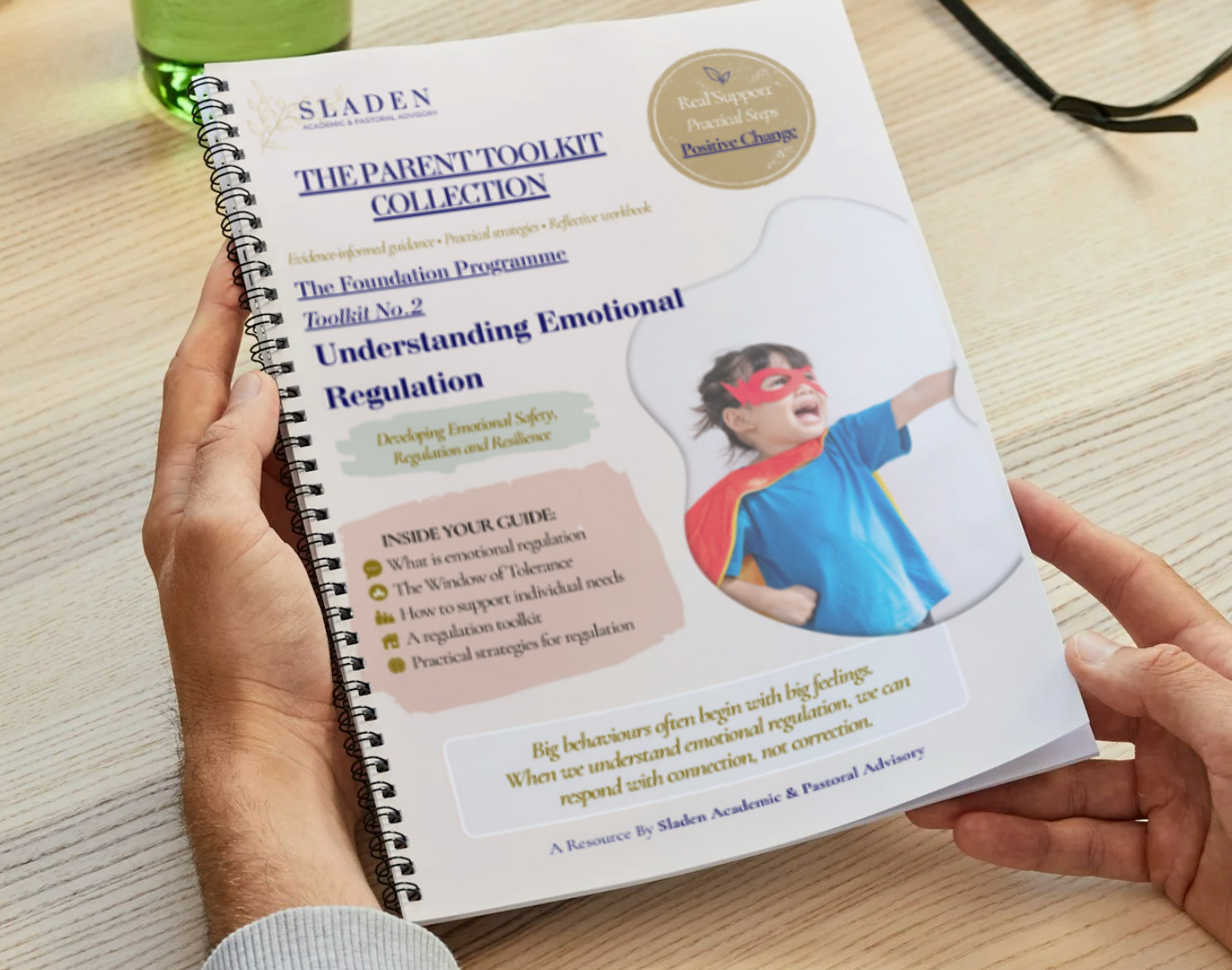
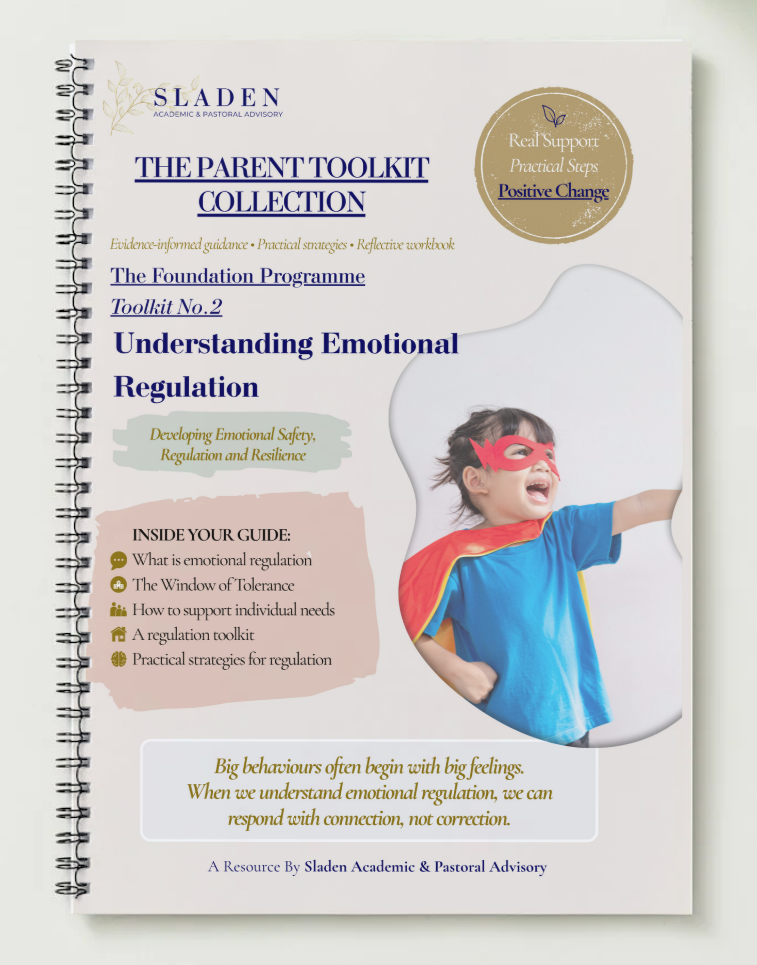
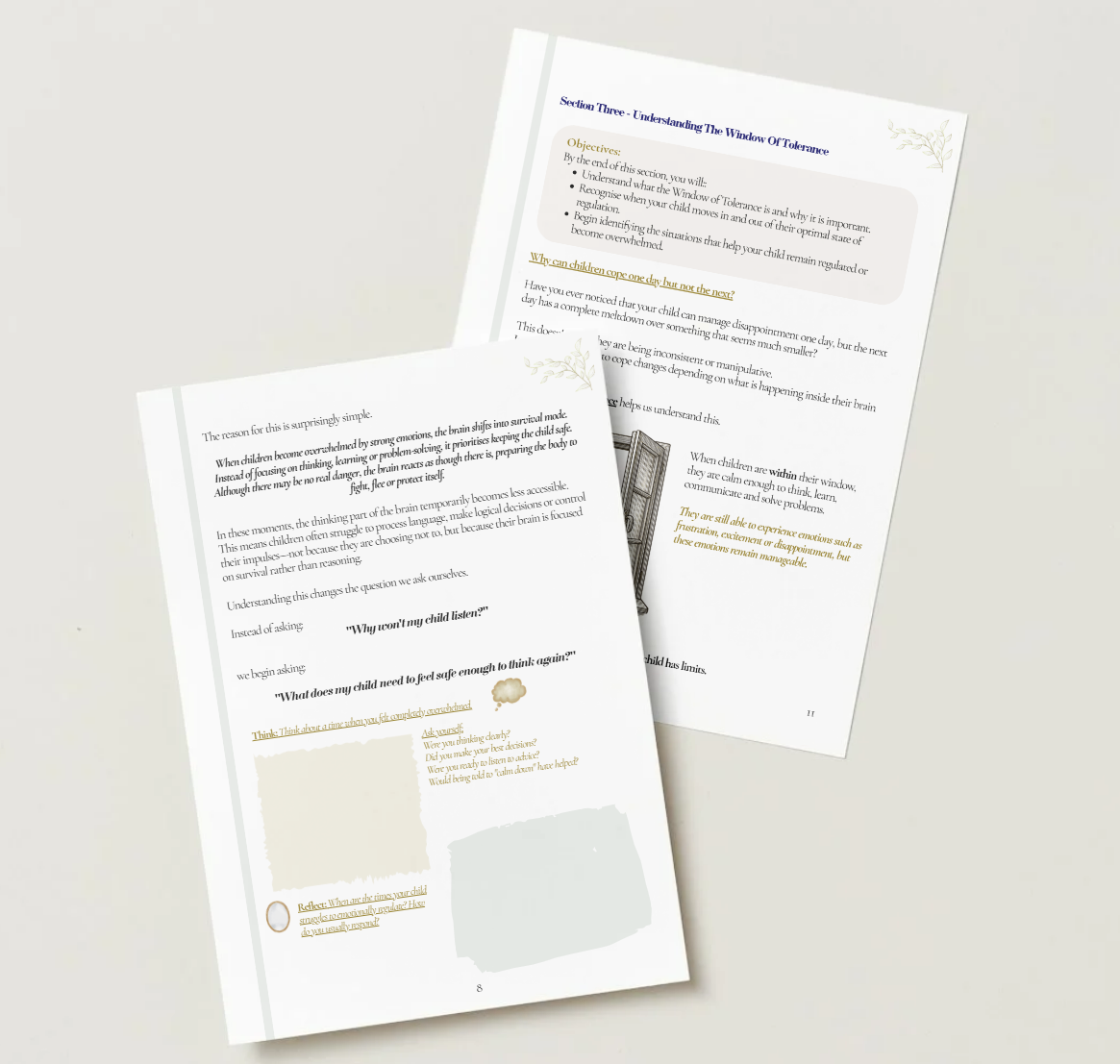
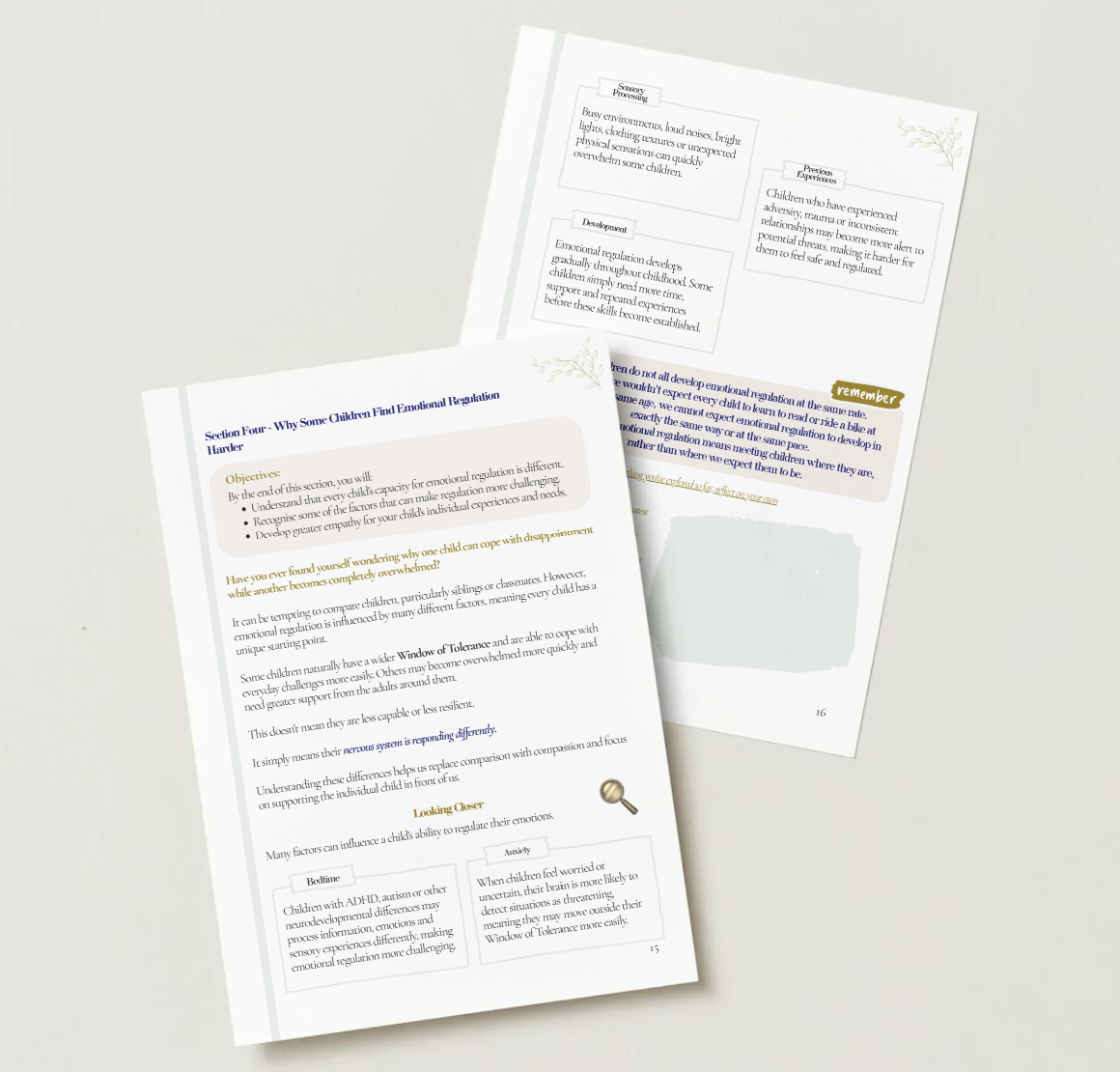
Understanding Emotional Regulation is the second guide in the Foundation Programme of the Parent Toolkit Collection; a series of practical, evidence-informed resources designed to help parents better understand, support and nurture their child's emotional development.
Building on the foundations introduced in Looking Beyond the Behaviour, this toolkit explores what happens inside a child's brain and body during moments of emotional overwhelm and provides practical strategies to help children feel safe, calm and connected.
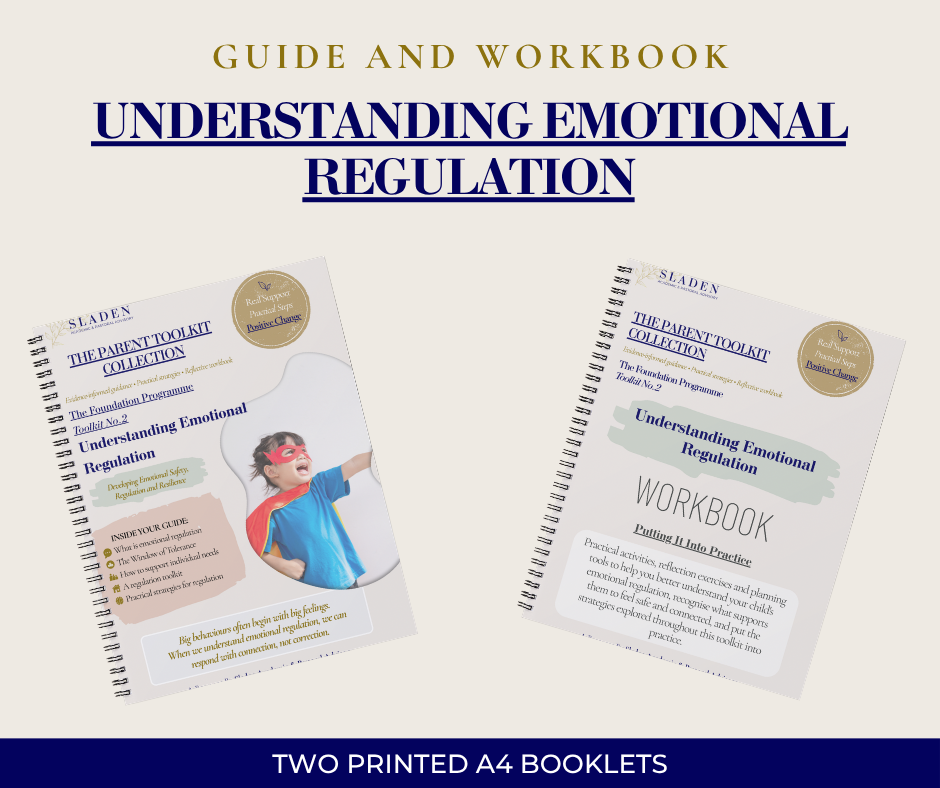
This toolkit includes 40+ pages split into two printable PDF downloads:
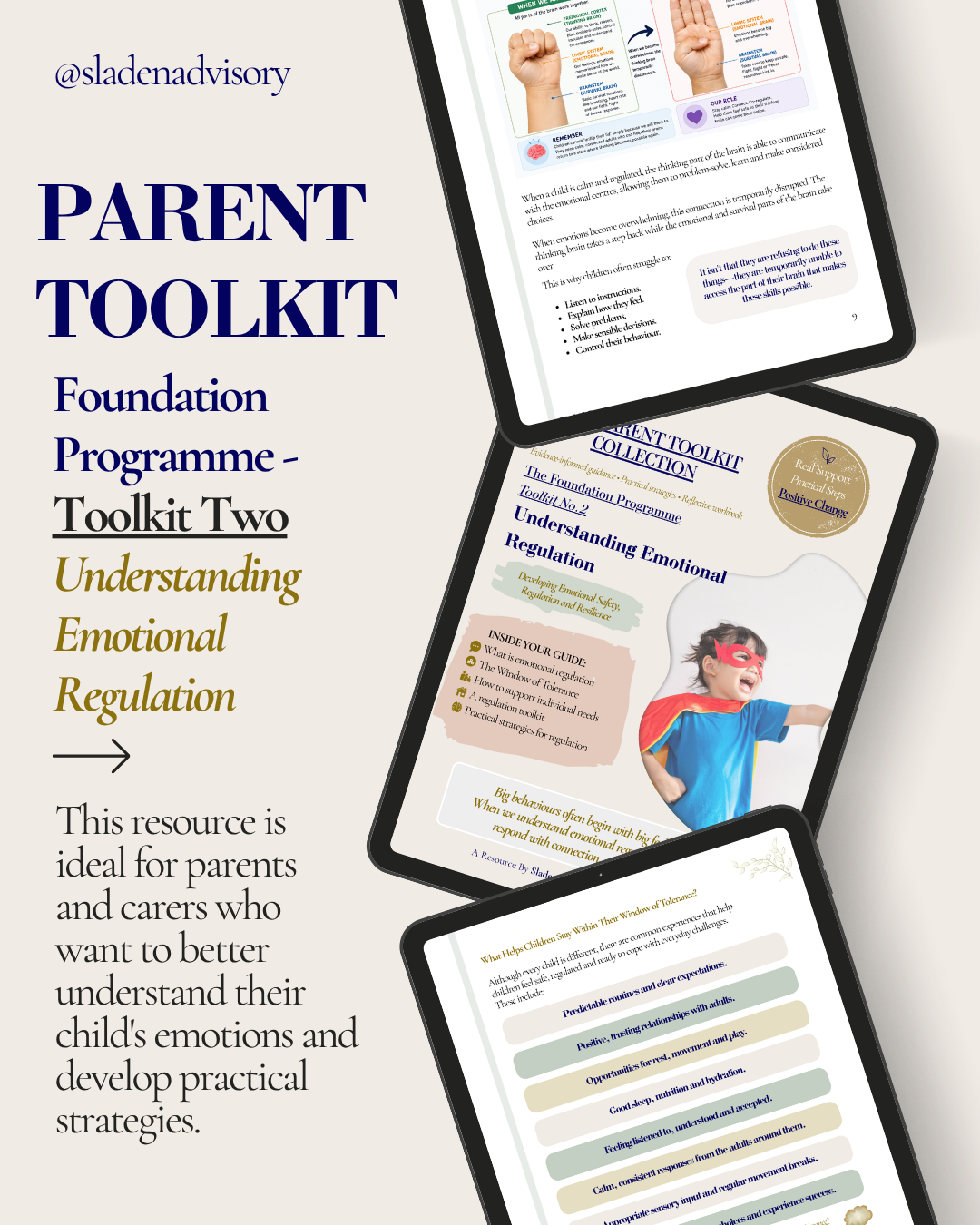
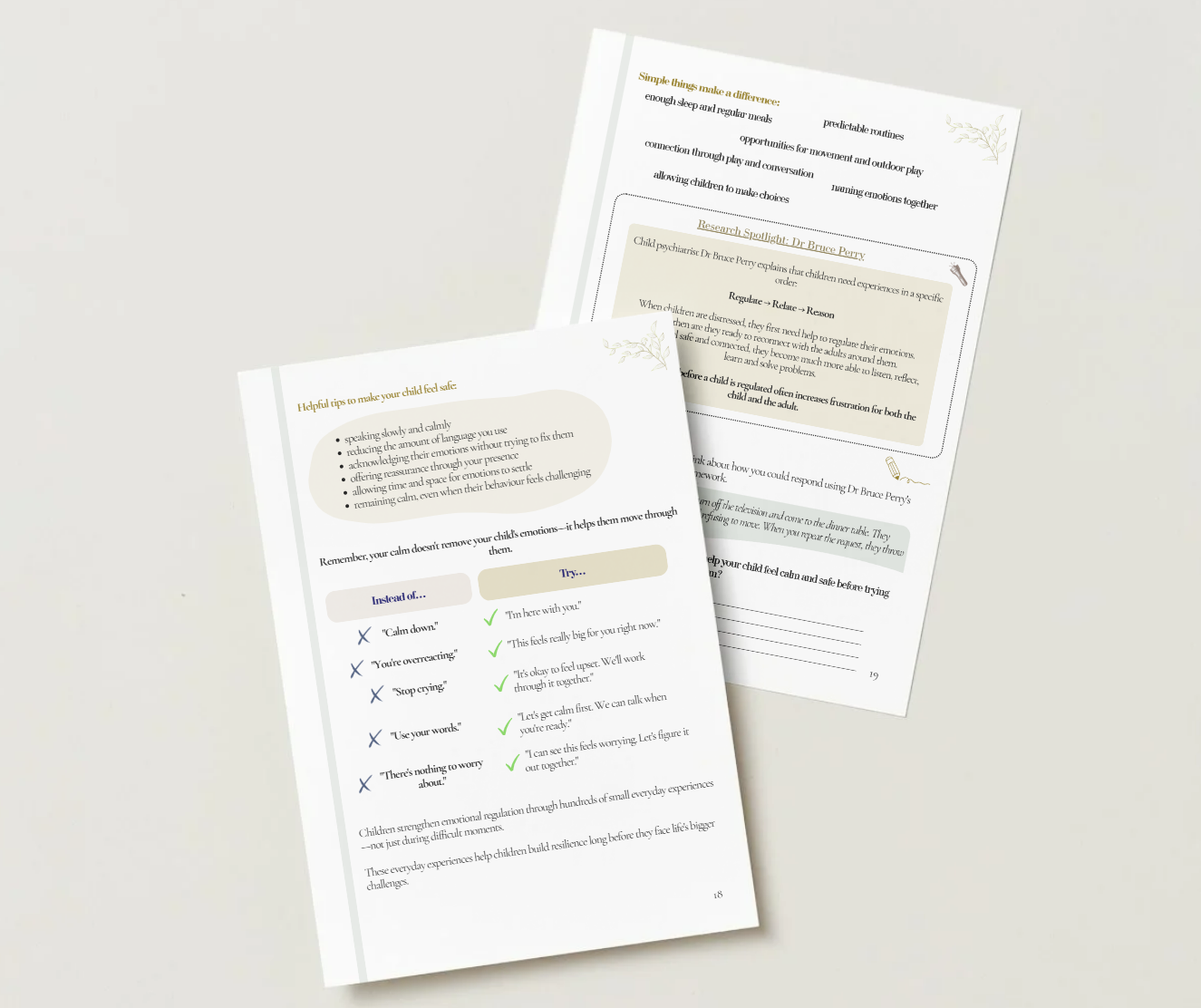
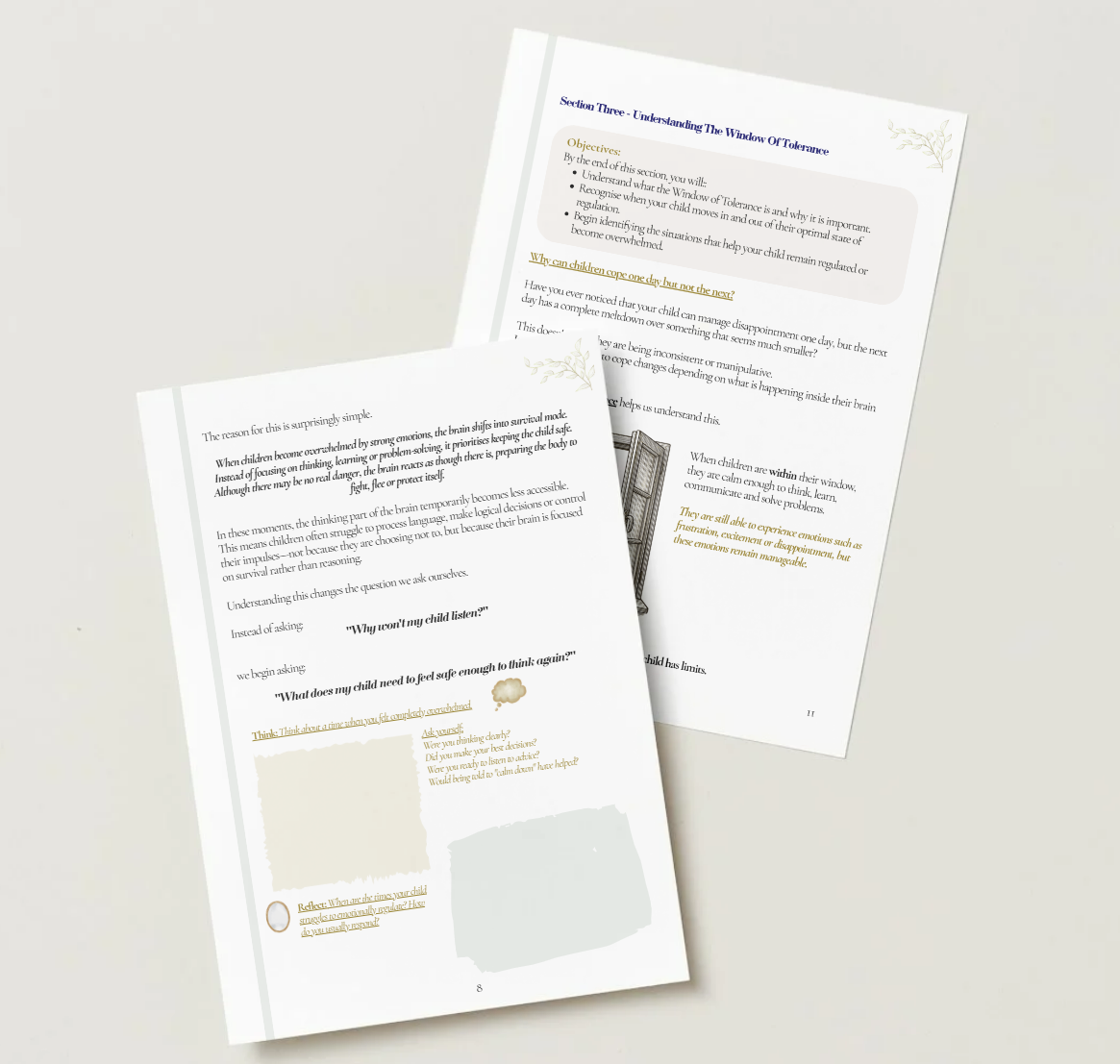
A professionally written guide combining neuroscience, child development theory and practical strategies to help you understand emotional regulation. Drawing on evidence-informed approaches, including Dr Daniel Siegel's Hand Model of the Brain, Bruce Perry's Regulate, Relate, Reason framework, and the Window of Tolerance, the guide explains why children become dysregulated and how parents can confidently support them through challenging moments.
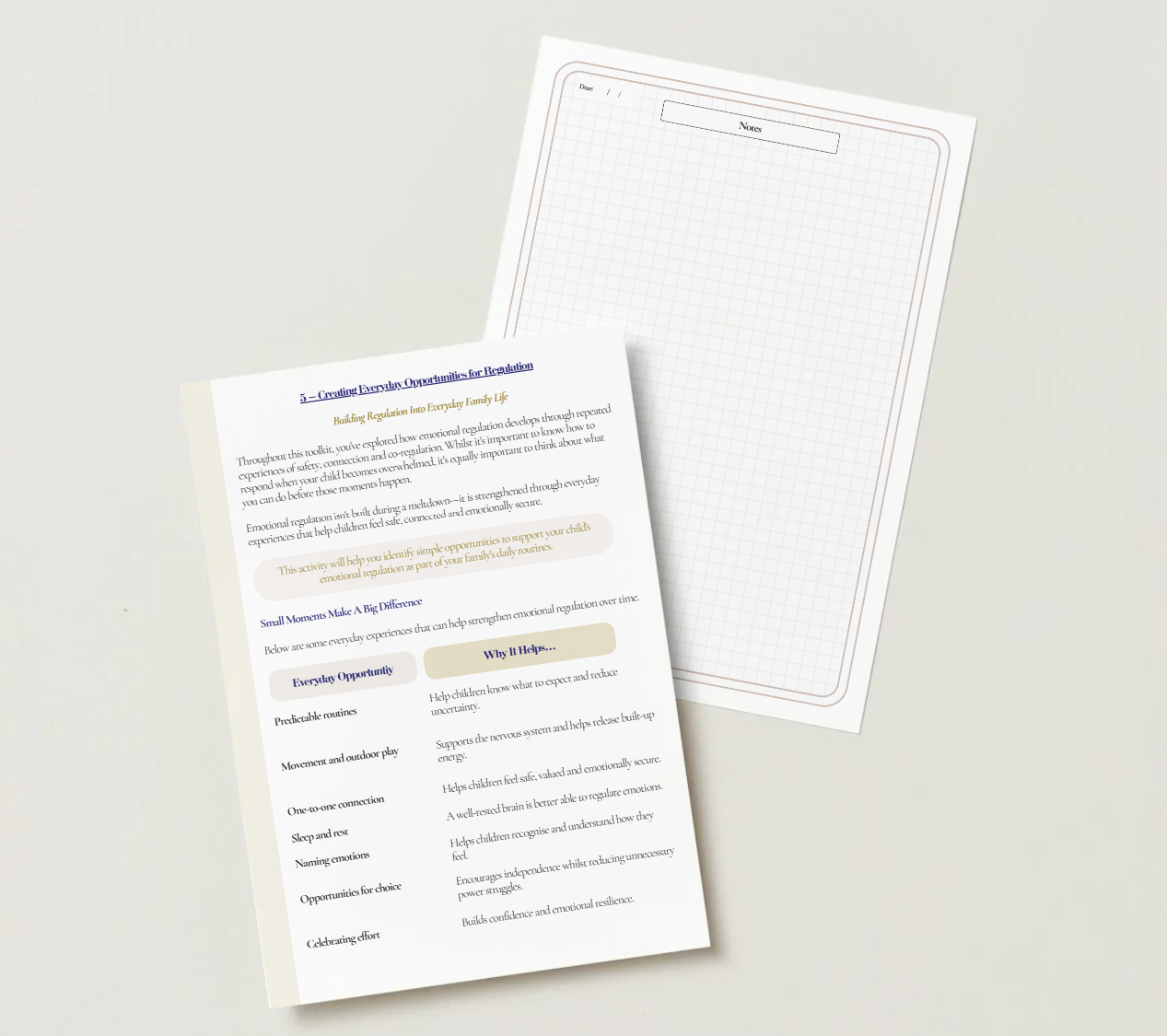
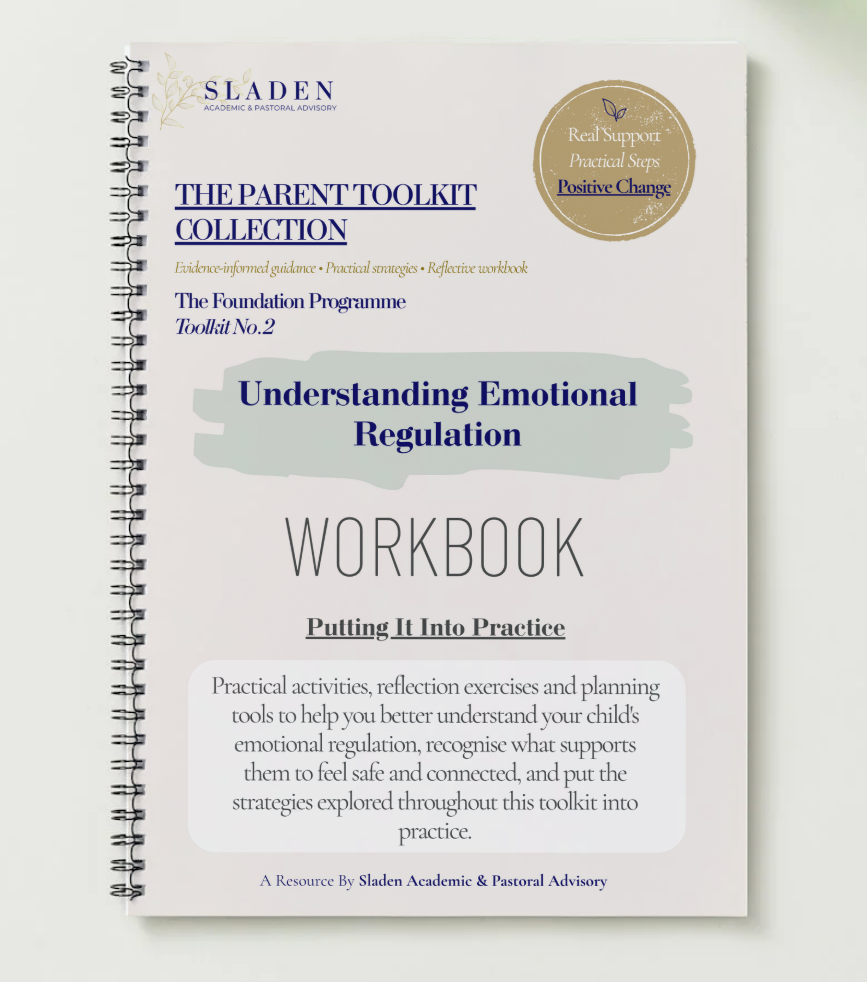
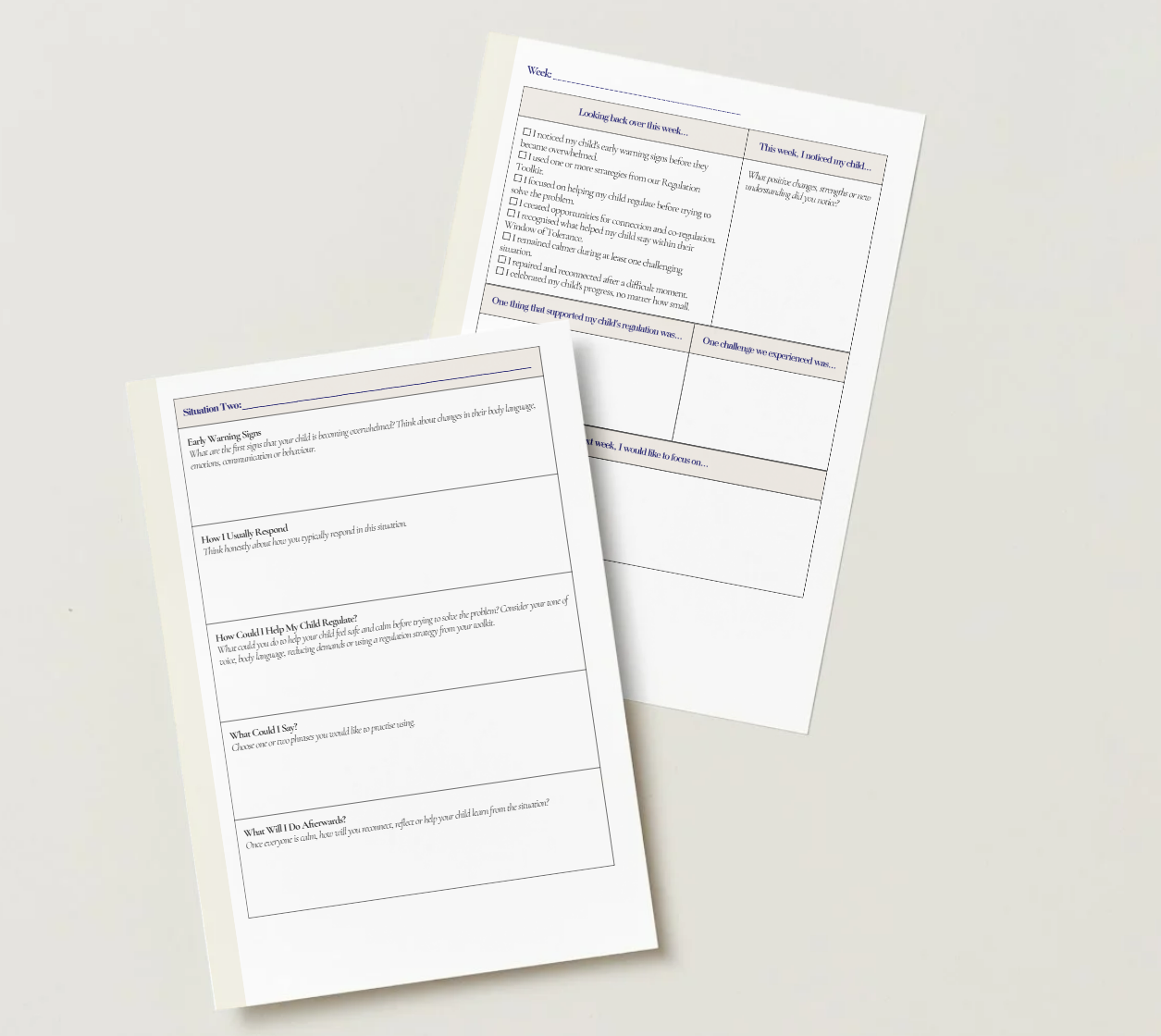
A companion workbook filled with practical templates, guided activities and planning tools designed to help you apply the theory to your own child. From creating your child's Regulation Profile and mapping their Window of Tolerance to building a personalised Regulation Toolkit and Co-Regulation Plan, the workbook supports you in putting your learning into everyday practice.
What emotional regulation is and how it develops throughout childhood.
What happens in a child's brain during moments of emotional overwhelm.
How to recognise when your child is moving in and out of their Window of Tolerance.
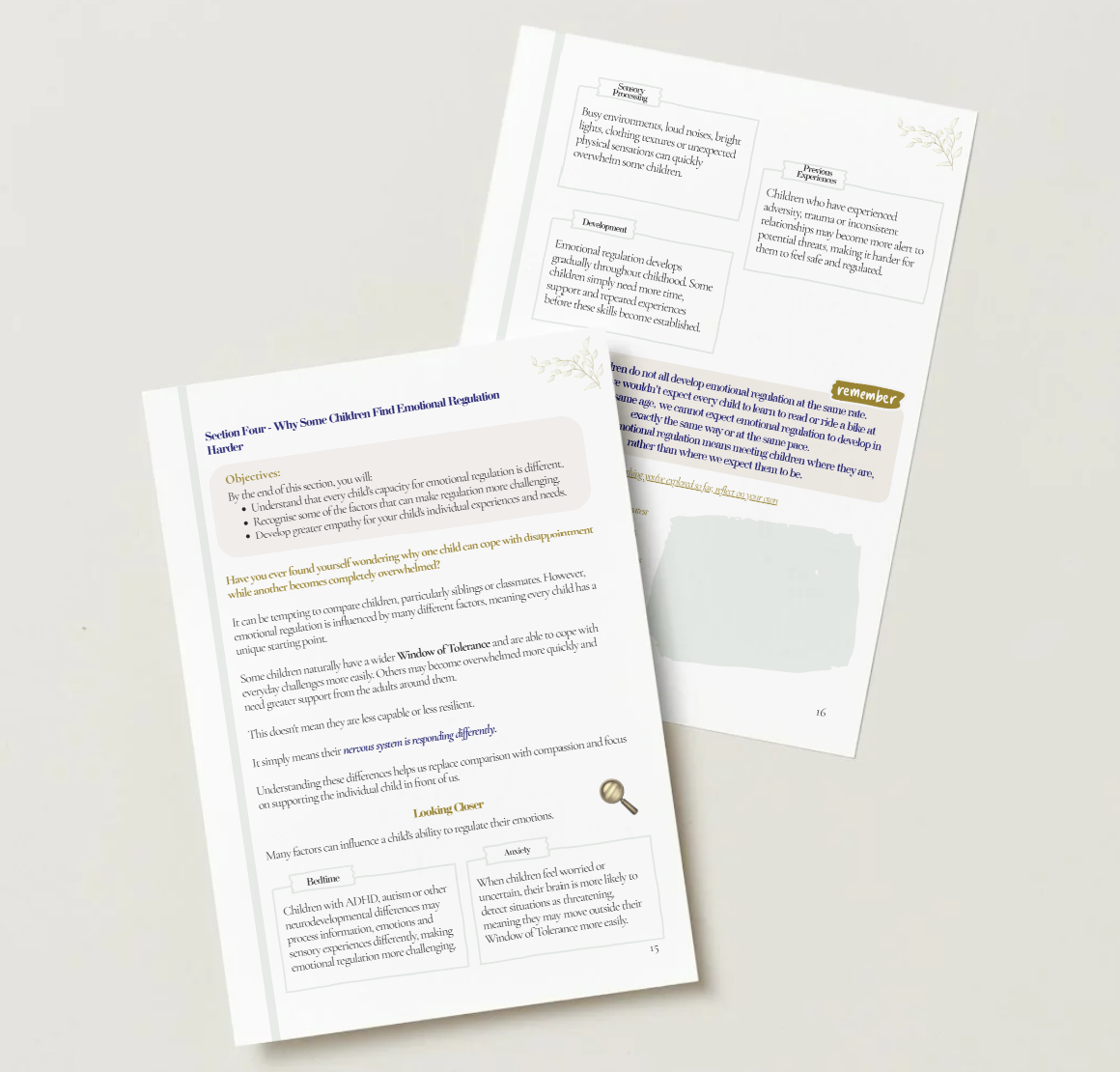
Why some children find emotional regulation more challenging than others.
Practical strategies to support co-regulation and emotional development.
How to create everyday opportunities that strengthen emotional regulation over time
This resource is ideal for parents and carers who want to better understand their child's emotions and develop practical strategies to support emotional regulation. Whether your child experiences frequent meltdowns, struggles with anxiety, finds transitions difficult, or simply experiences emotions intensely, this toolkit will help you build confidence in supporting them with empathy, consistency and evidence-informed approaches.
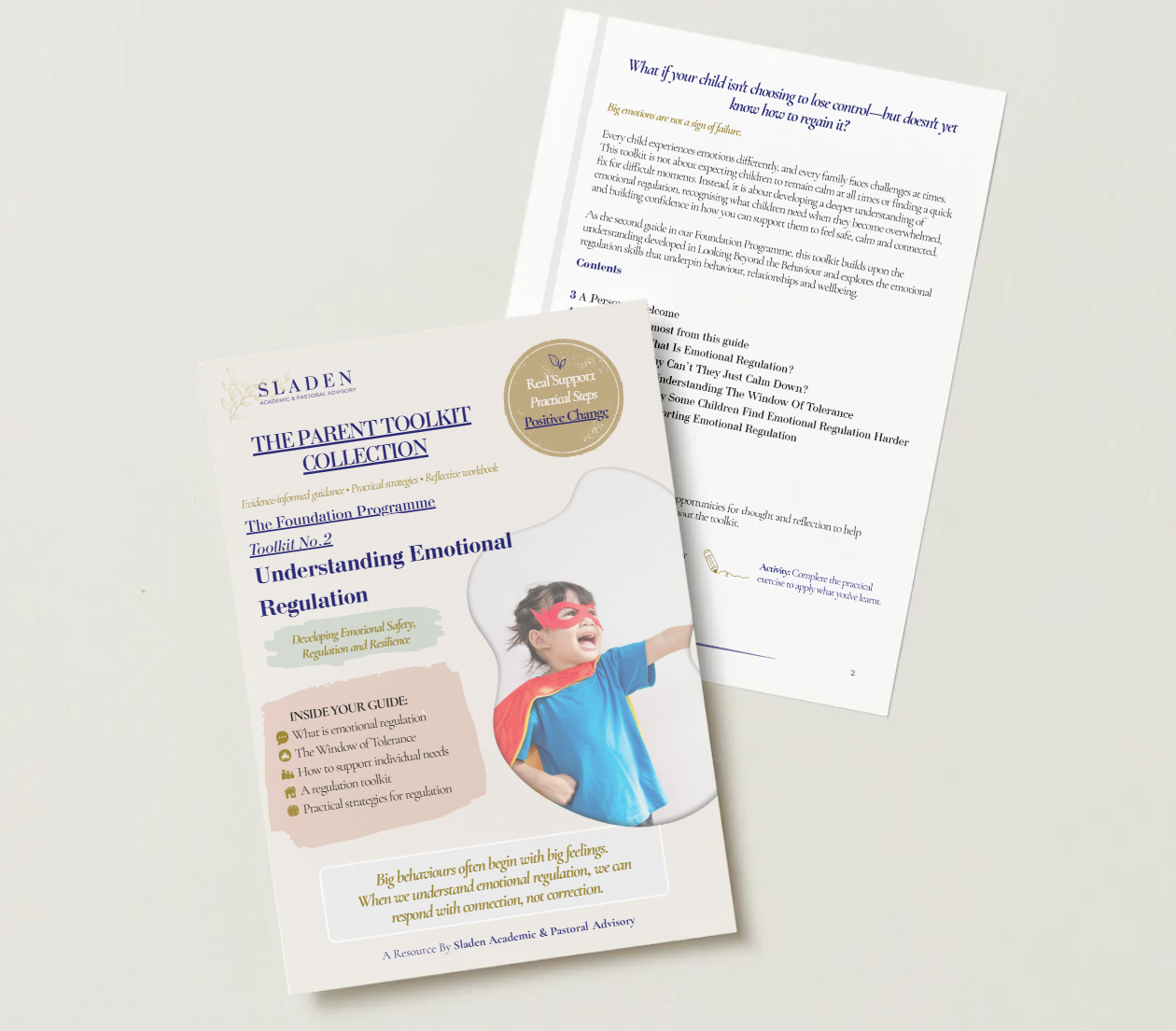
A Personal Welcome
How to Get the Most from This Guide
Section One – What is Emotional Regulation?
Section Two – Why Can't They Just Calm Down?
Section Three – Understanding the Window of Tolerance
Section Four – Why Do Some Children Find Emotional Regulation Harder?
Section Five – Supporting Emotional Regulation
Take Ten
My Child's Regulation Profile
Understanding My Child's Window of Tolerance
Building My Child's Regulation Toolkit
My Co-Regulation Plan
Creating Everyday Opportunities for Regulation
My Weekly Regulation Check-In
Notes
Understanding behaviour is the first step—but understanding why children become emotionally overwhelmed is what helps us respond differently.
As the second guide in the Foundation Programme, this toolkit builds on the principles introduced in Looking Beyond the Behaviour, helping parents move from understanding behaviour to actively supporting emotional regulation. Together, these two guides provide the foundations for building calmer, more connected relationships and helping children develop lifelong emotional regulation skills.
✔ Printable PDF format
✔ Two professionally designed resources included (Guide + Workbook)
✔ Download immediately after purchase
✔ Complete at your own pace and revisit whenever you need it
Developed by Sladen Advisory using professional experience alongside recognised, evidence-informed approaches to child development, neuroscience, emotional regulation and trauma-informed practice.


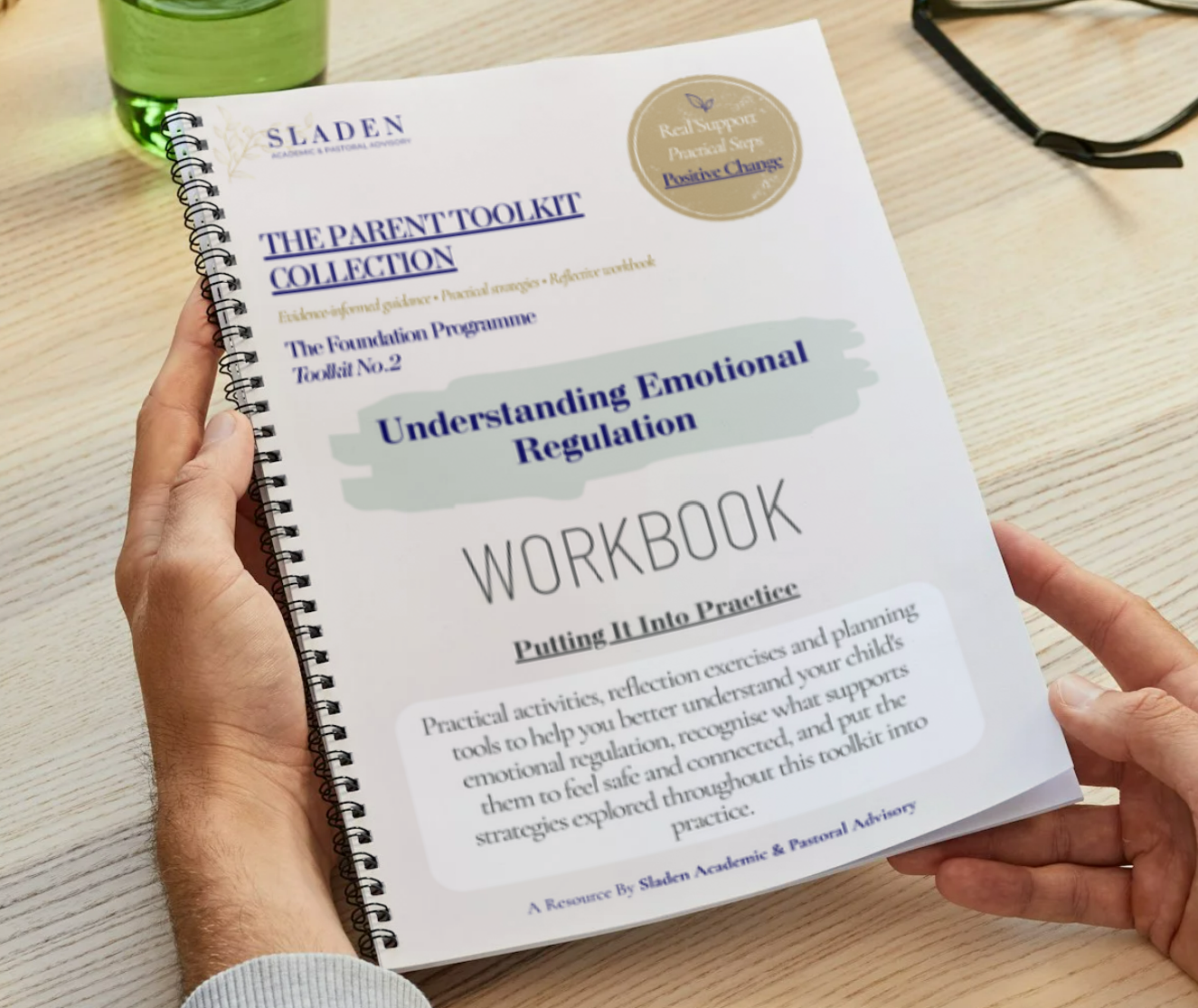
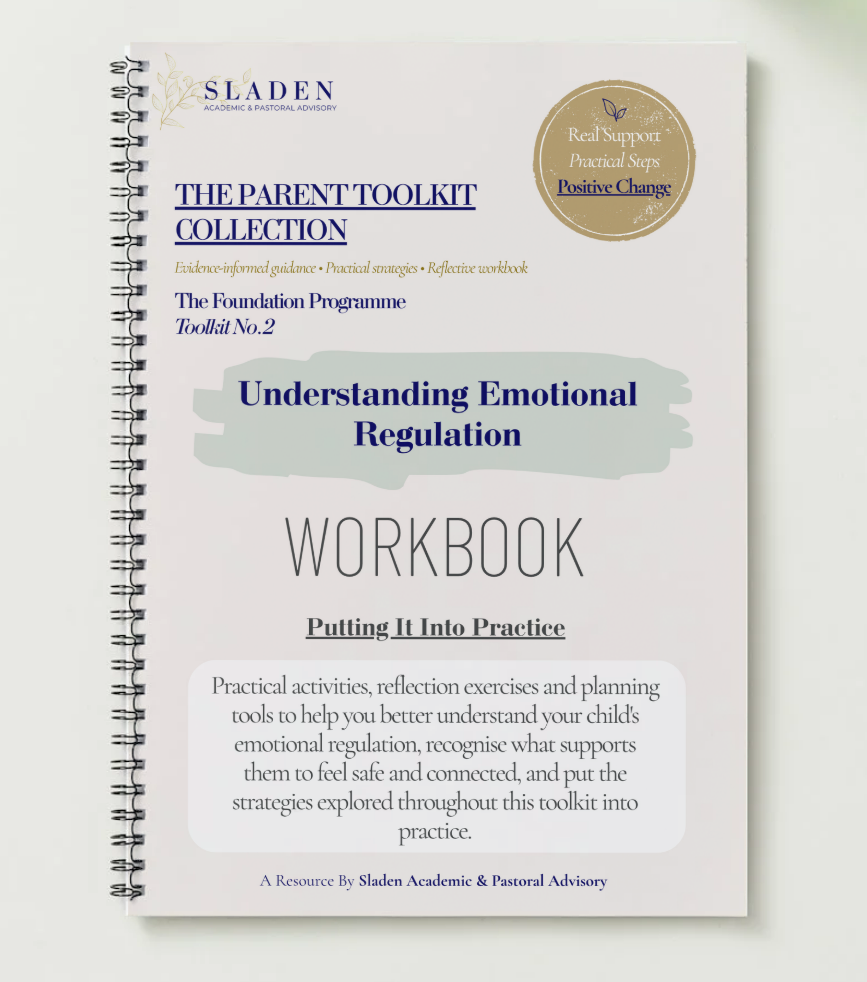
Foundation Programme - Toolkit Two
Understanding Emotional Regulation is the second guide in the Foundation Programme of the Parent Toolkit Collection; a series of practical, evidence-informed resources designed to help parents better understand, support and nurture their child's emotional development.
Building on the foundations introduced in Looking Beyond the Behaviour, this toolkit explores what happens inside a child's brain and body during moments of emotional overwhelm and provides practical strategies to help children feel safe, calm and connected.
This toolkit includes 40+ pages split into two spiral-bound workbooks.
A professionally written guide combining neuroscience, child development theory and practical strategies to help you understand emotional regulation. Drawing on evidence-informed approaches, including Dr Daniel Siegel's Hand Model of the Brain, Bruce Perry's Regulate, Relate, Reason framework, and the Window of Tolerance, the guide explains why children become dysregulated and how parents can confidently support them through challenging moments.
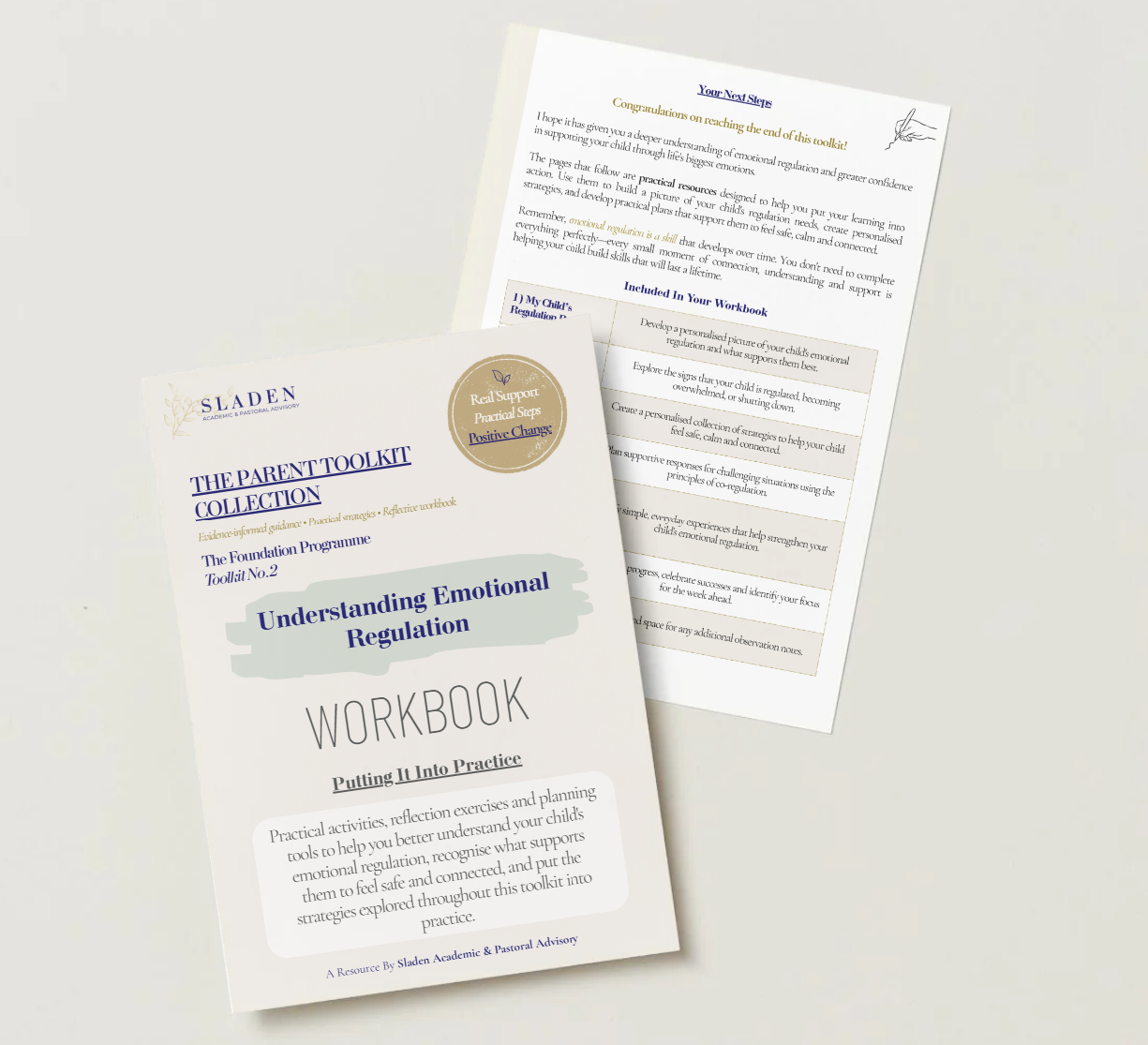
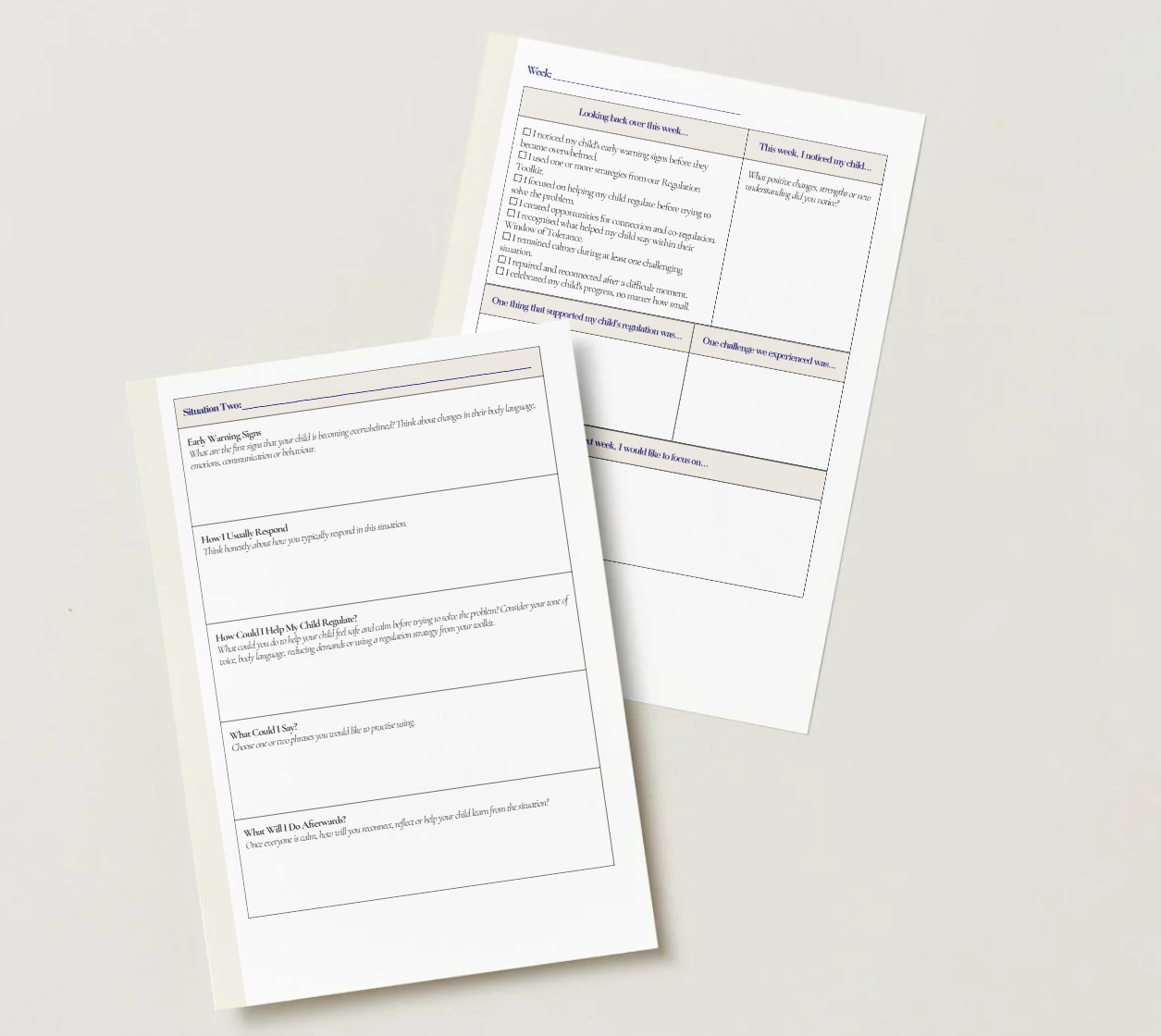
A companion workbook filled with practical templates, guided activities and planning tools designed to help you apply the theory to your own child. From creating your child's Regulation Profile and mapping their Window of Tolerance to building a personalised Regulation Toolkit and Co-Regulation Plan, the workbook supports you in putting your learning into everyday practice.
What emotional regulation is and how it develops throughout childhood.
What happens in a child's brain during moments of emotional overwhelm.
How to recognise when your child is moving in and out of their Window of Tolerance.
Why some children find emotional regulation more challenging than others.
Practical strategies to support co-regulation and emotional development.
How to create everyday opportunities that strengthen emotional regulation over time
This resource is ideal for parents and carers who want to better understand their child's emotions and develop practical strategies to support emotional regulation. Whether your child experiences frequent meltdowns, struggles with anxiety, finds transitions difficult, or simply experiences emotions intensely, this toolkit will help you build confidence in supporting them with empathy, consistency and evidence-informed approaches.
A Personal Welcome
How to Get the Most from This Guide
Section One – What is Emotional Regulation?
Section Two – Why Can't They Just Calm Down?
Section Three – Understanding the Window of Tolerance
Section Four – Why Do Some Children Find Emotional Regulation Harder?
Section Five – Supporting Emotional Regulation
Take Ten
My Child's Regulation Profile
Understanding My Child's Window of Tolerance
Building My Child's Regulation Toolkit
My Co-Regulation Plan
Creating Everyday Opportunities for Regulation
My Weekly Regulation Check-In
Notes
Understanding behaviour is the first step—but understanding why children become emotionally overwhelmed is what helps us respond differently.
As the second guide in the Foundation Programme, this toolkit builds on the principles introduced in Looking Beyond the Behaviour, helping parents move from understanding behaviour to actively supporting emotional regulation. Together, these two guides provide the foundations for building calmer, more connected relationships and helping children develop lifelong emotional regulation skills.
Developed by Sladen Advisory using professional experience alongside recognised, evidence-informed approaches to child development, neuroscience, emotional regulation and trauma-informed practice.
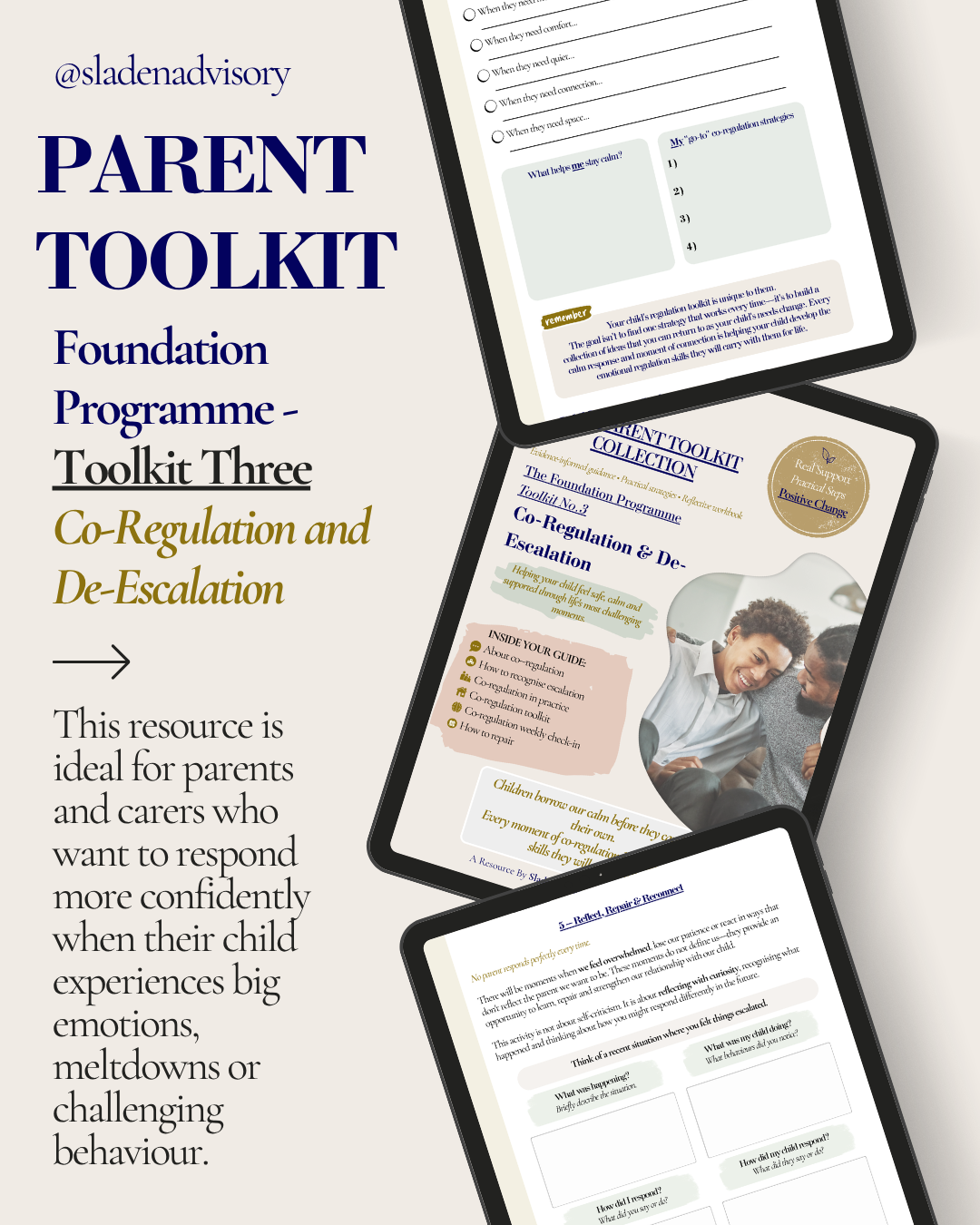
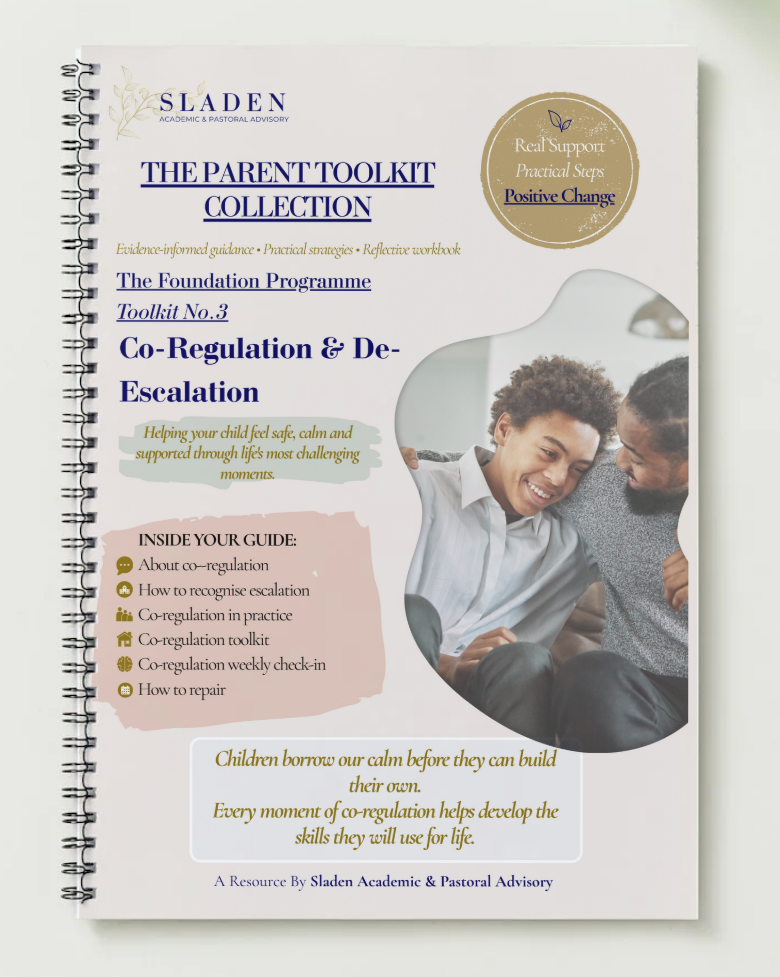
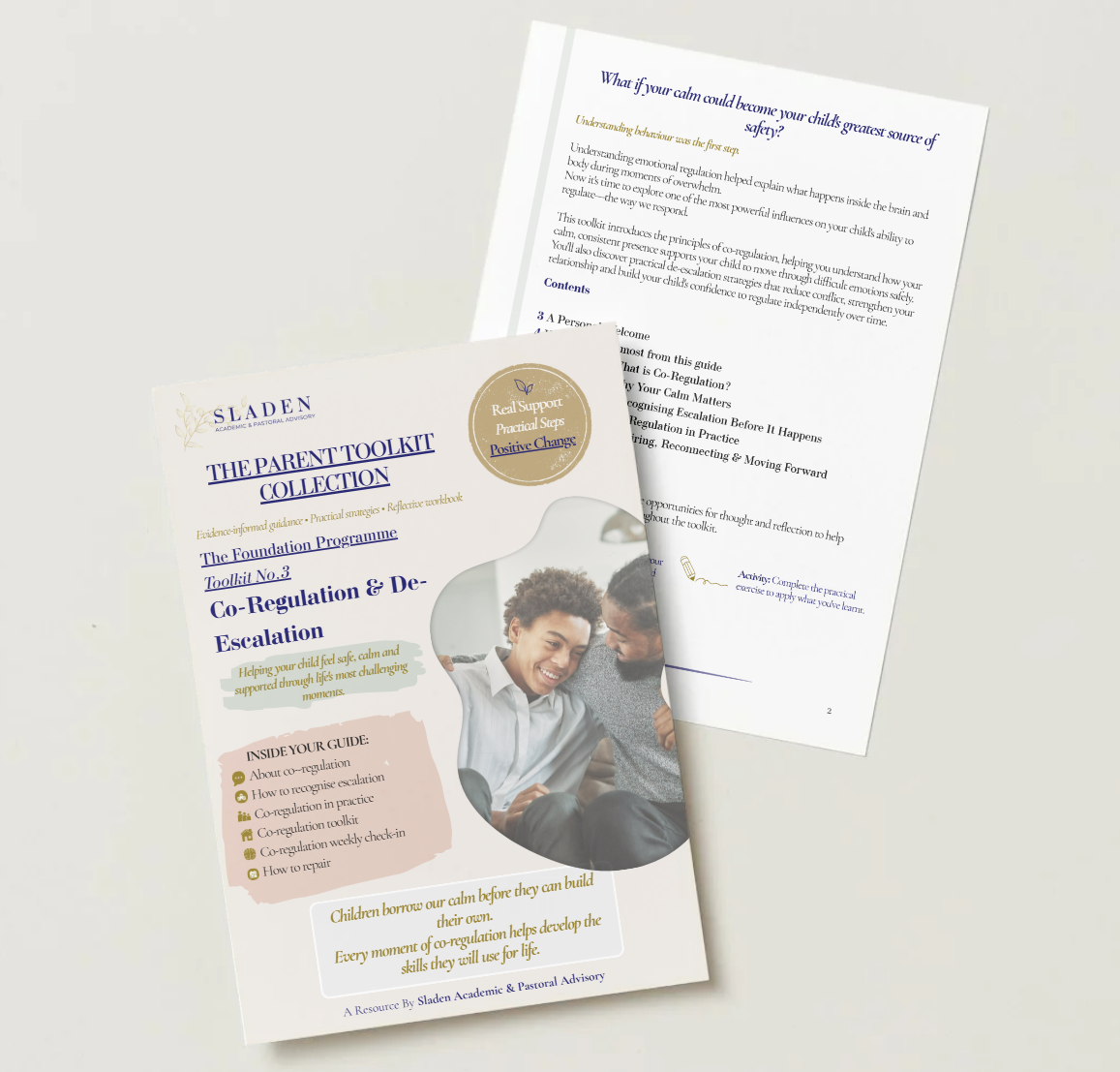



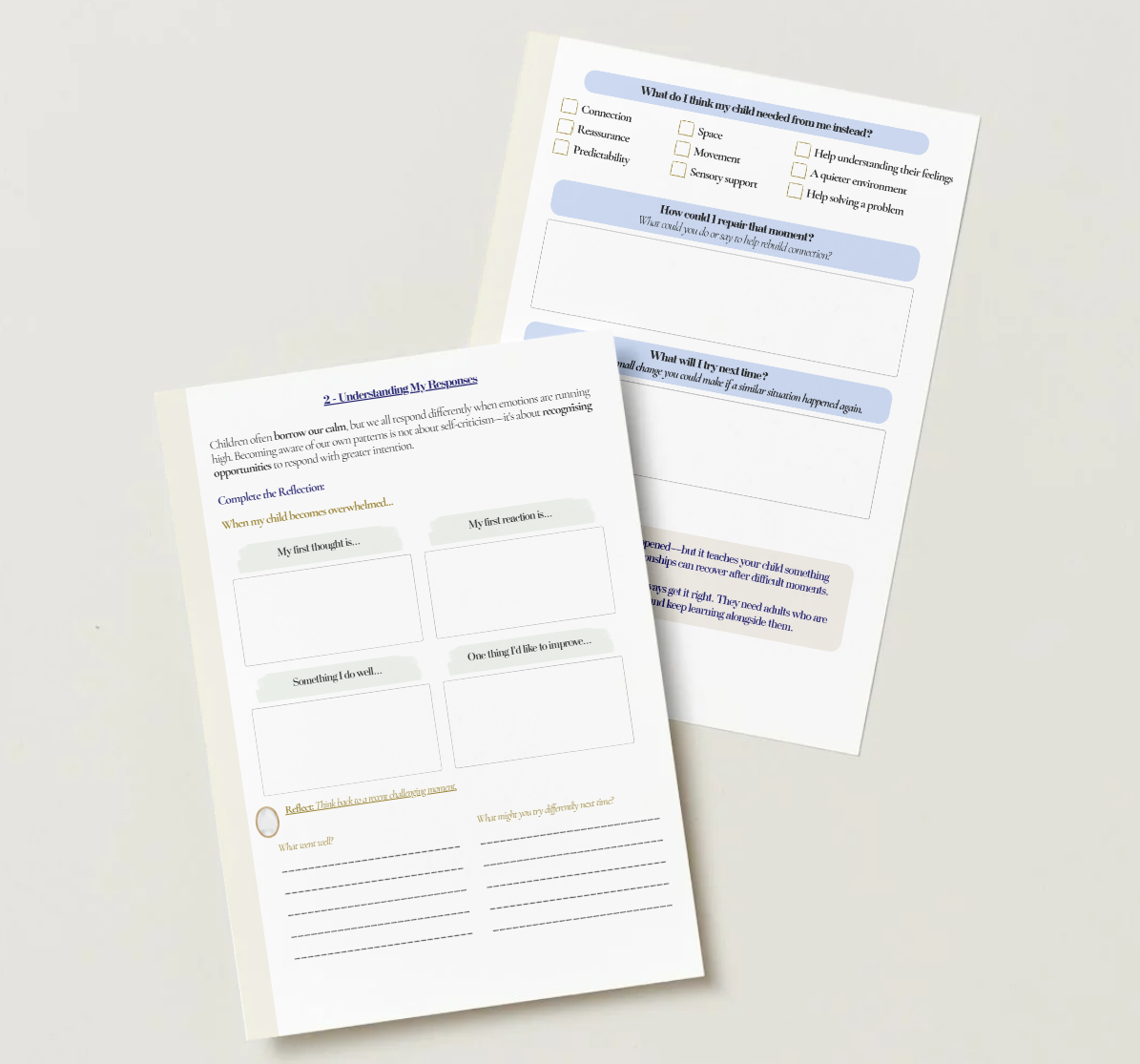
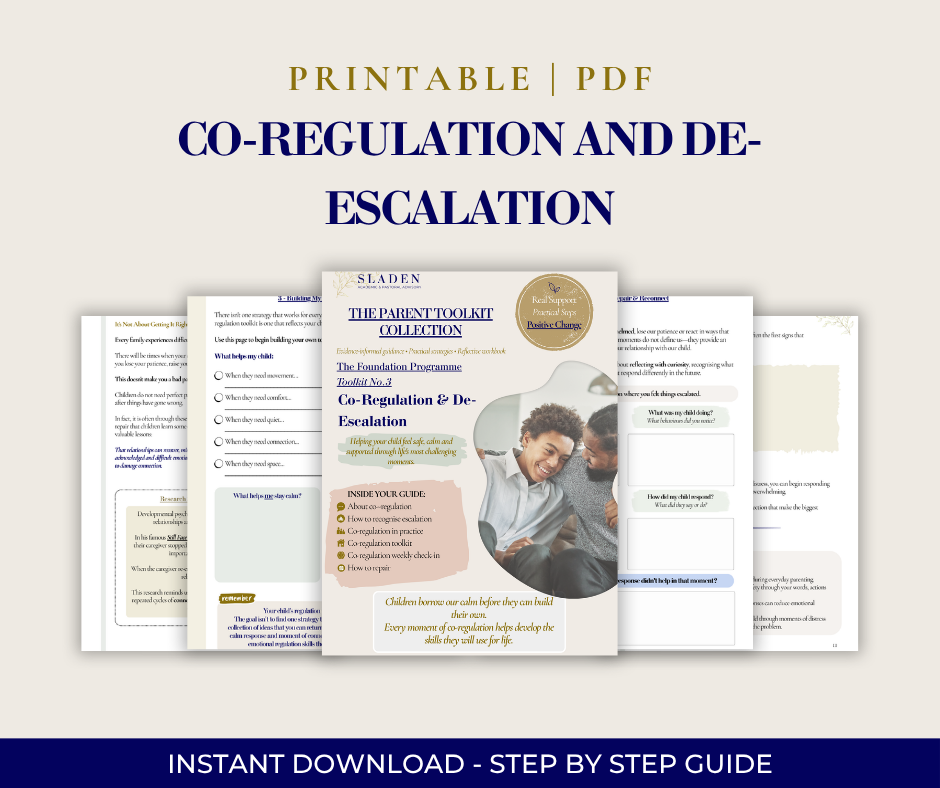
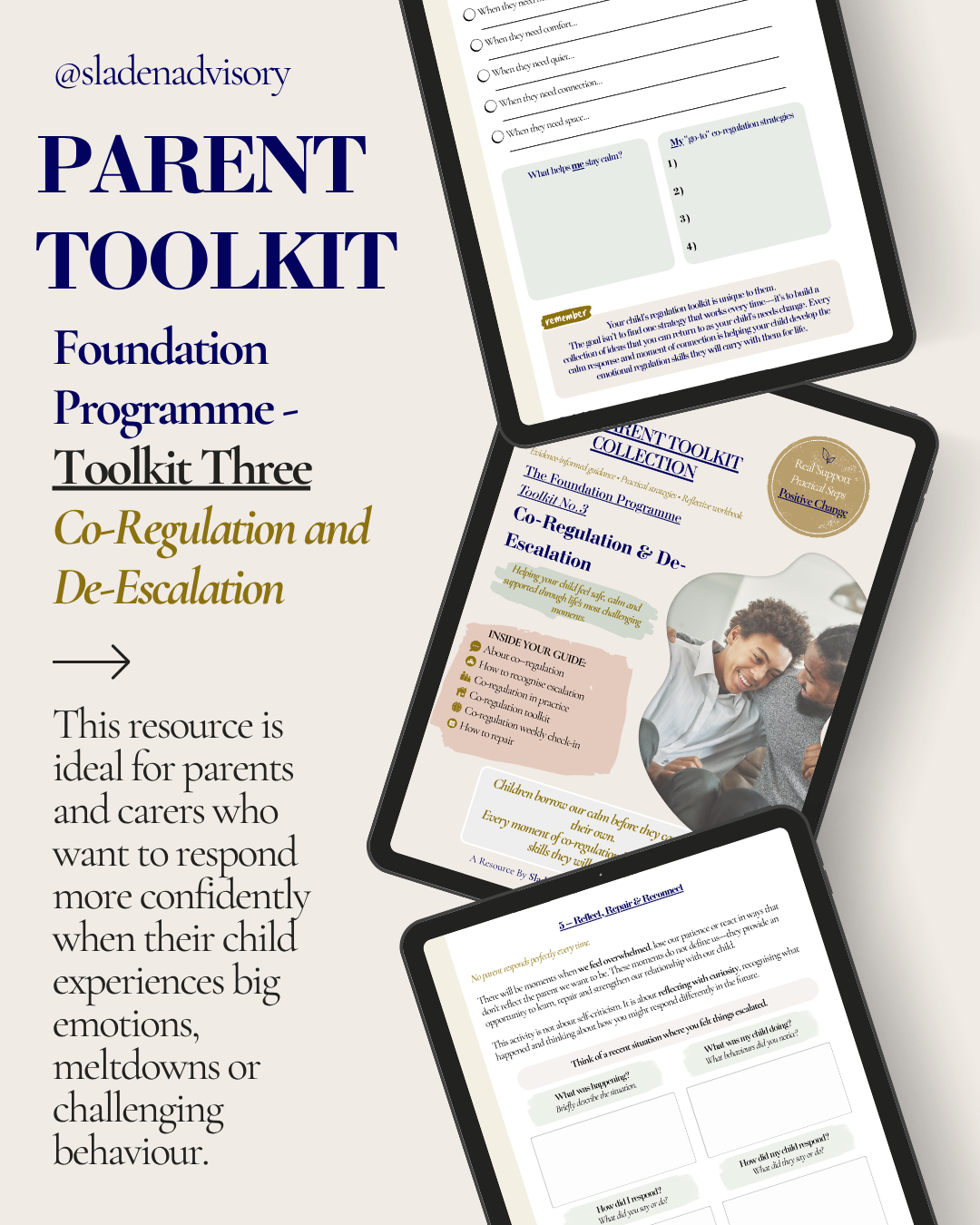
Co-Regulation & De-escalation is the third guide in the Parent Toolkit Collection; a series of practical, evidence-informed resources designed to help parents build stronger relationships, respond confidently during challenging moments and support their child's emotional development.
Building on the understanding developed in the first two toolkits, this guide focuses on one of the most powerful influences on a child's ability to regulate—the calm, consistent support of a trusted adult. You'll discover practical strategies to reduce emotional escalation, strengthen connection and help your child develop lifelong emotional regulation skills.
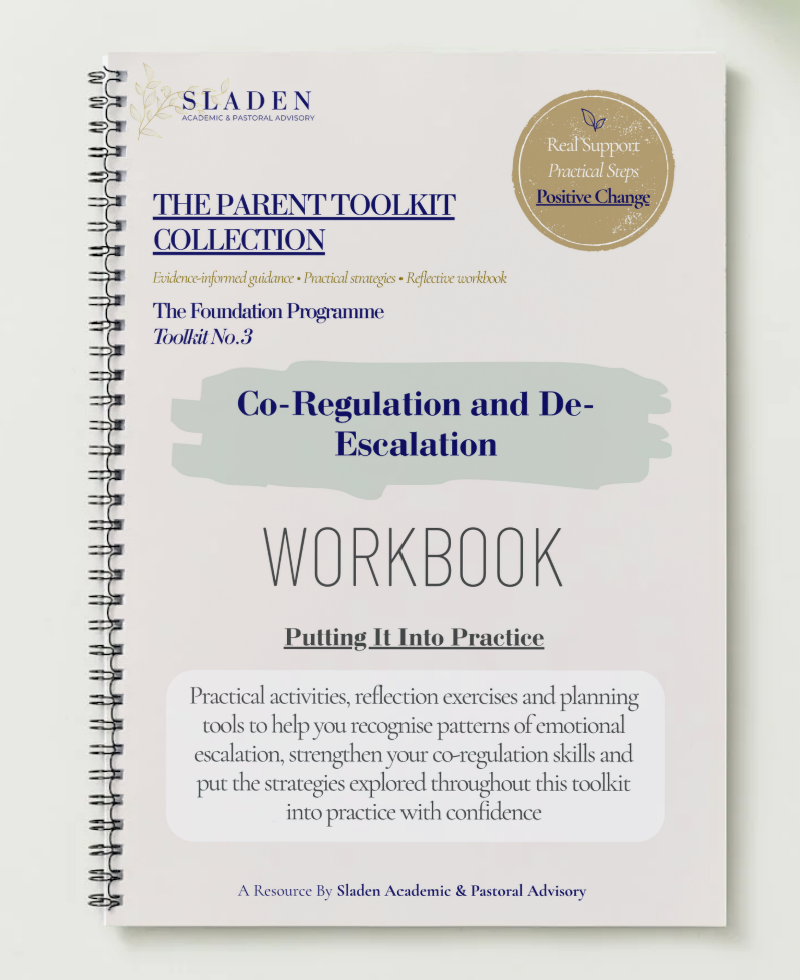
This toolkit includes 37 pages split into two printable PDF downloads:
A professionally written guide combining research, practical strategies and real-life examples to help you understand the principles of co-regulation and emotional de-escalation. Drawing on evidence-informed approaches including Polyvagal Theory, attachment theory and interpersonal neurobiology, the guide explores how children learn emotional regulation through relationships and how parents can confidently support them during difficult moments.
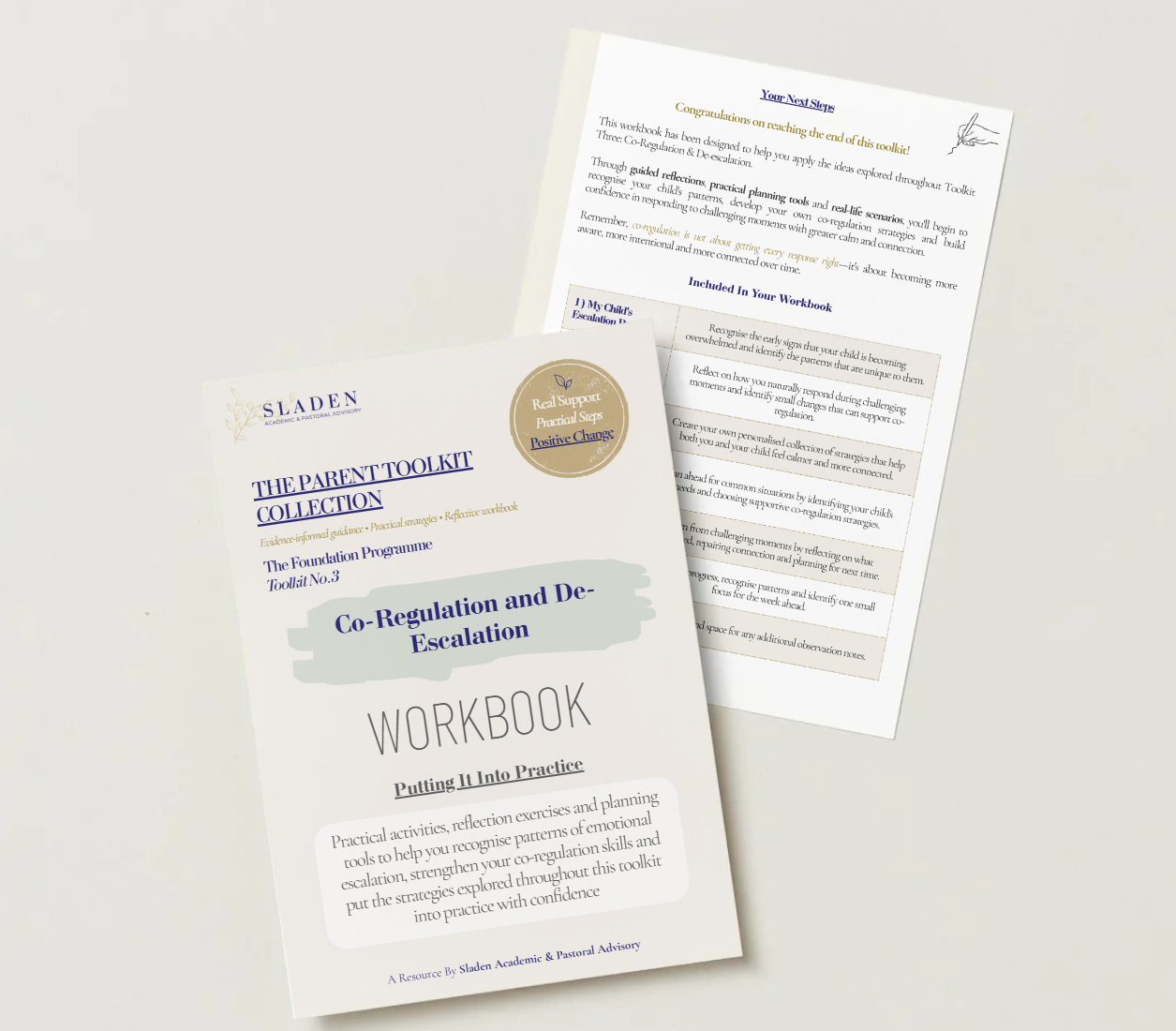
A companion workbook filled with guided reflections, practical planning tools and personalised activities designed to help you apply the learning to your own family. From recognising escalation patterns and building your own co-regulation toolkit to planning for challenging situations and reflecting on moments of repair, the workbook supports you in developing calm, connected responses with confidence.
What co-regulation is and why it is essential for emotional development.
Why your own emotional regulation plays a key role in supporting your child.
How to recognise the early signs of emotional escalation.
Practical strategies to co-regulate during challenging moments.
How to reduce conflict whilst maintaining connection and boundaries.
Why repair and reconnection are essential parts of healthy relationships.
This resource is ideal for parents and carers who want to respond more confidently when their child experiences big emotions, meltdowns or challenging behaviour. Whether your child struggles with emotional regulation, has additional needs, is awaiting assessment or simply needs extra support, this toolkit will help you develop practical, relationship-based strategies that strengthen connection whilst reducing emotional escalation.
A Personal Welcome
How to Get the Most from This Guide
Section One – What is Co-Regulation?
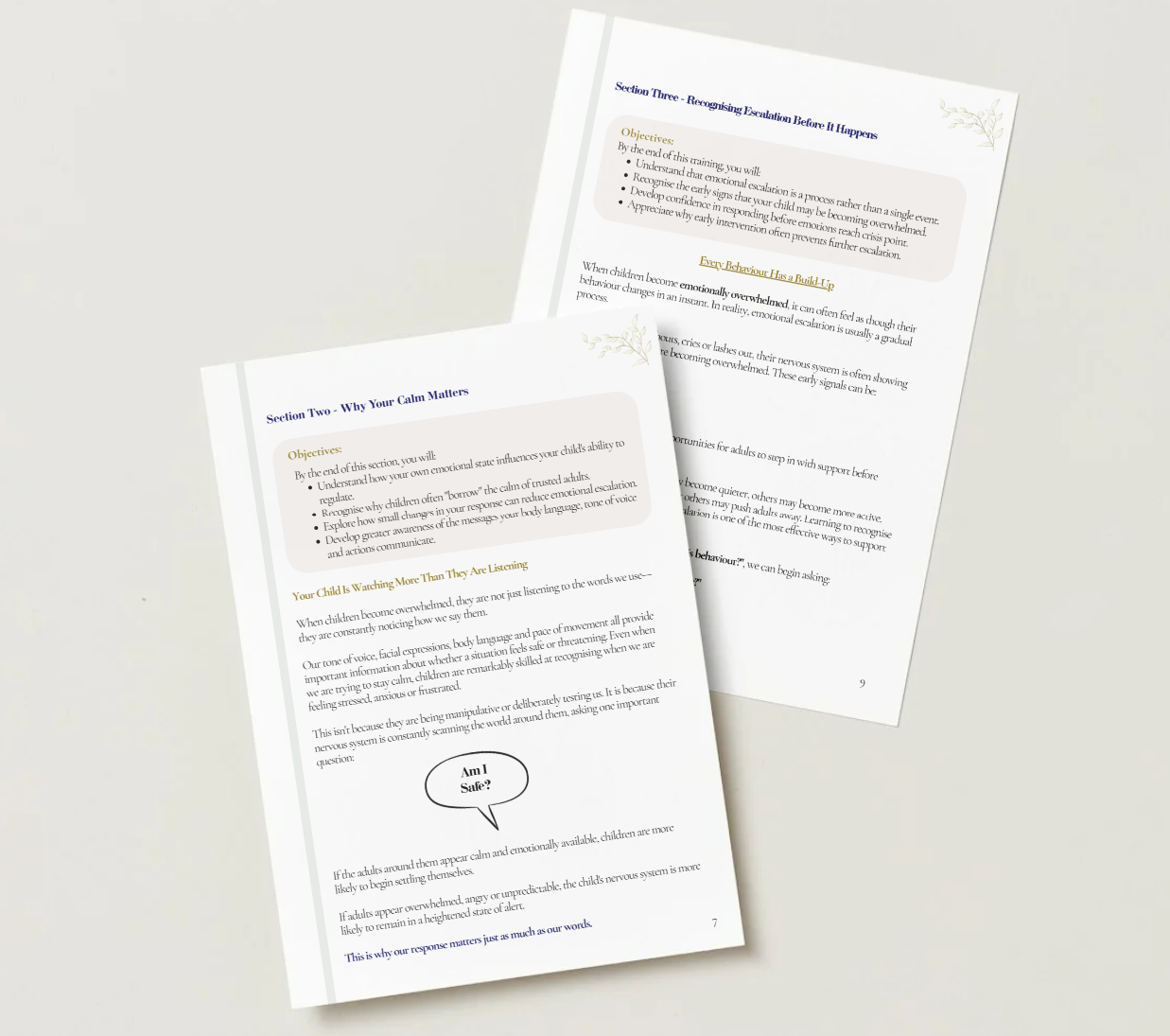
Section Two – Why Your Calm Matters
Section Three – Recognising Escalation Before It Happens
Section Four – Co-Regulation in Practice
Section Five – Repairing, Reconnecting & Moving Forward
Take Ten
One Final Thought
Theories & Approaches Referenced
Further Reading
Includes six practical activities:
My Child's Escalation Profile
Understanding My Responses
Building My Co-Regulation Toolkit
Planning for Everyday Co-Regulation
Reflect, Repair & Reconnect
Weekly Co-Regulation Check-In
Understanding behaviour is only the beginning.
Once we understand why behaviour happens and how emotional regulation develops, the next step is learning how to respond in ways that help children feel safe, connected and understood.
This toolkit provides practical strategies that help you reduce emotional escalation, strengthen your relationship with your child and build the foundations for lifelong emotional wellbeing.
✔ Printable PDF format
✔ Two professionally designed resources included (Guide + Workbook)
✔ Download immediately after purchase
✔ Complete at your own pace and revisit whenever you need it
Developed by Sladen Advisory using professional experience alongside recognised, evidence-informed approaches to child development, attachment, emotional regulation, neuroscience, SEND and trauma-informed practice.
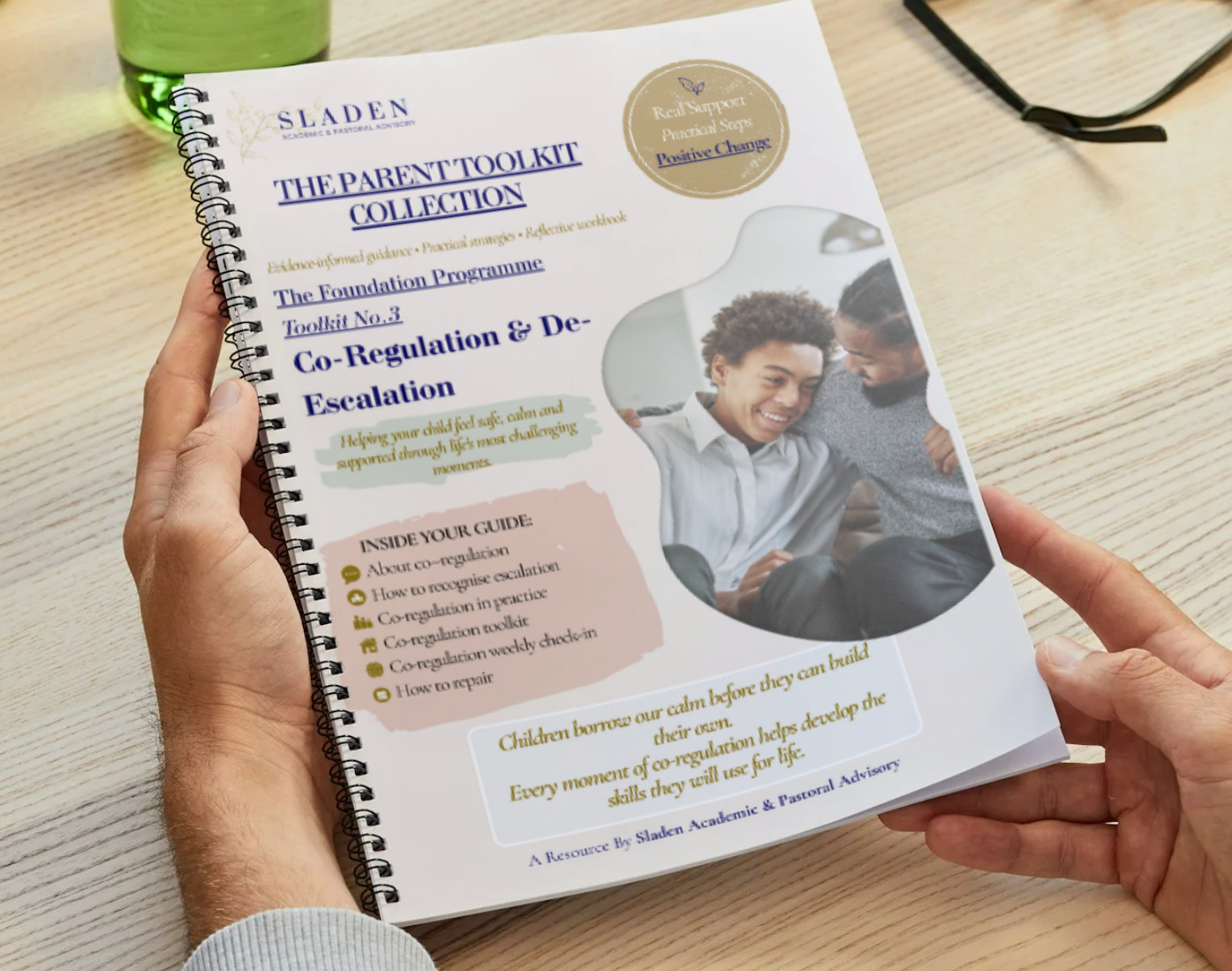

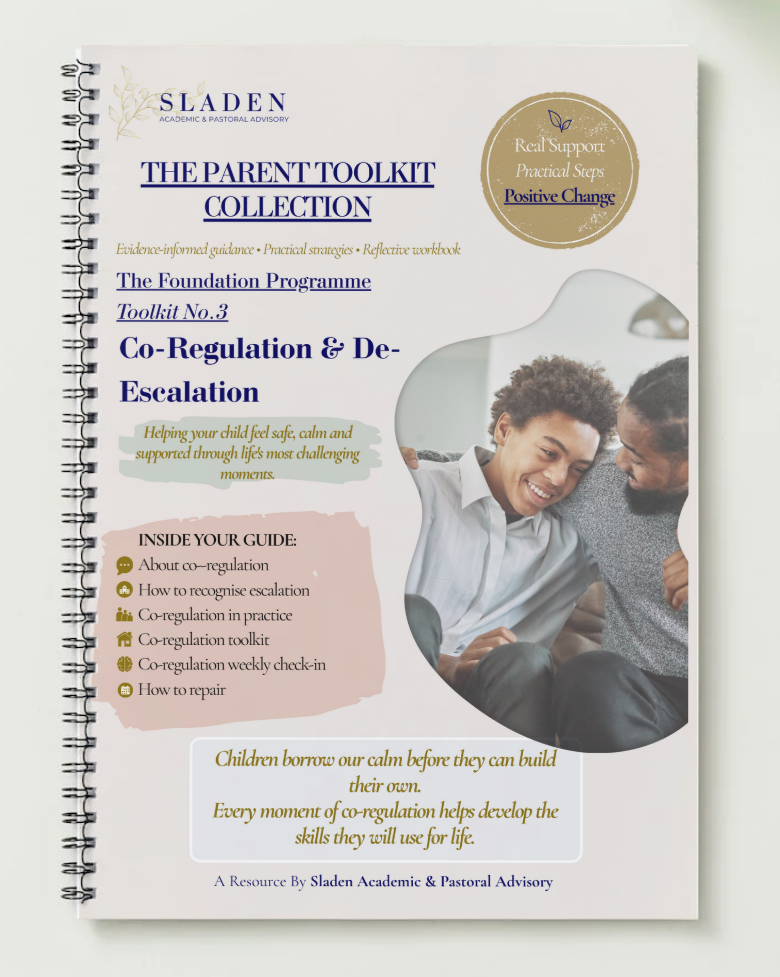
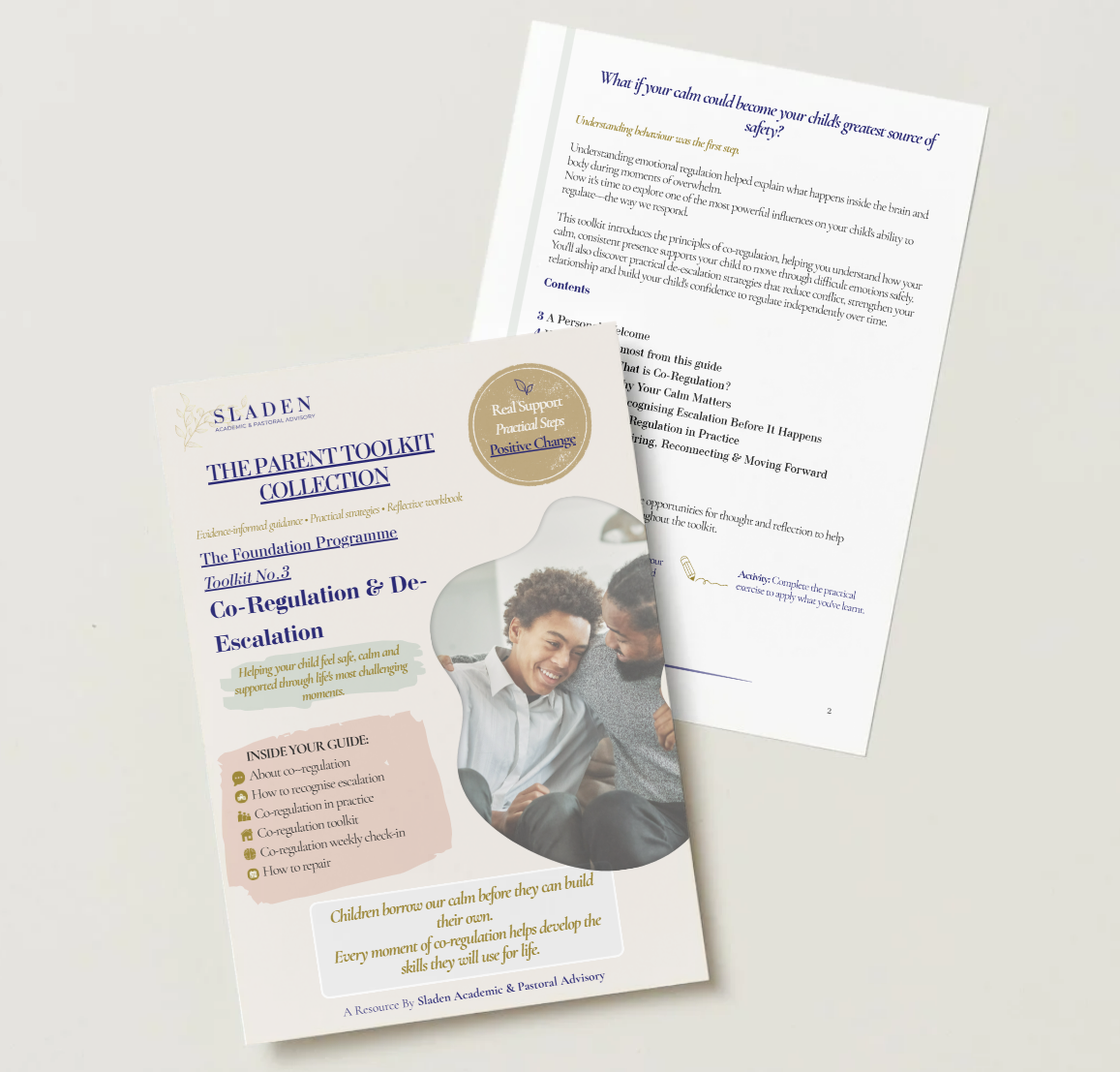


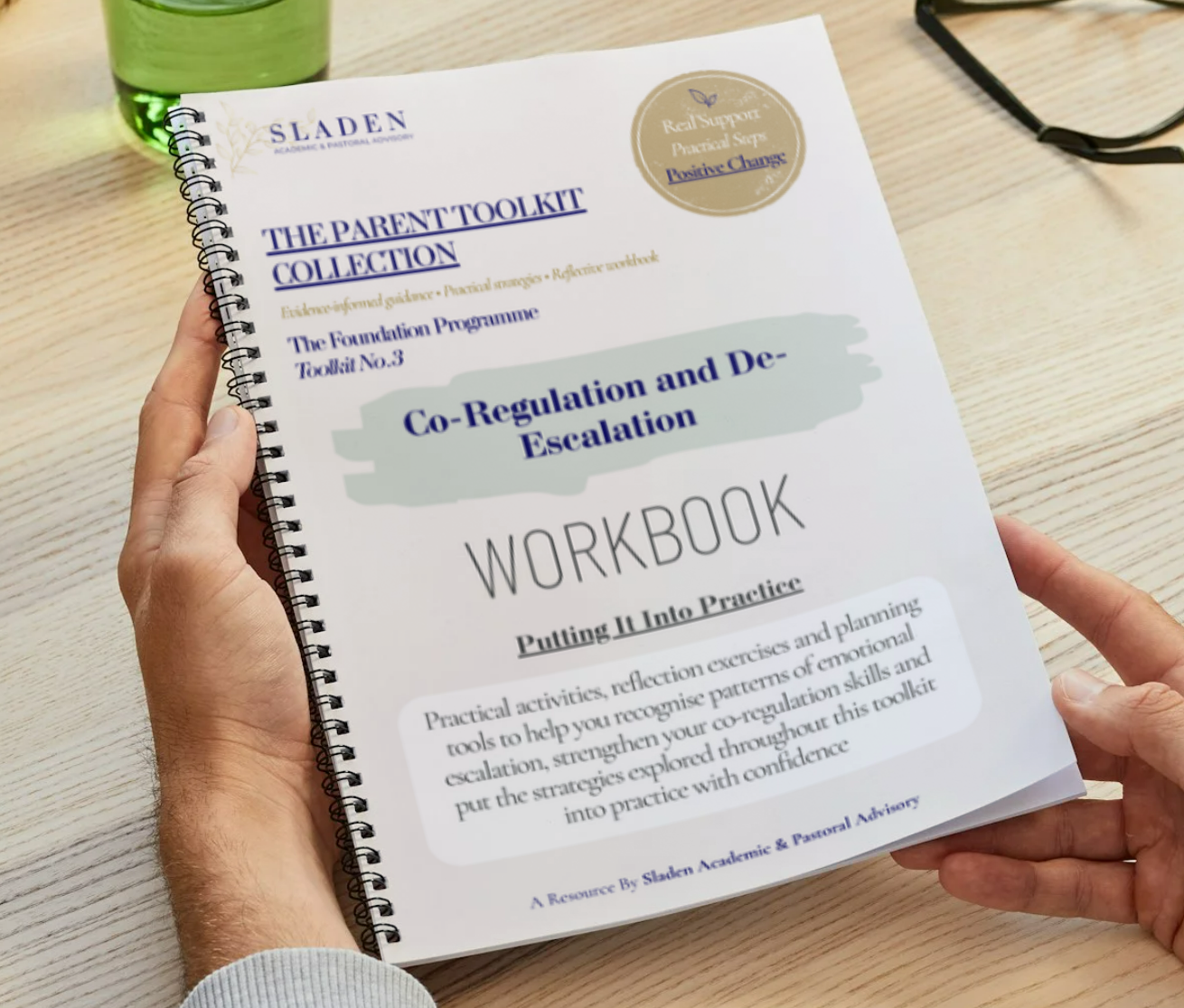
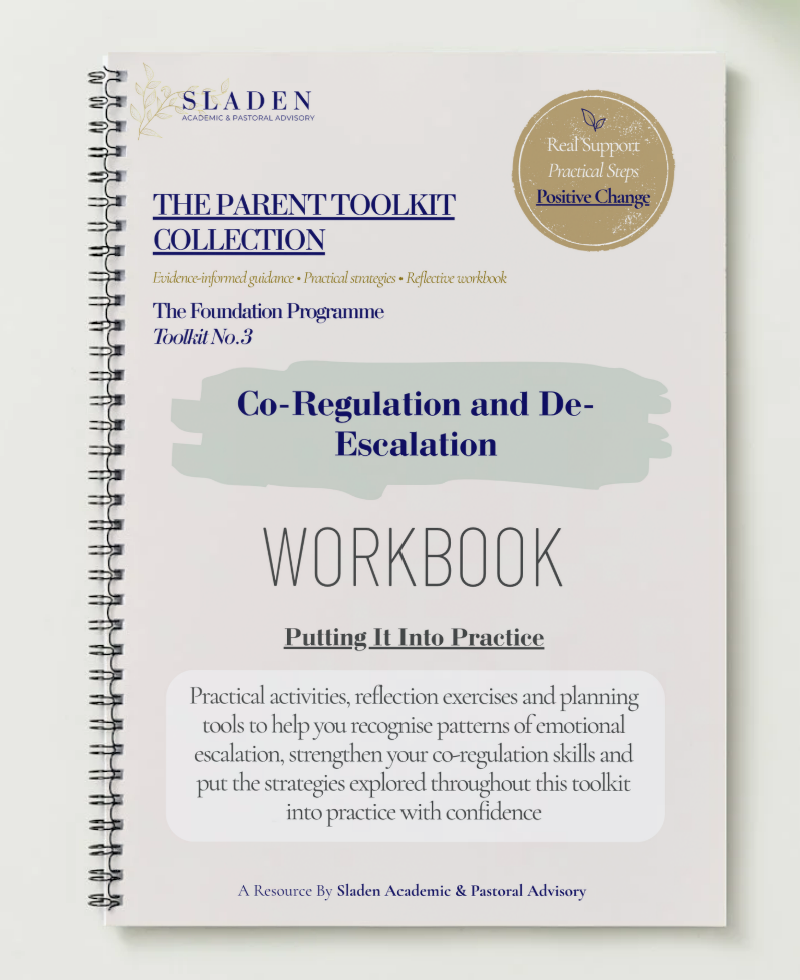
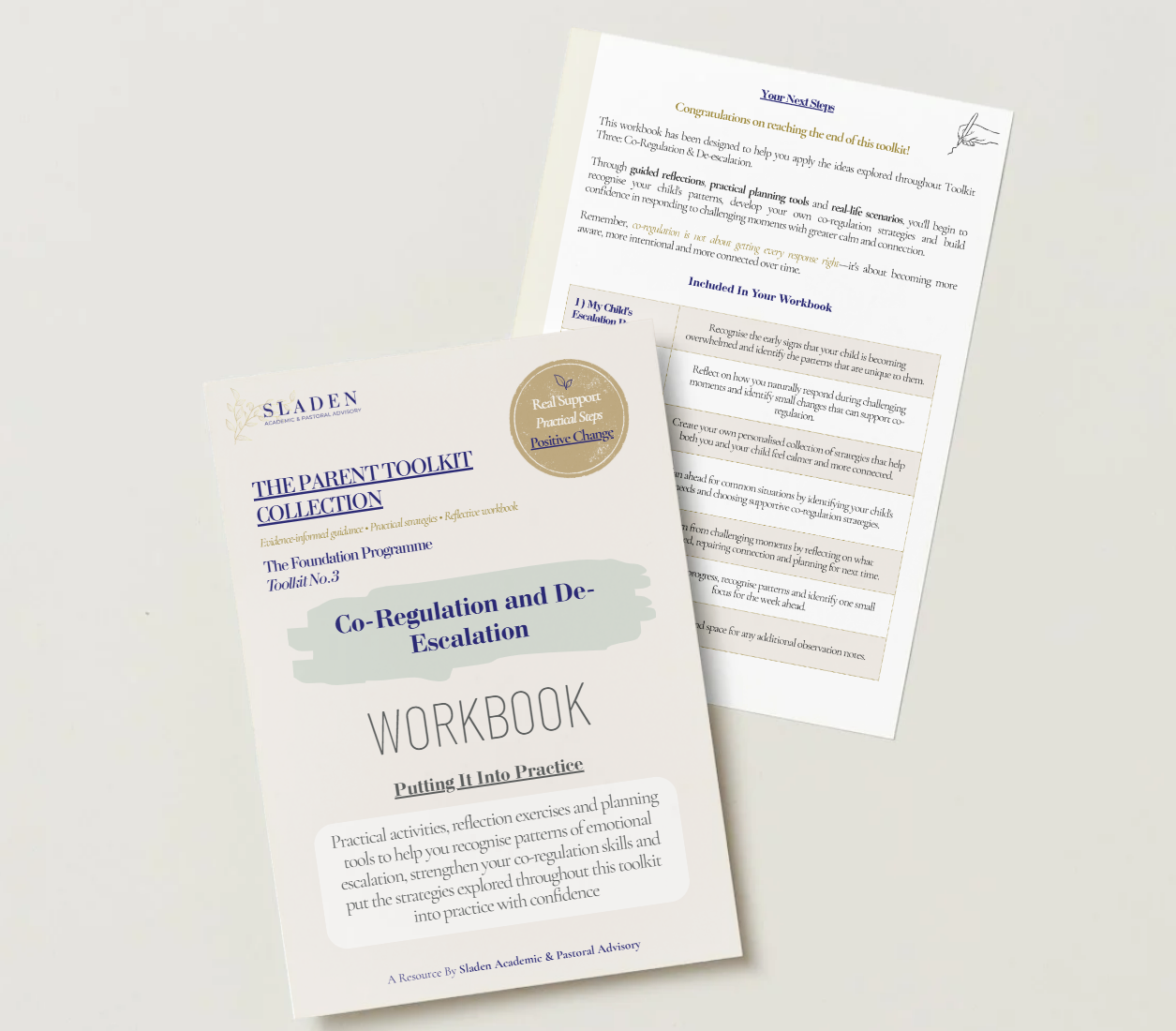

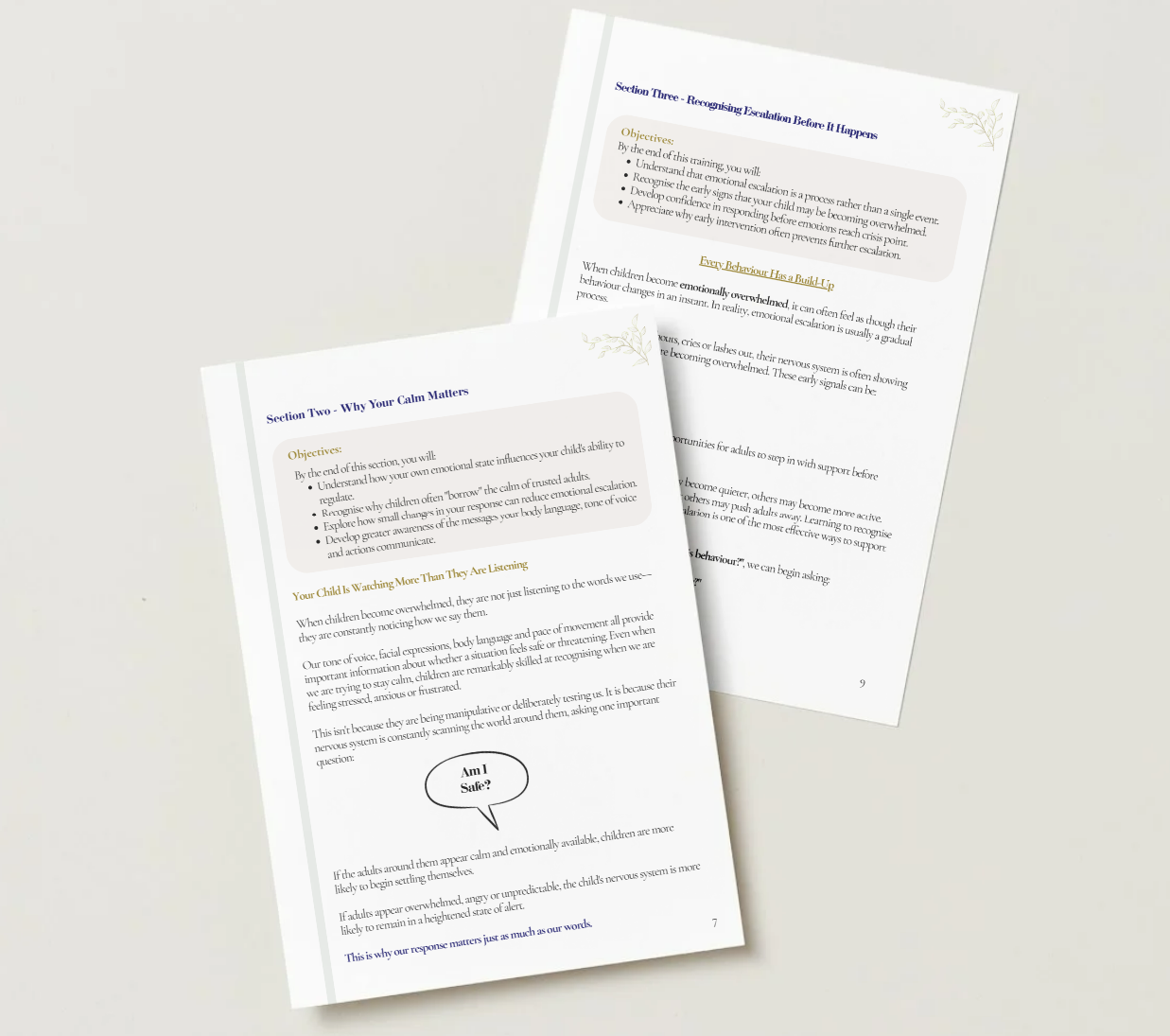
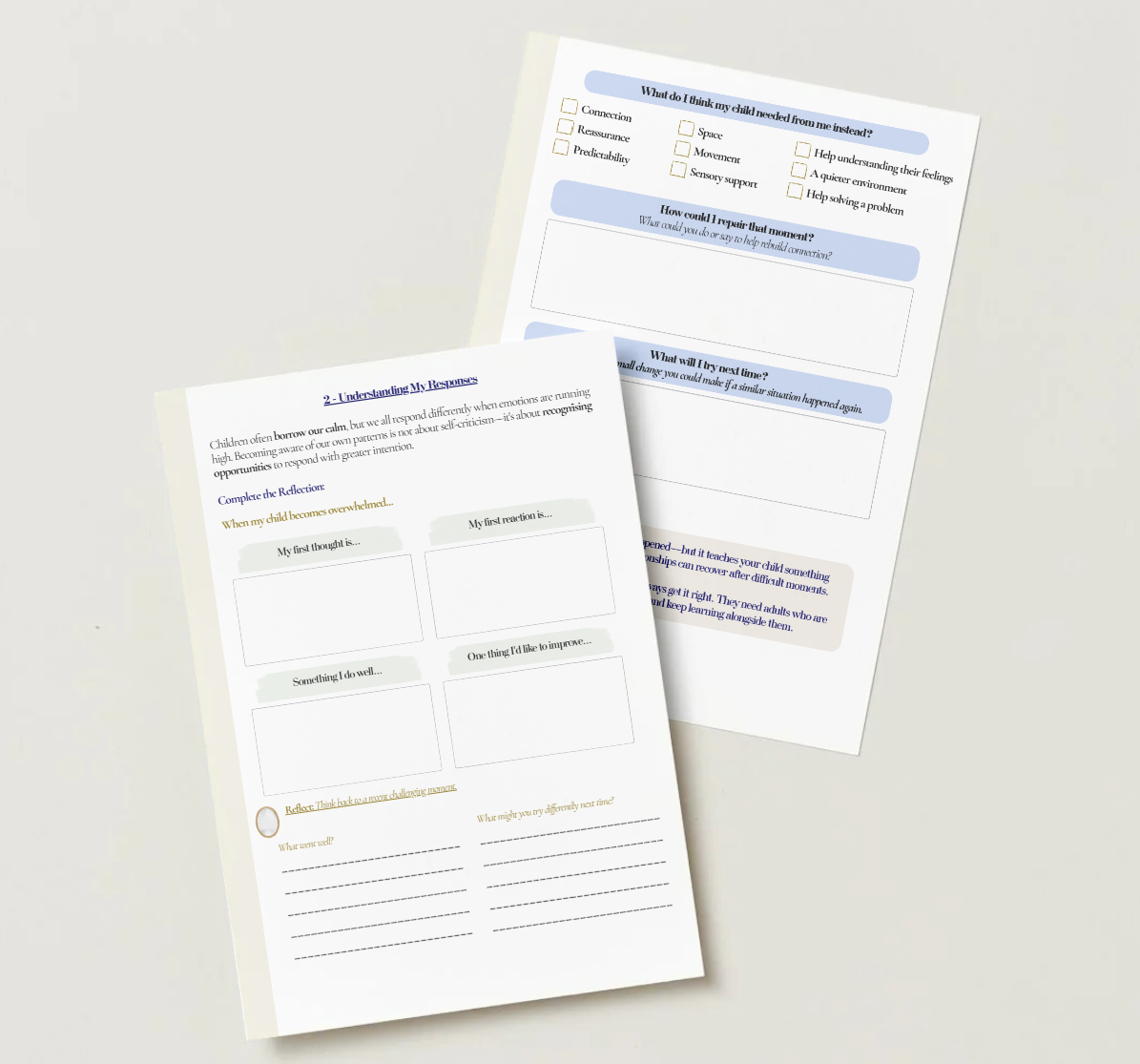
Co-Regulation & De-escalation is the third guide in the Parent Toolkit Collection; a series of practical, evidence-informed resources designed to help parents build stronger relationships, respond confidently during challenging moments and support their child's emotional development.
Building on the understanding developed in the first two toolkits, this guide focuses on one of the most powerful influences on a child's ability to regulate—the calm, consistent support of a trusted adult. You'll discover practical strategies to reduce emotional escalation, strengthen connection and help your child develop lifelong emotional regulation skills.
This toolkit includes 37+ pages split into two spiral-bound workbooks:
A professionally written guide combining research, practical strategies and real-life examples to help you understand the principles of co-regulation and emotional de-escalation. Drawing on evidence-informed approaches including Polyvagal Theory, attachment theory and interpersonal neurobiology, the guide explores how children learn emotional regulation through relationships and how parents can confidently support them during difficult moments.
A companion workbook filled with guided reflections, practical planning tools and personalised activities designed to help you apply the learning to your own family. From recognising escalation patterns and building your own co-regulation toolkit to planning for challenging situations and reflecting on moments of repair, the workbook supports you in developing calm, connected responses with confidence.
What co-regulation is and why it is essential for emotional development.
Why your own emotional regulation plays a key role in supporting your child.
How to recognise the early signs of emotional escalation.
Practical strategies to co-regulate during challenging moments.
How to reduce conflict whilst maintaining connection and boundaries.
Why repair and reconnection are essential parts of healthy relationships.
This resource is ideal for parents and carers who want to respond more confidently when their child experiences big emotions, meltdowns or challenging behaviour. Whether your child struggles with emotional regulation, has additional needs, is awaiting assessment or simply needs extra support, this toolkit will help you develop practical, relationship-based strategies that strengthen connection whilst reducing emotional escalation.
A Personal Welcome
How to Get the Most from This Guide
Section One – What is Co-Regulation?
Section Two – Why Your Calm Matters
Section Three – Recognising Escalation Before It Happens
Section Four – Co-Regulation in Practice
Section Five – Repairing, Reconnecting & Moving Forward
Take Ten
One Final Thought
Theories & Approaches Referenced
Further Reading
Includes six practical activities:
My Child's Escalation Profile
Understanding My Responses
Building My Co-Regulation Toolkit
Planning for Everyday Co-Regulation
Reflect, Repair & Reconnect
Weekly Co-Regulation Check-In
Understanding behaviour is only the beginning.
Once we understand why behaviour happens and how emotional regulation develops, the next step is learning how to respond in ways that help children feel safe, connected and understood.
This toolkit provides practical strategies that help you reduce emotional escalation, strengthen your relationship with your child and build the foundations for lifelong emotional wellbeing.
Developed by Sladen Advisory using professional experience alongside recognised, evidence-informed approaches to child development, attachment, emotional regulation, neuroscience, SEND and trauma-informed practice.
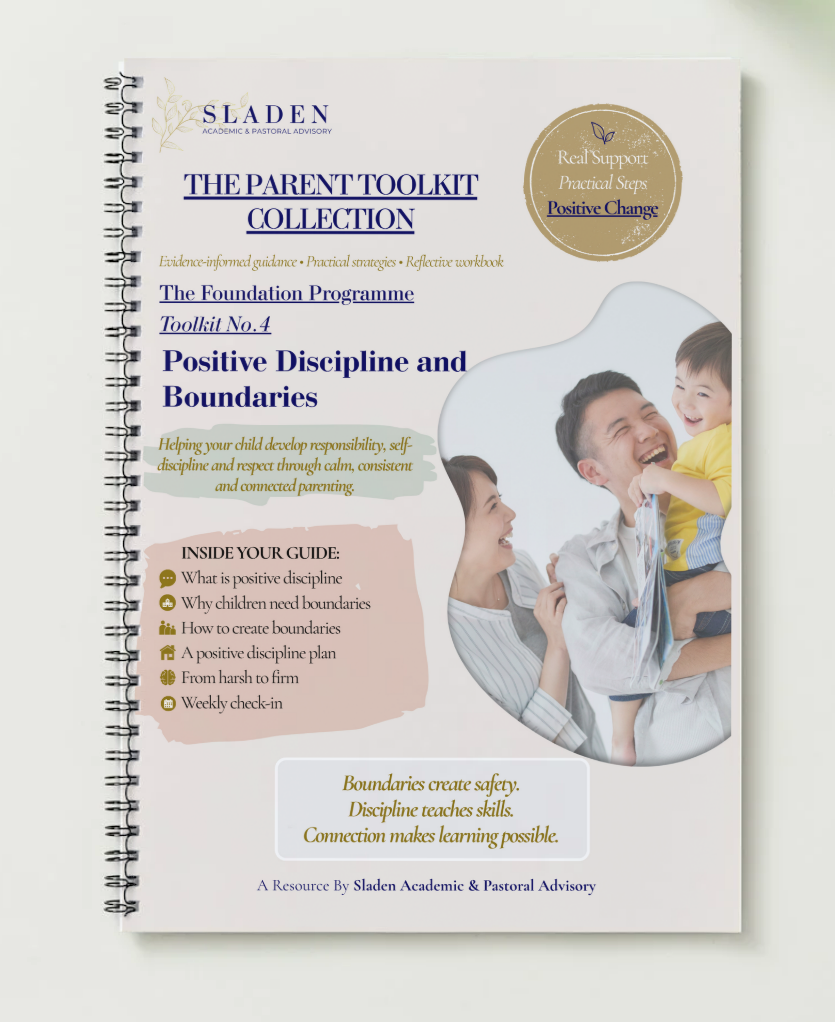
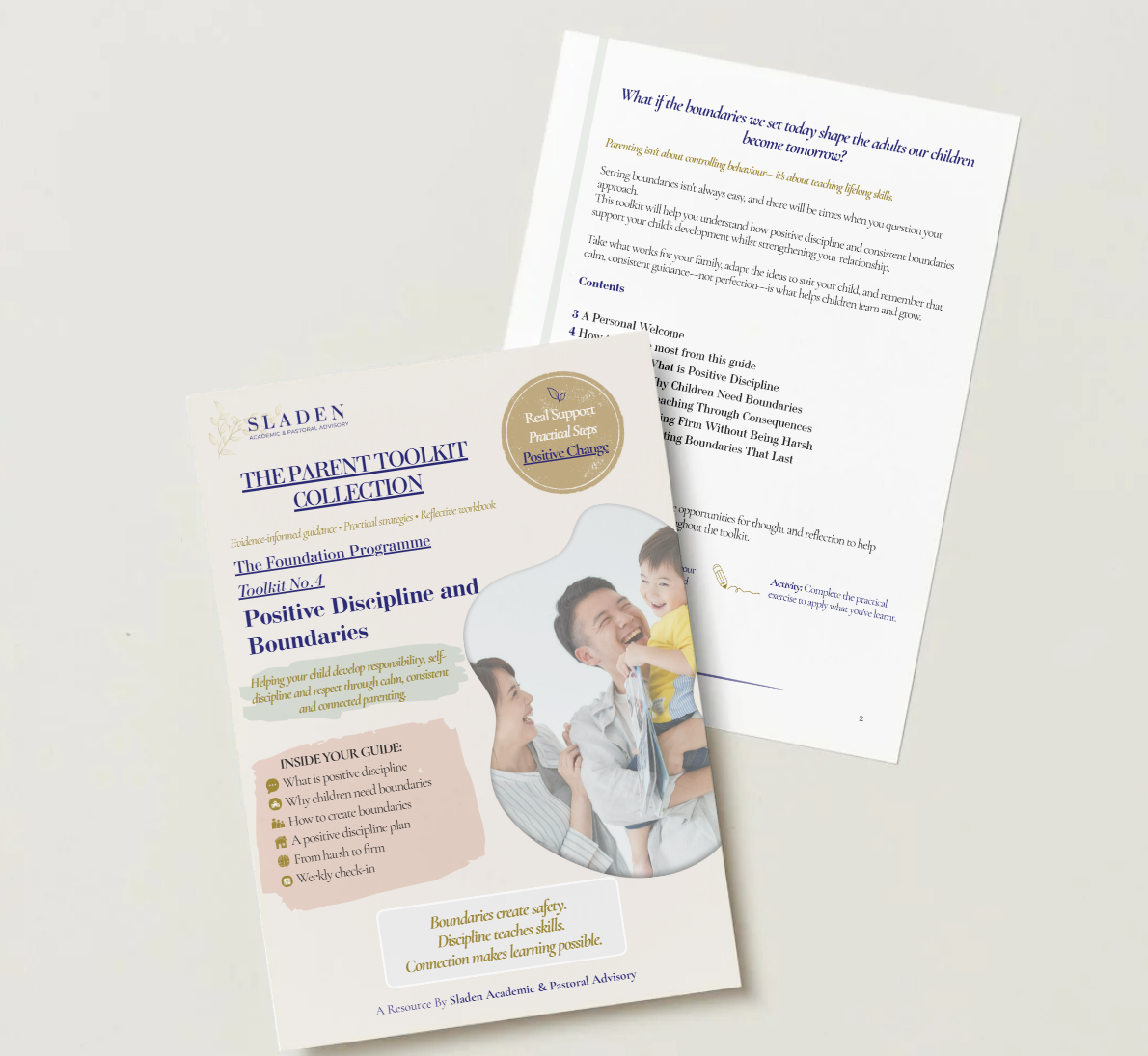


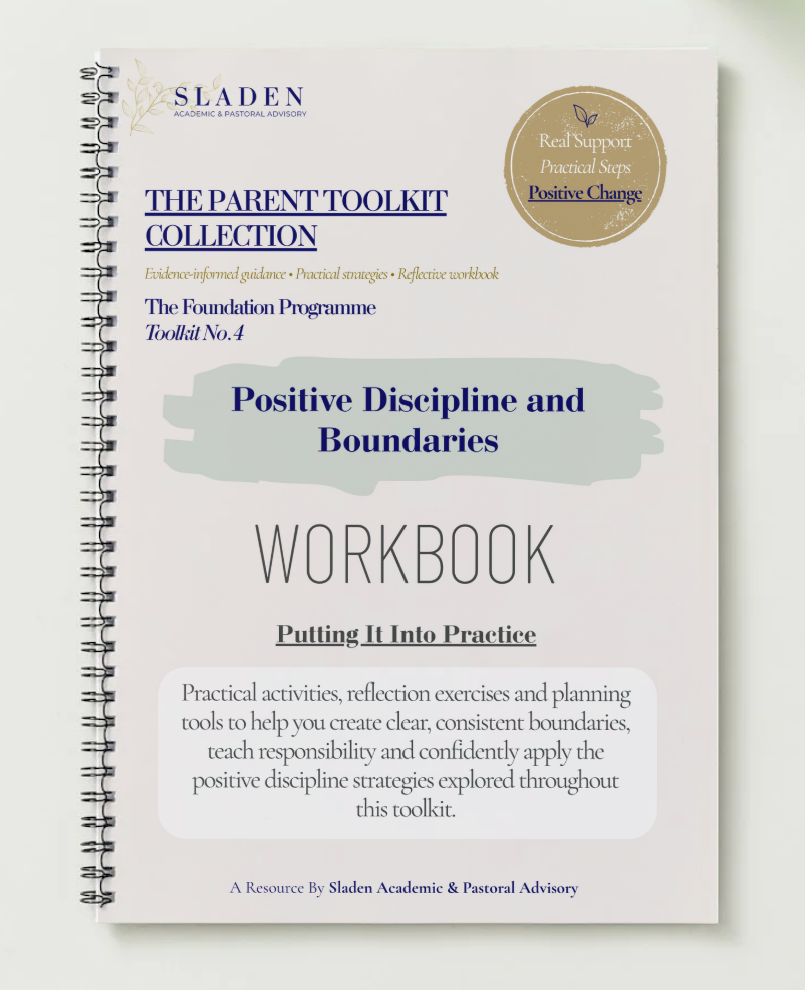
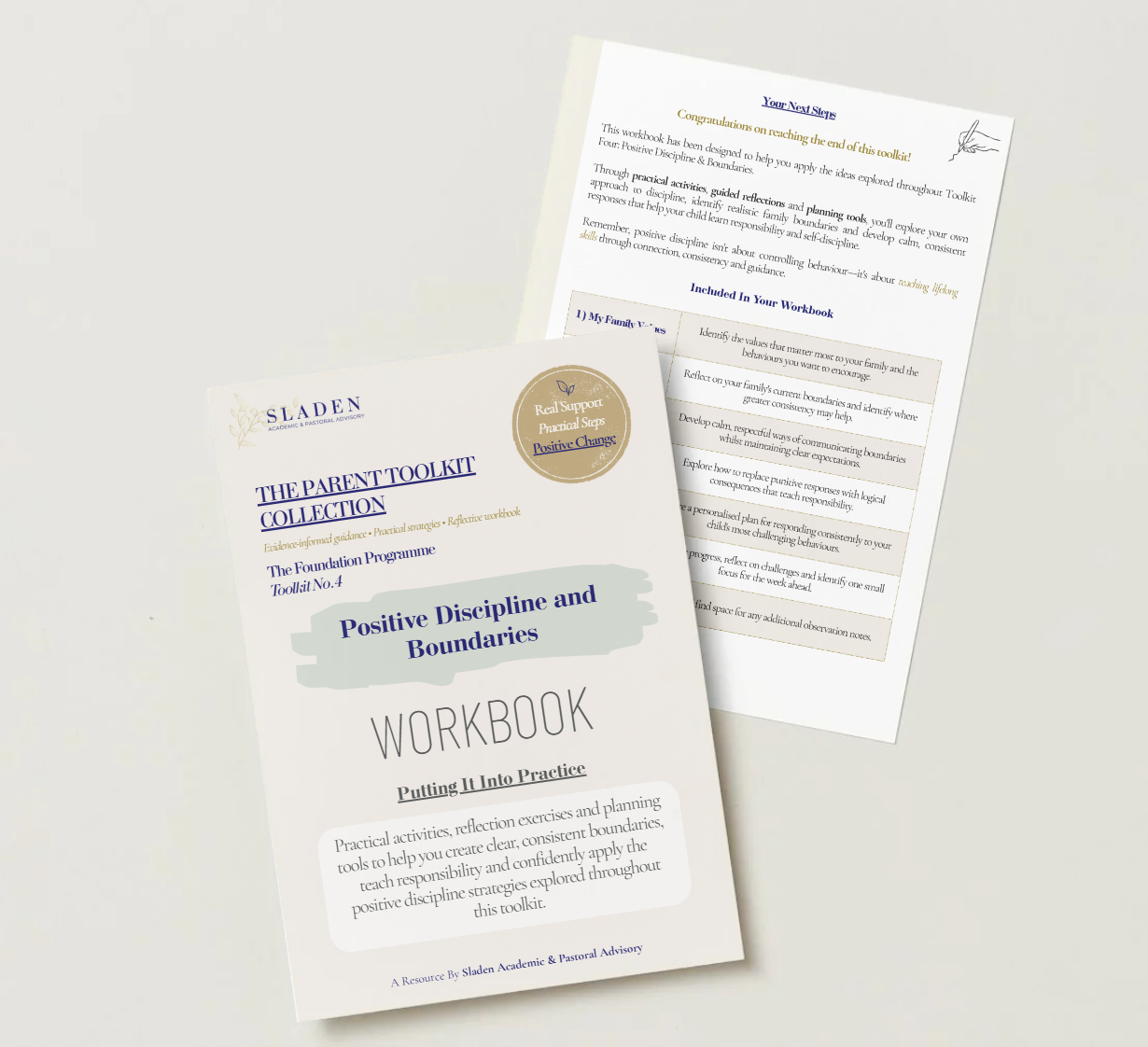
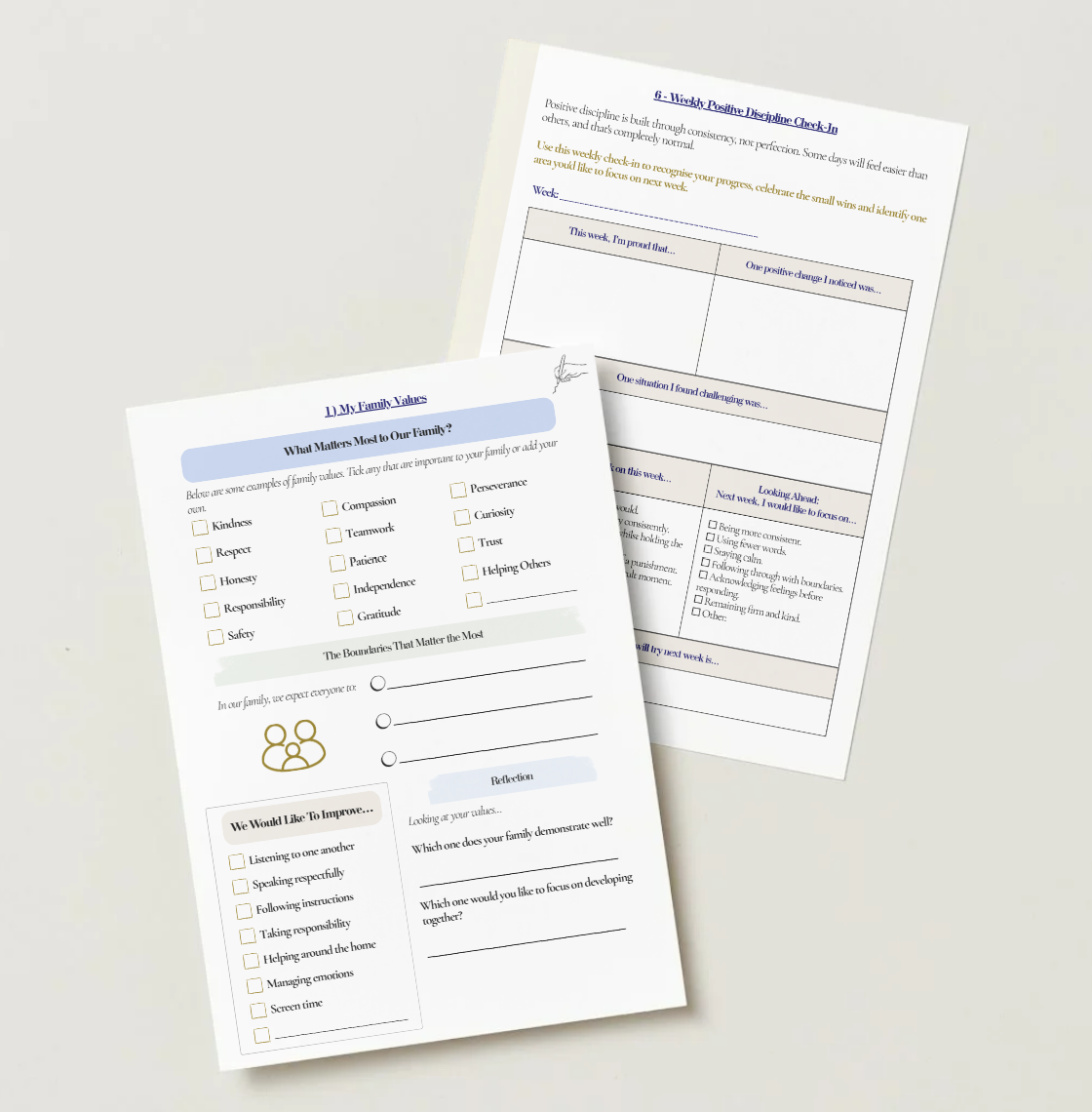
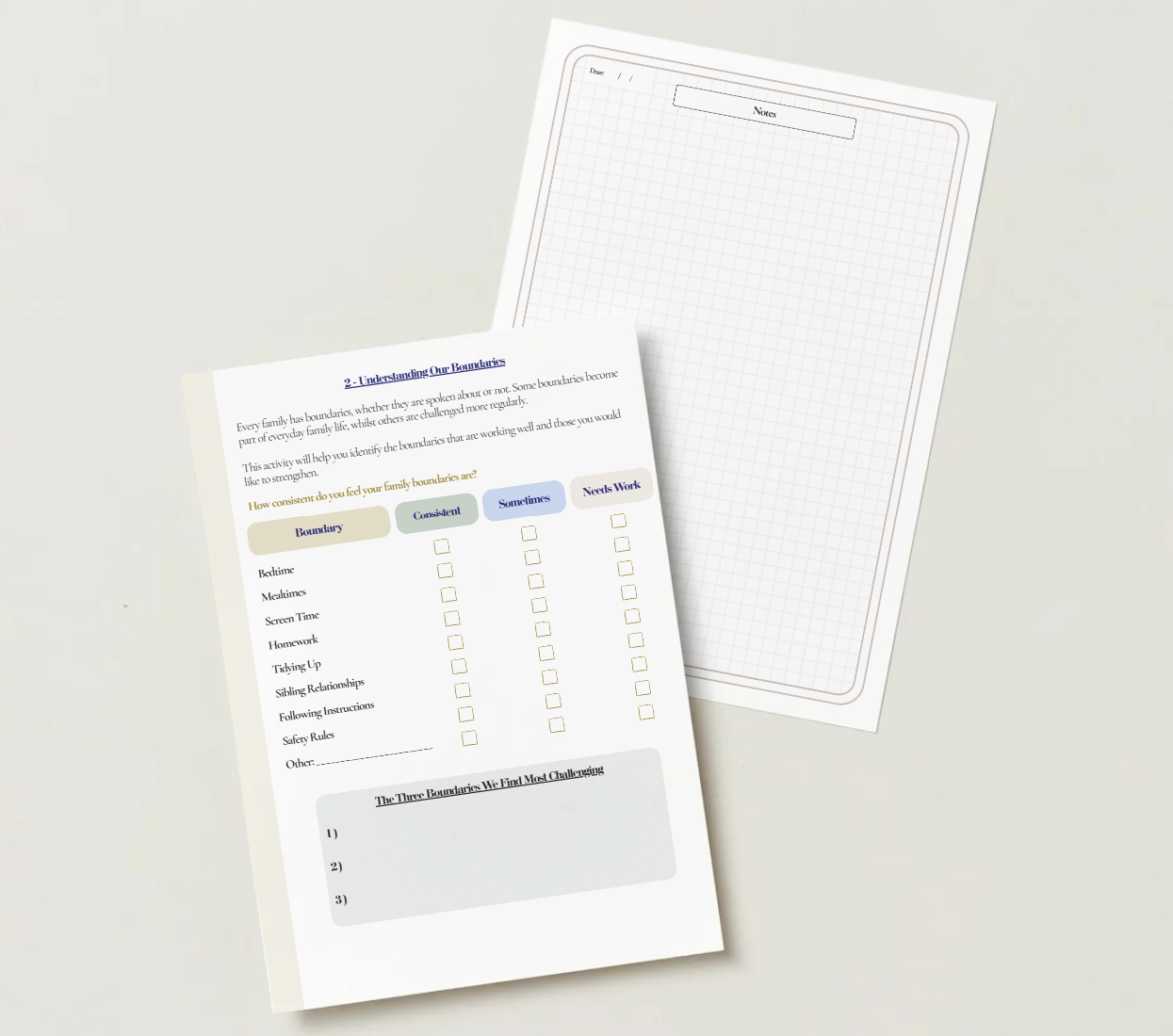
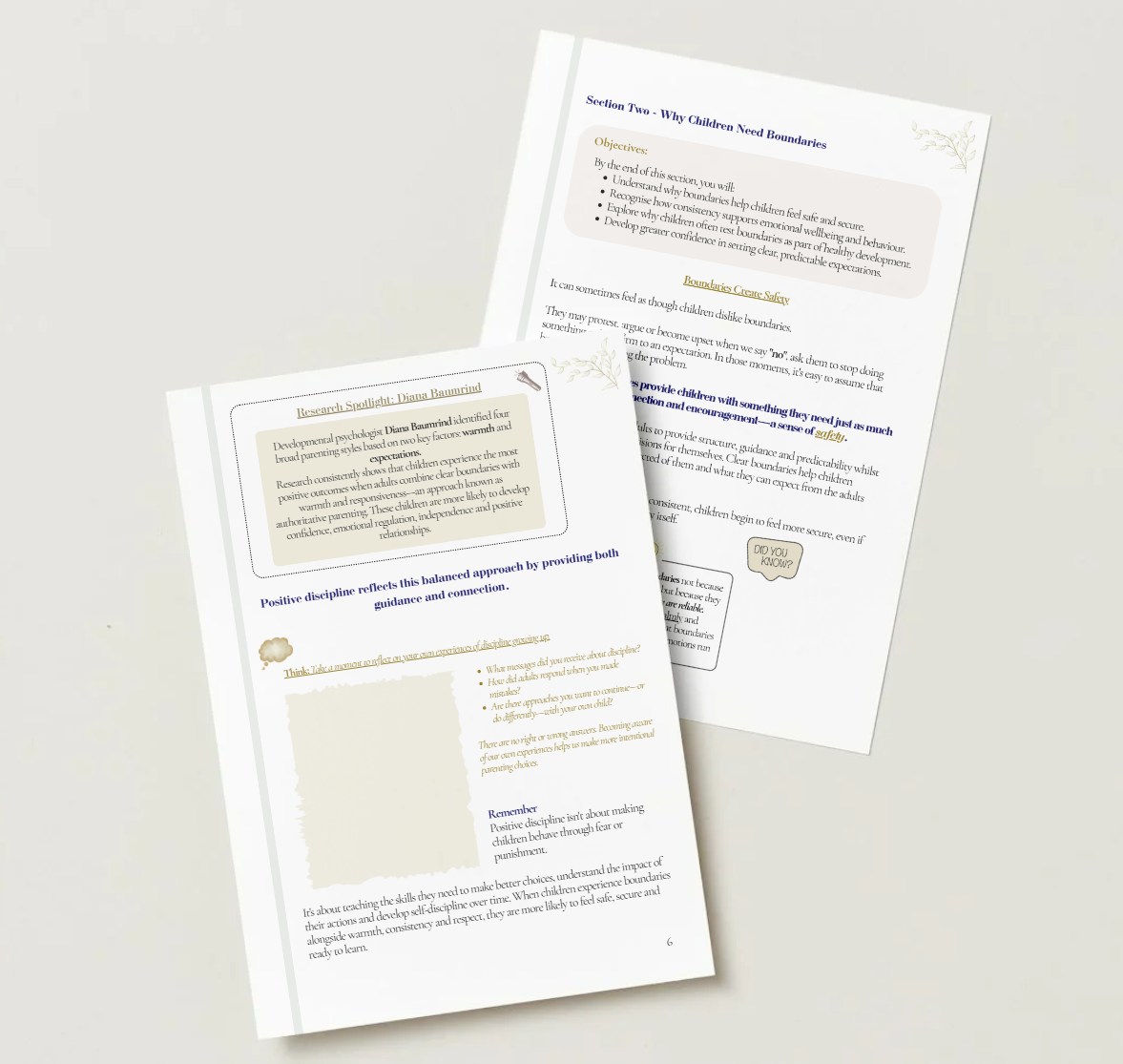
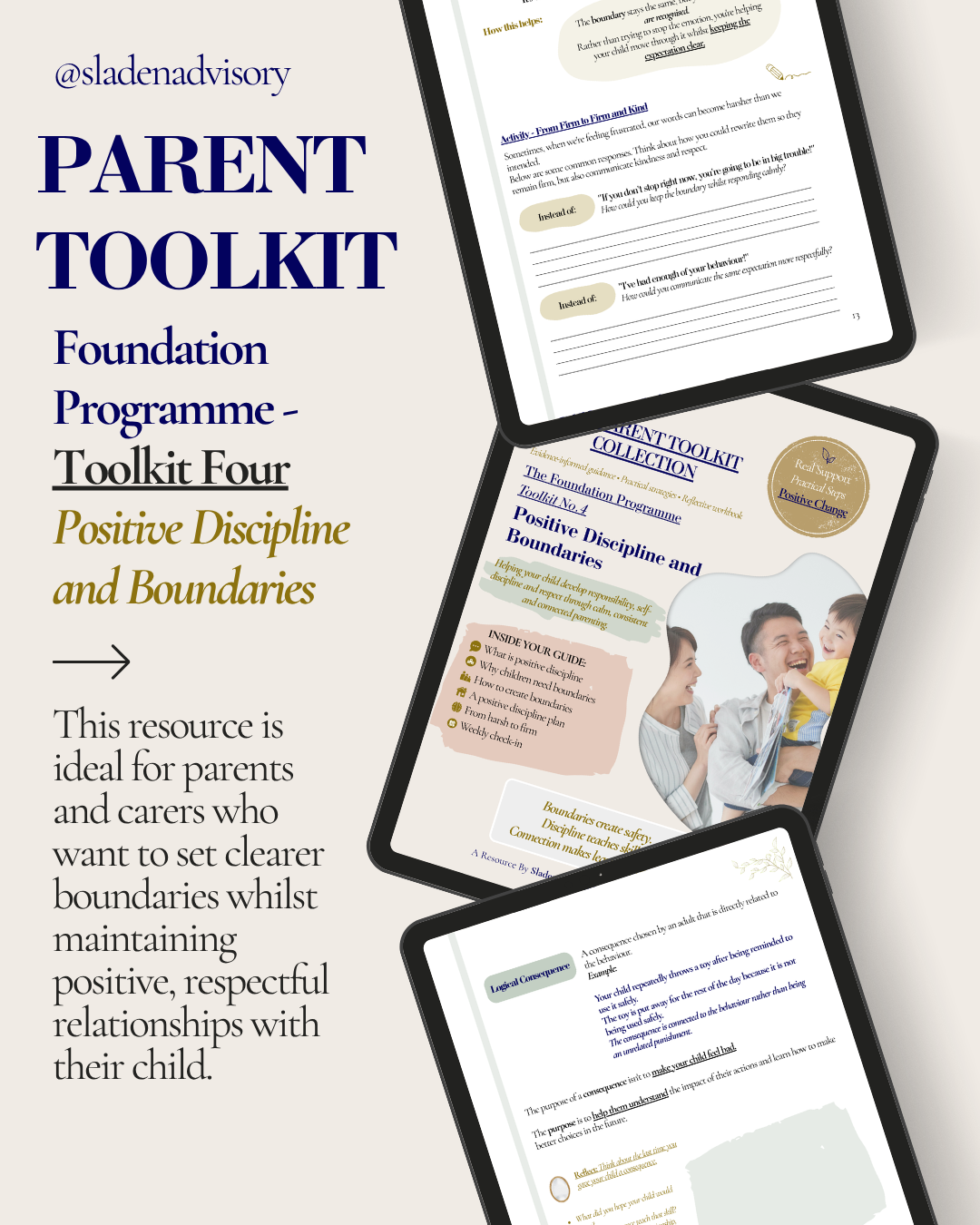
Positive Discipline & Boundaries is the fourth guide in the Parent Toolkit Collection; a series of practical, evidence-informed resources designed to help parents build positive relationships, establish clear expectations and confidently guide their child's behaviour.
Building on the understanding of behaviour, emotional regulation and co-regulation explored in the previous toolkits, this guide focuses on how positive discipline and consistent boundaries help children feel safe, develop responsibility and learn the skills they need to make positive choices throughout life.
Rather than relying on punishment or control, this toolkit provides practical strategies to help you teach, guide and support your child through calm, consistent and connected parenting.
This toolkit includes 40+ pages split into two printable PDF downloads:
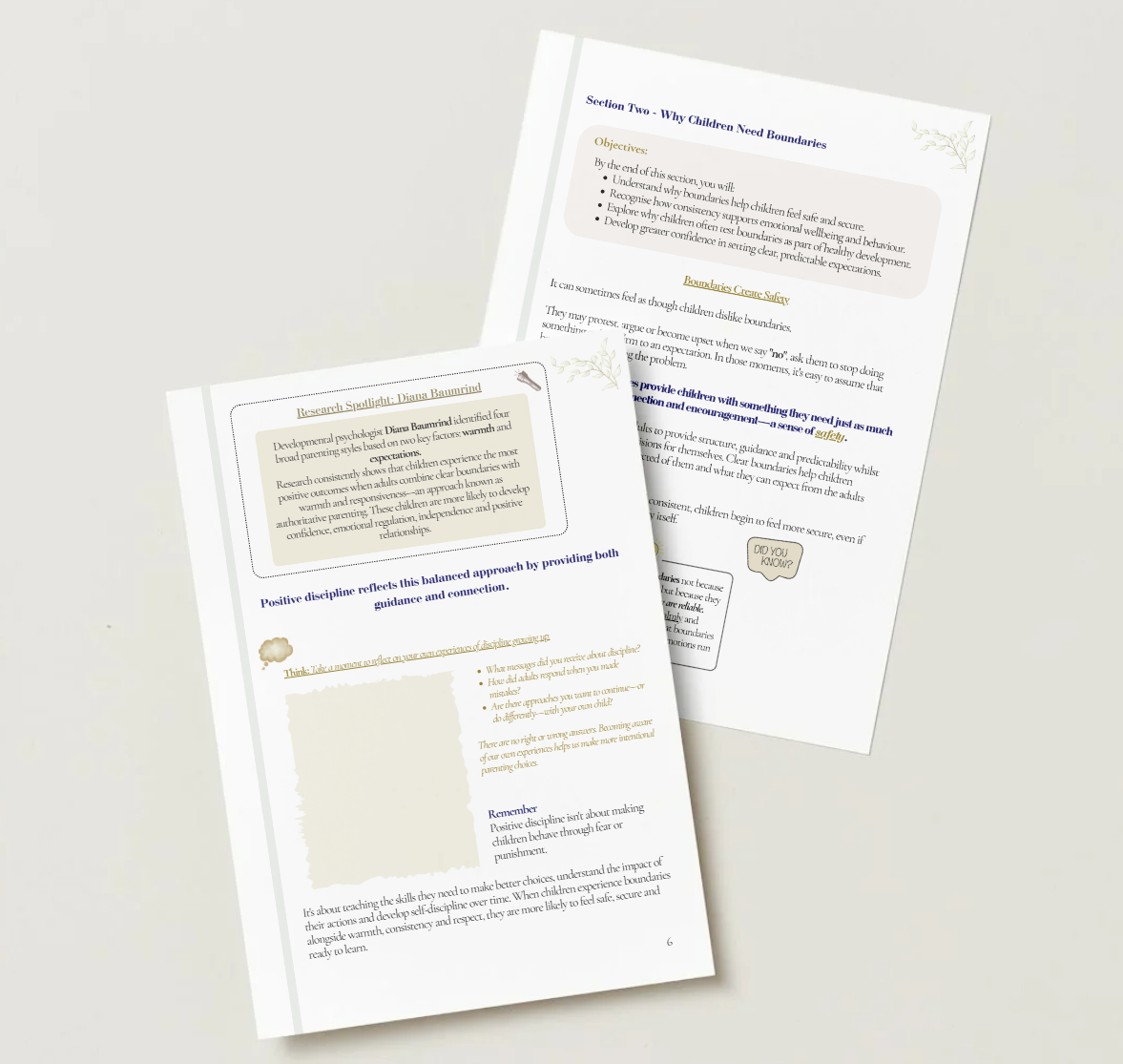
A professionally written guide combining research, practical strategies and real-life parenting examples to help you understand the principles of positive discipline and effective boundary setting. Drawing on evidence-informed approaches including Positive Discipline, authoritative parenting and collaborative problem-solving, the guide explores how boundaries create safety, how consequences can become opportunities for learning and how calm, consistent guidance helps children develop responsibility and self-discipline.
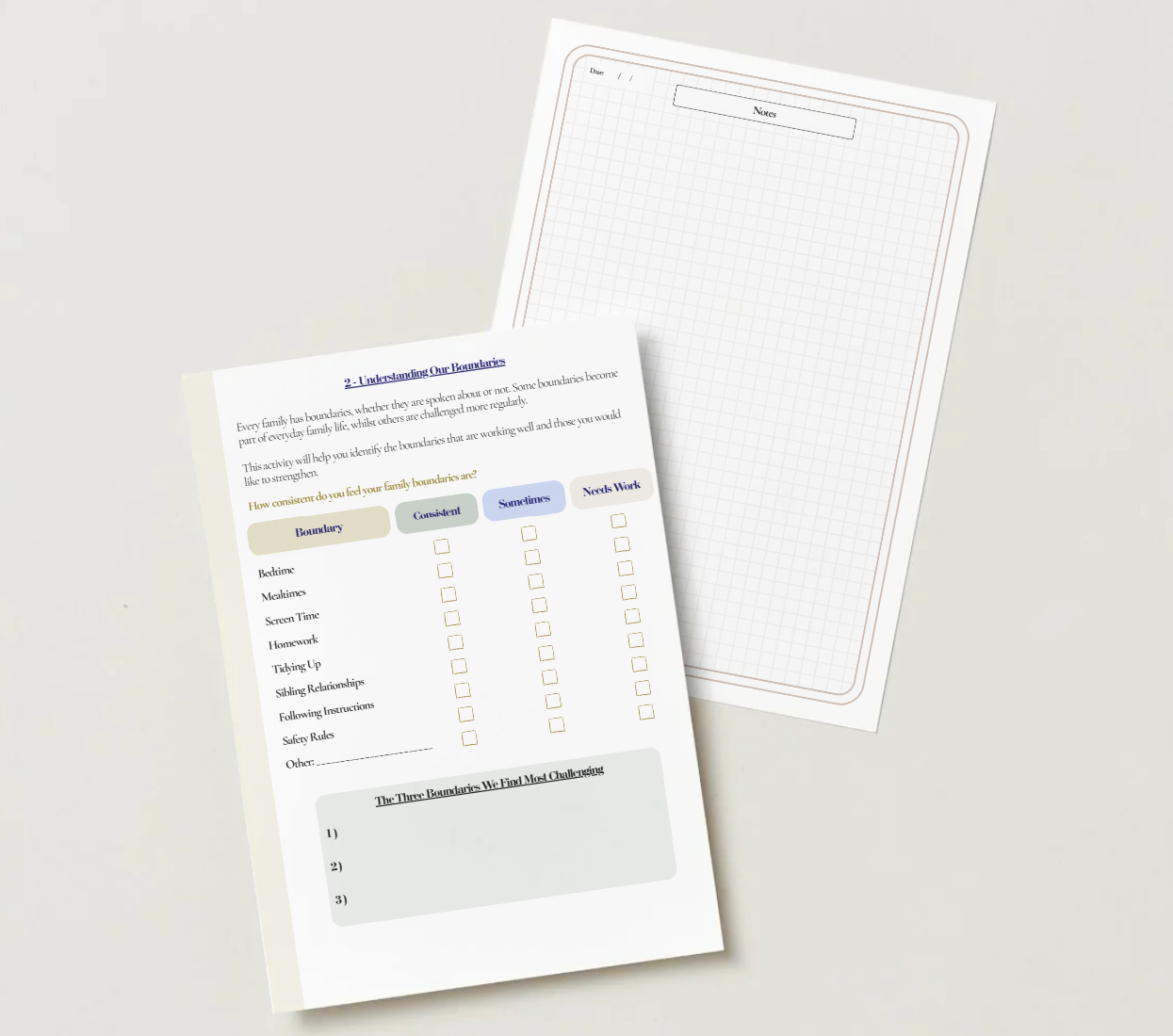
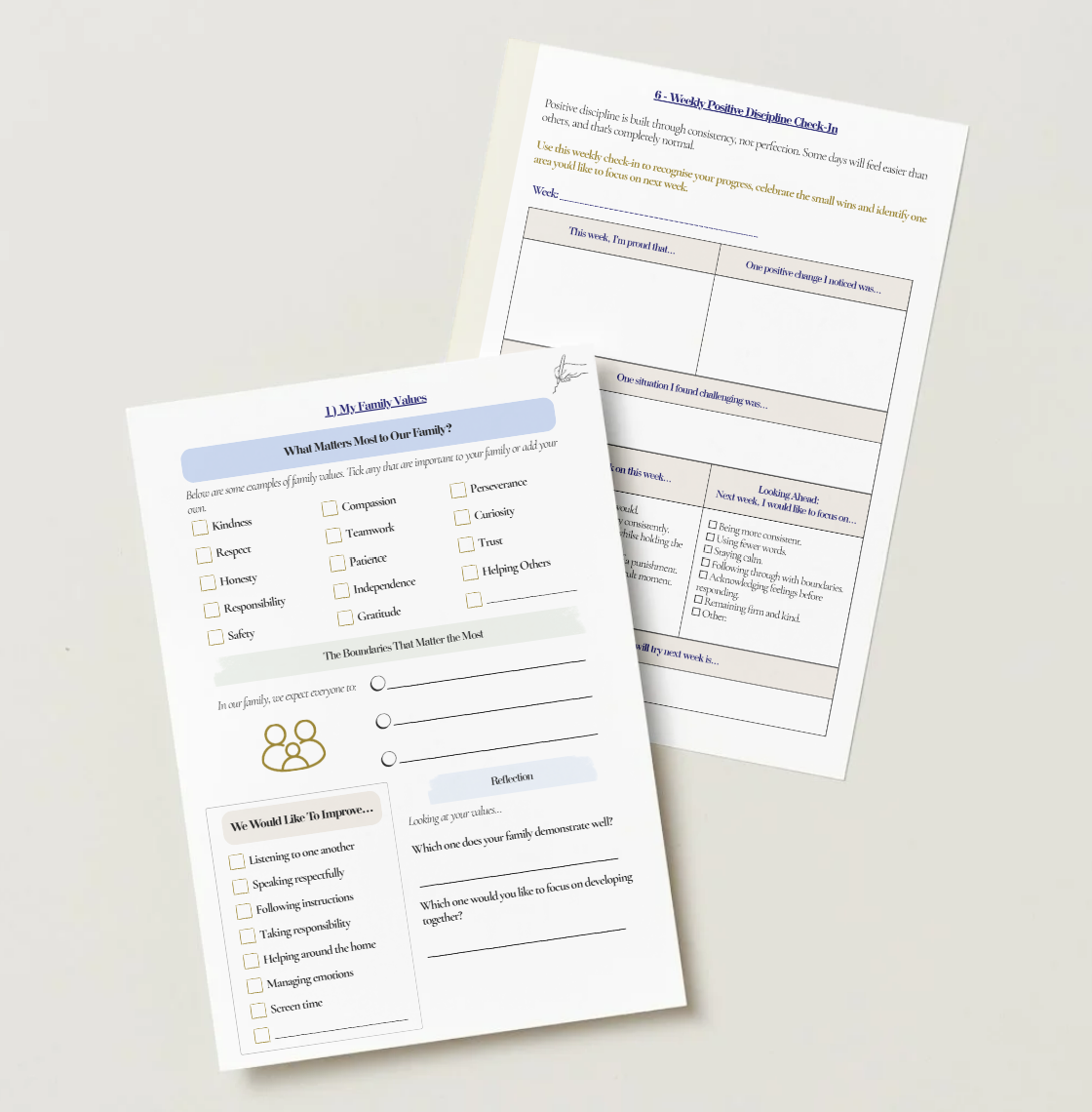
A companion workbook filled with practical planning tools, guided reflections and interactive activities designed to help you apply positive discipline within your own family. From identifying your family values and strengthening boundaries to developing firm-but-kind communication and creating your own Positive Discipline Plan, the workbook supports you in turning theory into everyday practice.
The difference between discipline and punishment.
Why boundaries help children feel safe and secure.
How to communicate boundaries in a calm, firm and respectful way.
The difference between punishment, natural consequences and logical consequences.
Practical strategies to develop consistency and reduce conflict.
How to use positive discipline to build responsibility, confidence and self-discipline.
This resource is ideal for parents and carers who want to set clearer boundaries whilst maintaining positive, respectful relationships with their child. Whether you're struggling with consistency, navigating challenging behaviour or simply looking for a more positive approach to discipline, this toolkit will help you develop the confidence and practical strategies to guide your child with calm, connection and purpose.
A Personal Welcome
How to Get the Most from This Guide
Section One – What Is Positive Discipline?
Section Two – Why Children Need Boundaries
Section Three – Teaching Through Consequences
Section Four – Being Firm Without Being Harsh
Section Five – Creating Boundaries That Last
Take Ten
One Final Thought
Theories & Approaches Referenced
Further Reading
Includes six practical activities:
My Family Values
Understanding Our Boundaries
From Firm to Firm & Kind
From Punishment to Learning
My Positive Discipline Plan
Weekly Positive Discipline Check-In
Understanding behaviour and emotions is only part of the journey.
Children also need calm guidance, clear expectations and consistent boundaries to help them develop responsibility, resilience and self-discipline.
This toolkit will help you move beyond reacting to behaviour by giving you practical strategies to teach lifelong skills whilst strengthening your relationship with your child.
✔ Printable PDF format
✔ Two professionally designed resources included (Guide + Workbook)
✔ Download immediately after purchase
✔ Complete at your own pace and revisit whenever you need it
Developed by Sladen Advisory using professional experience alongside recognised, evidence-informed approaches to child development, positive discipline, attachment, emotional regulation, SEND and trauma-informed practice.
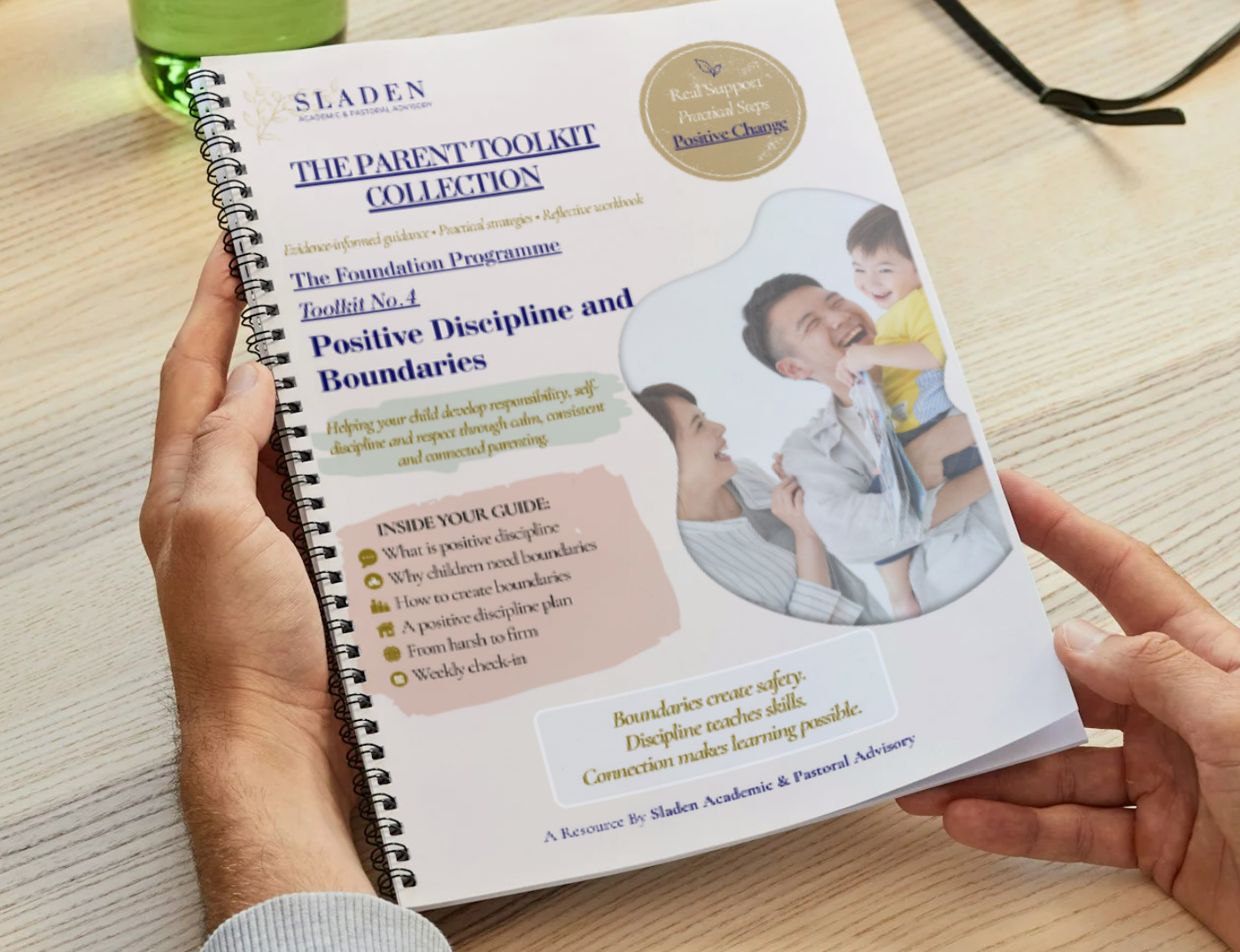
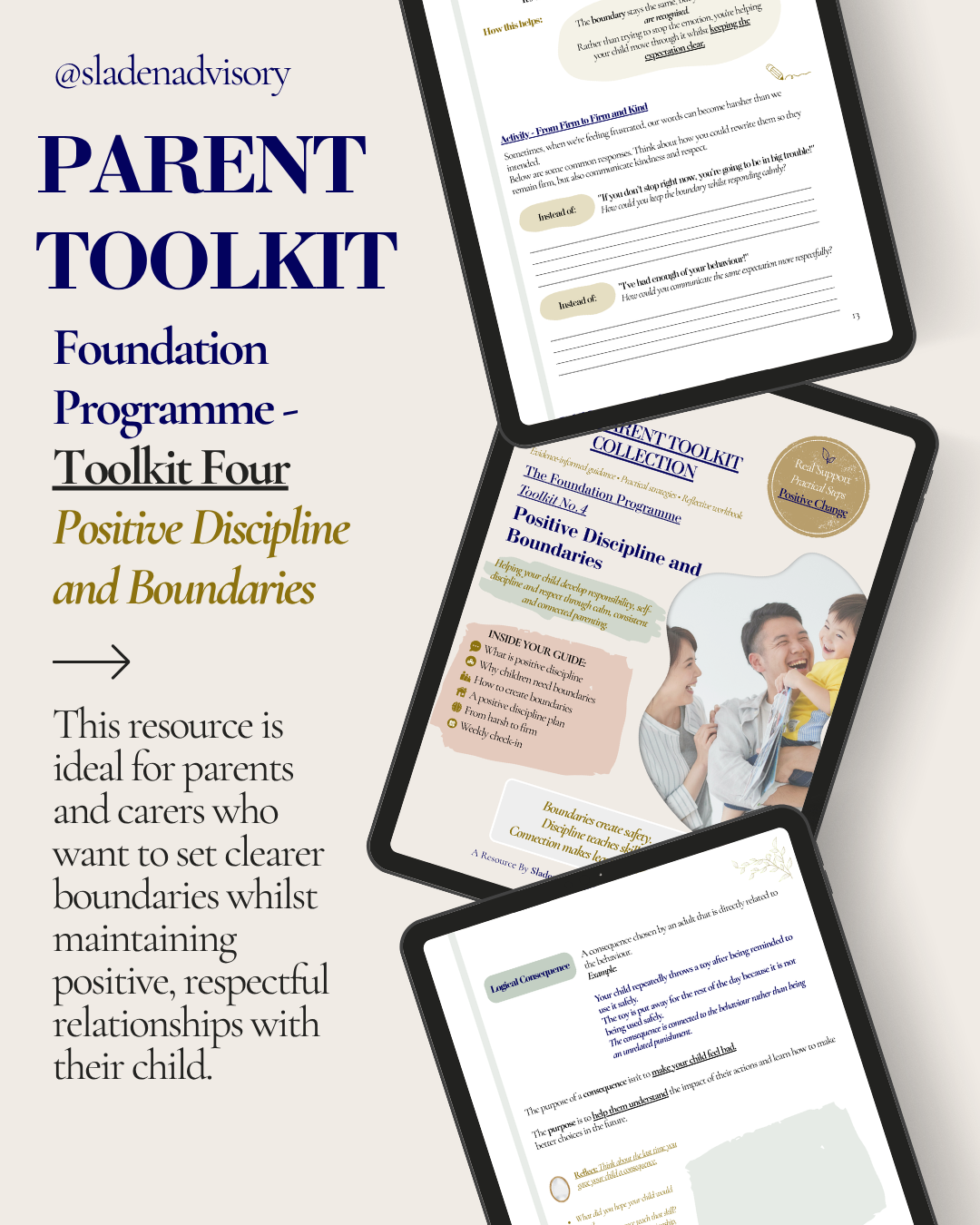
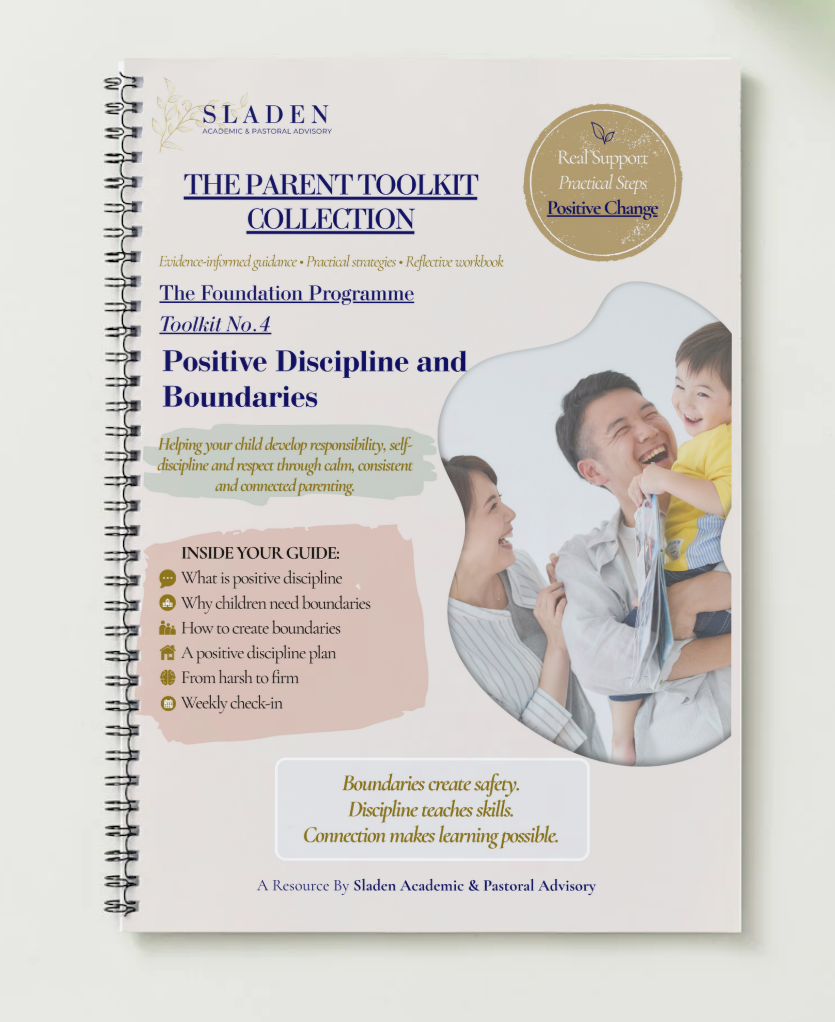
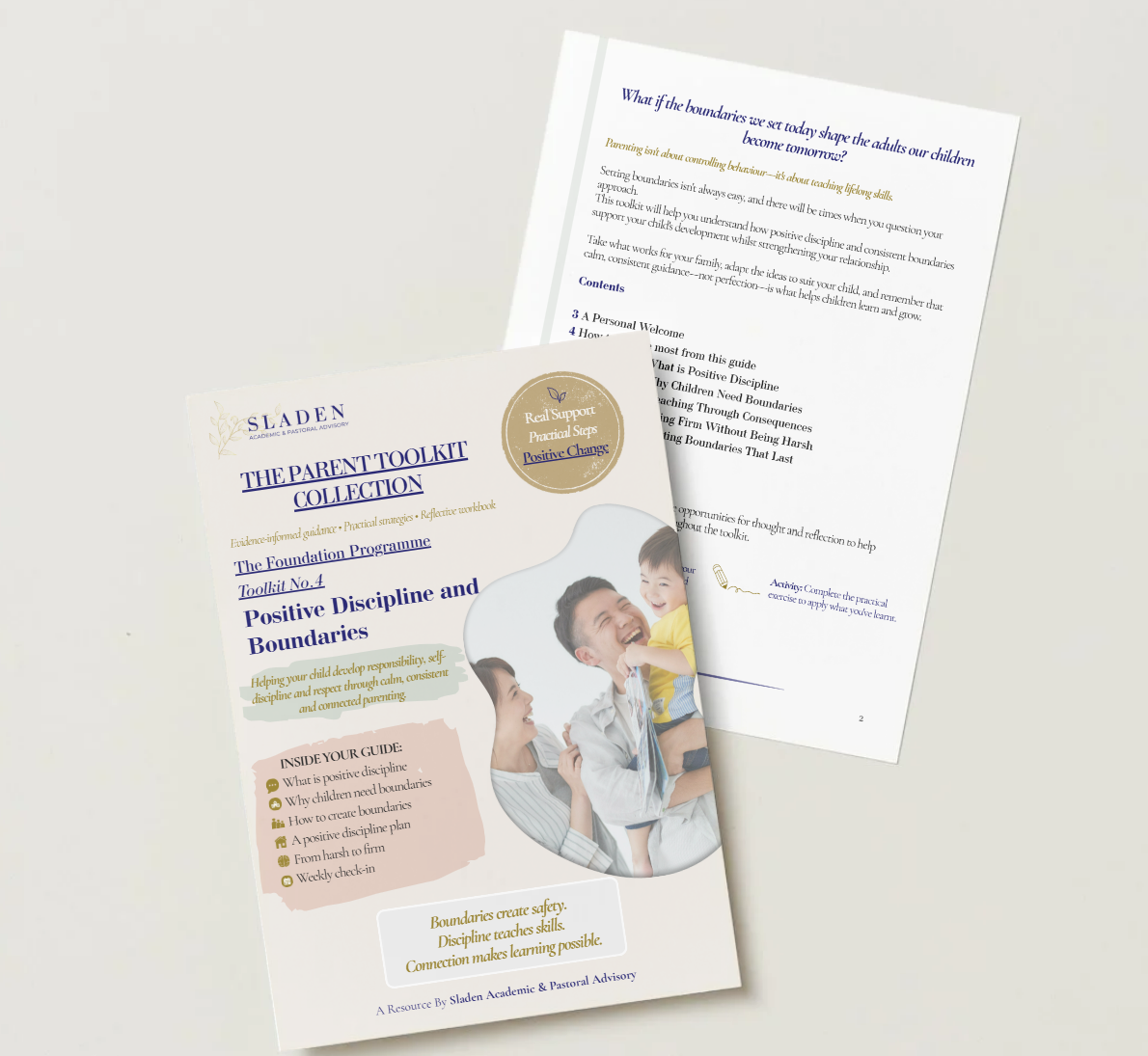


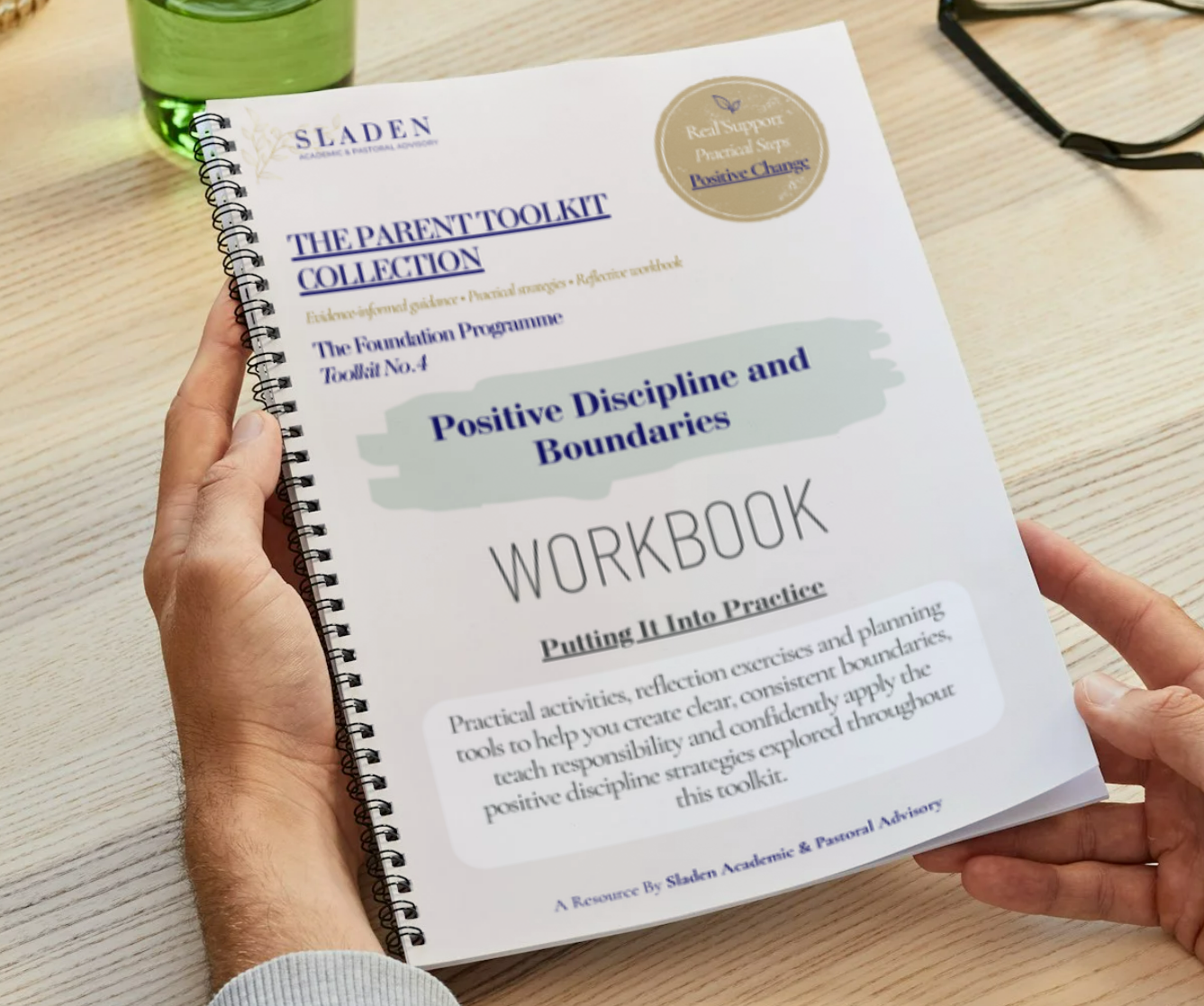
Positive Discipline & Boundaries is the fourth guide in the Parent Toolkit Collection; a series of practical, evidence-informed resources designed to help parents build positive relationships, establish clear expectations and confidently guide their child's behaviour.
Building on the understanding of behaviour, emotional regulation and co-regulation explored in the previous toolkits, this guide focuses on how positive discipline and consistent boundaries help children feel safe, develop responsibility and learn the skills they need to make positive choices throughout life.
Rather than relying on punishment or control, this toolkit provides practical strategies to help you teach, guide and support your child through calm, consistent and connected parenting.
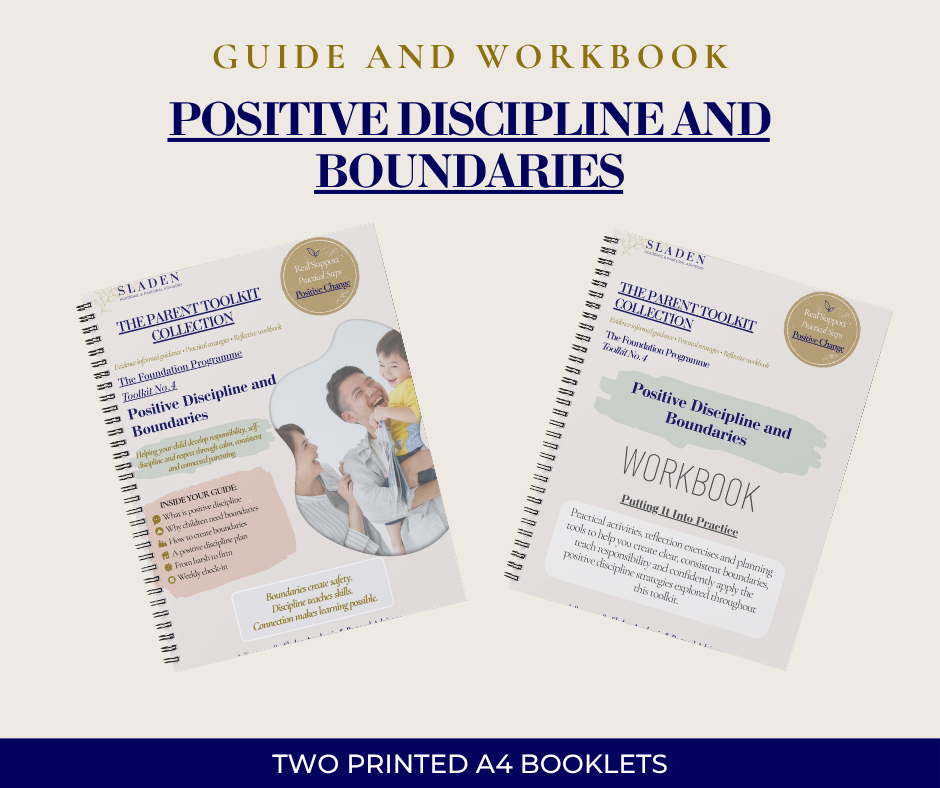
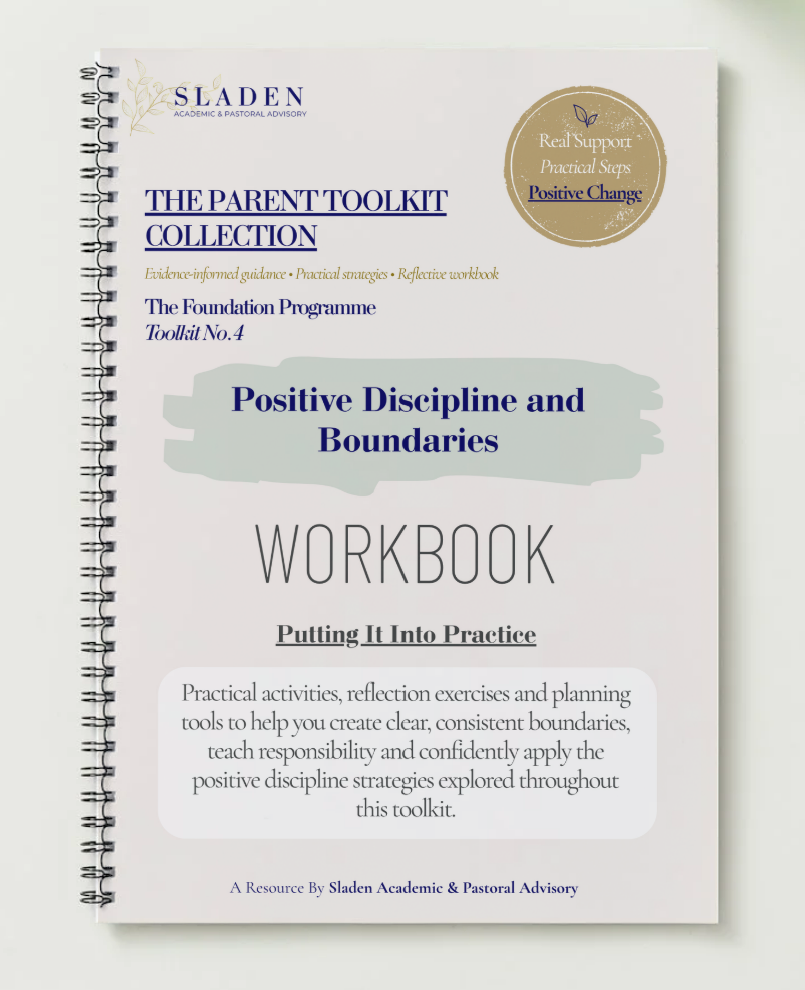
This toolkit includes 40+ pages split into two spiral-bound workbooks:
A professionally written guide combining research, practical strategies and real-life parenting examples to help you understand the principles of positive discipline and effective boundary setting. Drawing on evidence-informed approaches including Positive Discipline, authoritative parenting and collaborative problem-solving, the guide explores how boundaries create safety, how consequences can become opportunities for learning and how calm, consistent guidance helps children develop responsibility and self-discipline.
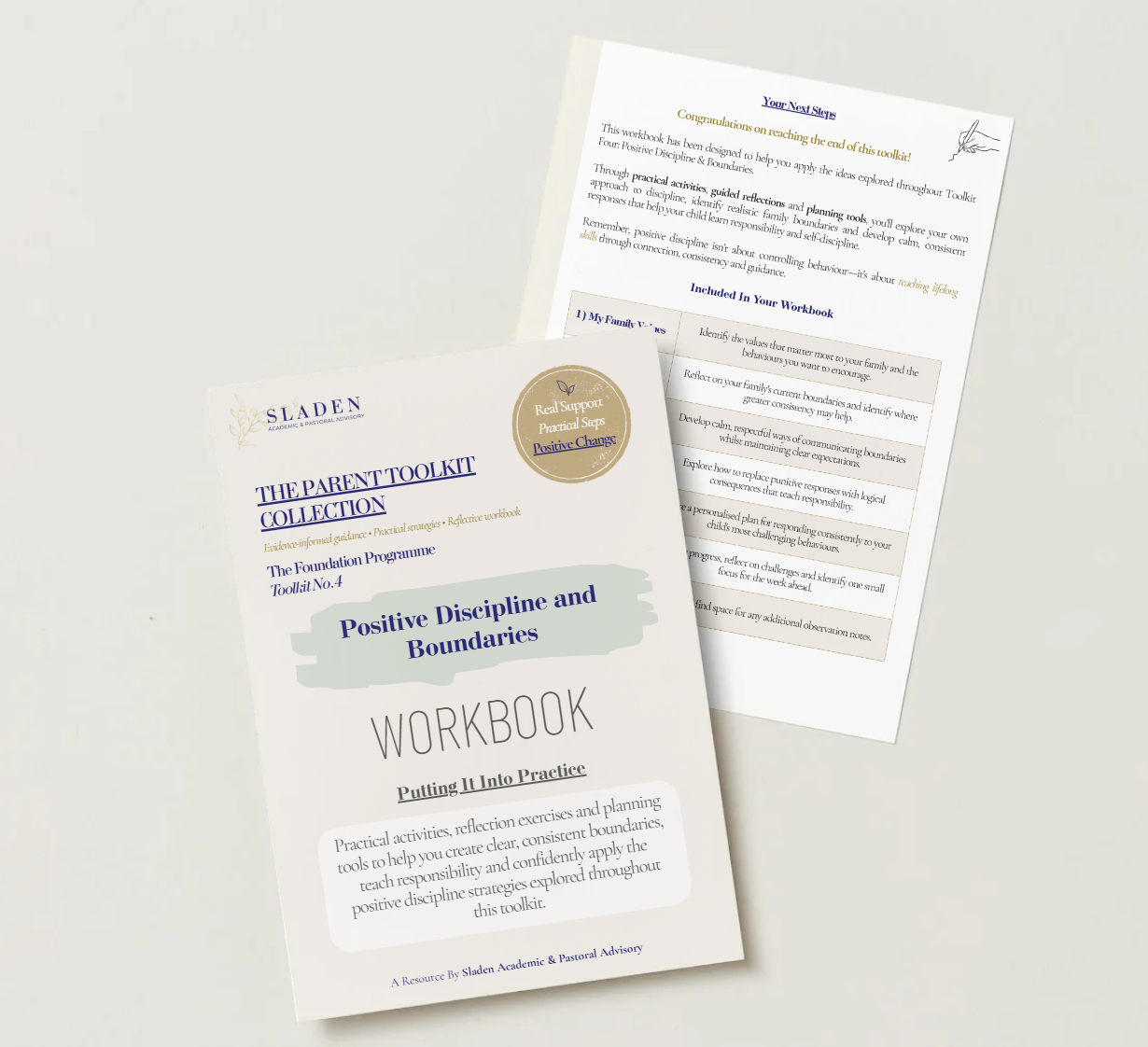
A companion workbook filled with practical planning tools, guided reflections and interactive activities designed to help you apply positive discipline within your own family. From identifying your family values and strengthening boundaries to developing firm-but-kind communication and creating your own Positive Discipline Plan, the workbook supports you in turning theory into everyday practice.
The difference between discipline and punishment.
Why boundaries help children feel safe and secure.
How to communicate boundaries in a calm, firm and respectful way.
The difference between punishment, natural consequences and logical consequences.
Practical strategies to develop consistency and reduce conflict.
How to use positive discipline to build responsibility, confidence and self-discipline.
This resource is ideal for parents and carers who want to set clearer boundaries whilst maintaining positive, respectful relationships with their child. Whether you're struggling with consistency, navigating challenging behaviour or simply looking for a more positive approach to discipline, this toolkit will help you develop the confidence and practical strategies to guide your child with calm, connection and purpose.
A Personal Welcome
How to Get the Most from This Guide
Section One – What Is Positive Discipline?
Section Two – Why Children Need Boundaries
Section Three – Teaching Through Consequences
Section Four – Being Firm Without Being Harsh
Section Five – Creating Boundaries That Last
Take Ten
One Final Thought
Theories & Approaches Referenced
Further Reading
Includes six practical activities:
My Family Values
Understanding Our Boundaries
From Firm to Firm & Kind
From Punishment to Learning
My Positive Discipline Plan
Weekly Positive Discipline Check-In
Understanding behaviour and emotions is only part of the journey.
Children also need calm guidance, clear expectations and consistent boundaries to help them develop responsibility, resilience and self-discipline.
This toolkit will help you move beyond reacting to behaviour by giving you practical strategies to teach lifelong skills whilst strengthening your relationship with your child.
Developed by Sladen Advisory using professional experience alongside recognised, evidence-informed approaches to child development, positive discipline, attachment, emotional regulation, SEND and trauma-informed practice.





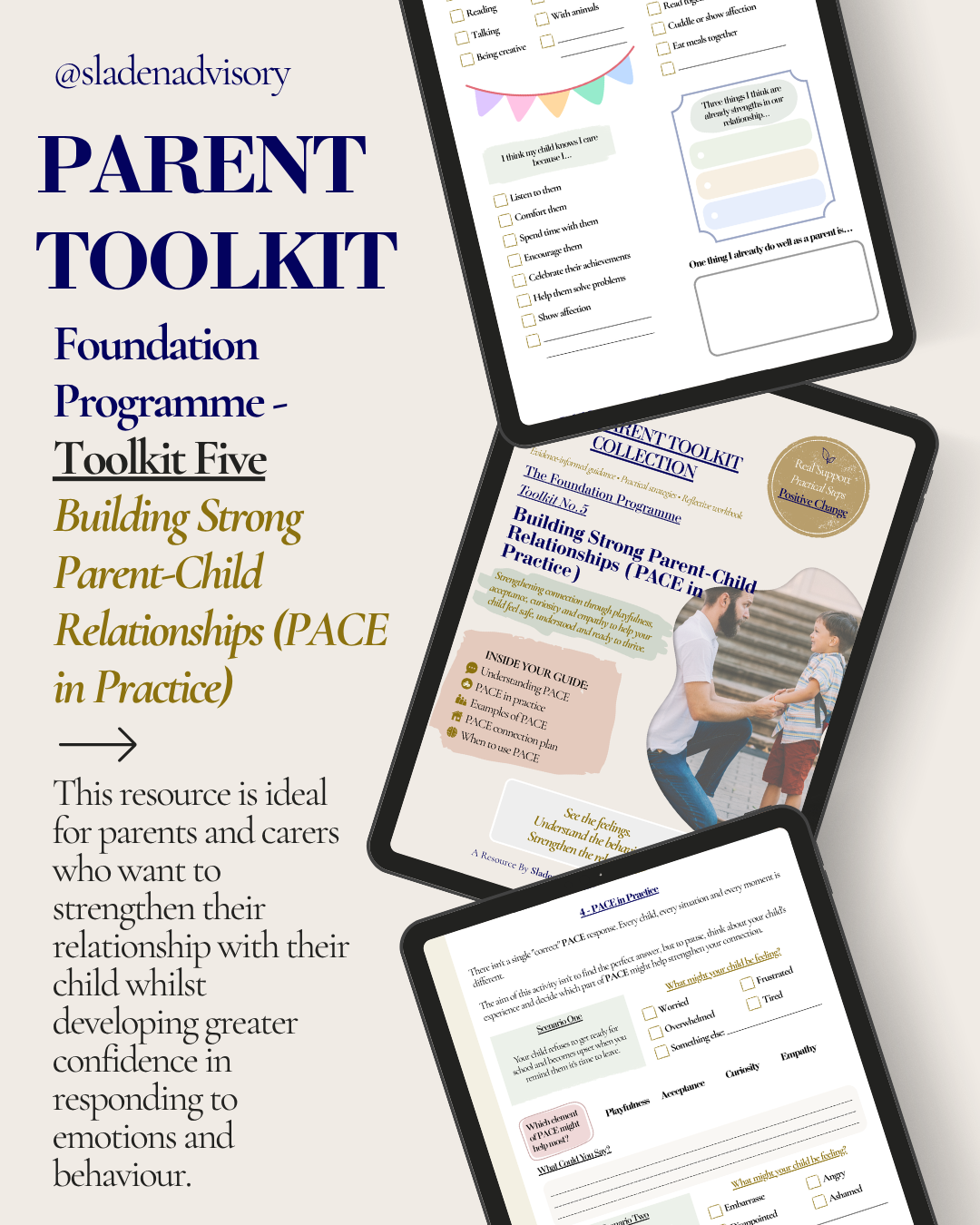
Foundation Programme - Toolkit Five
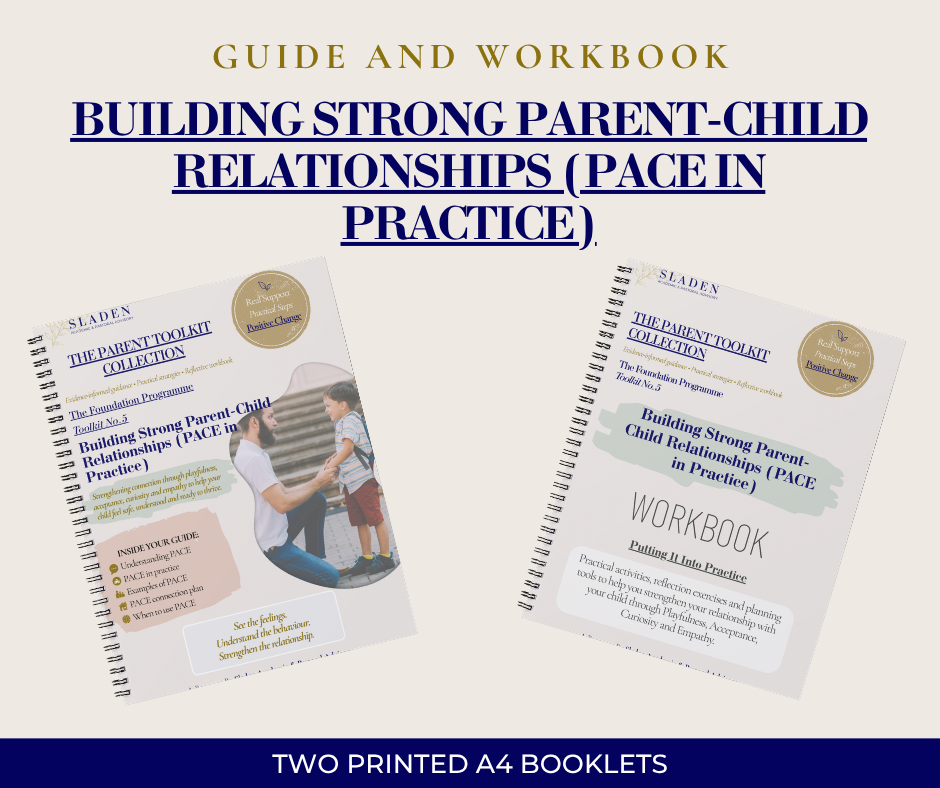
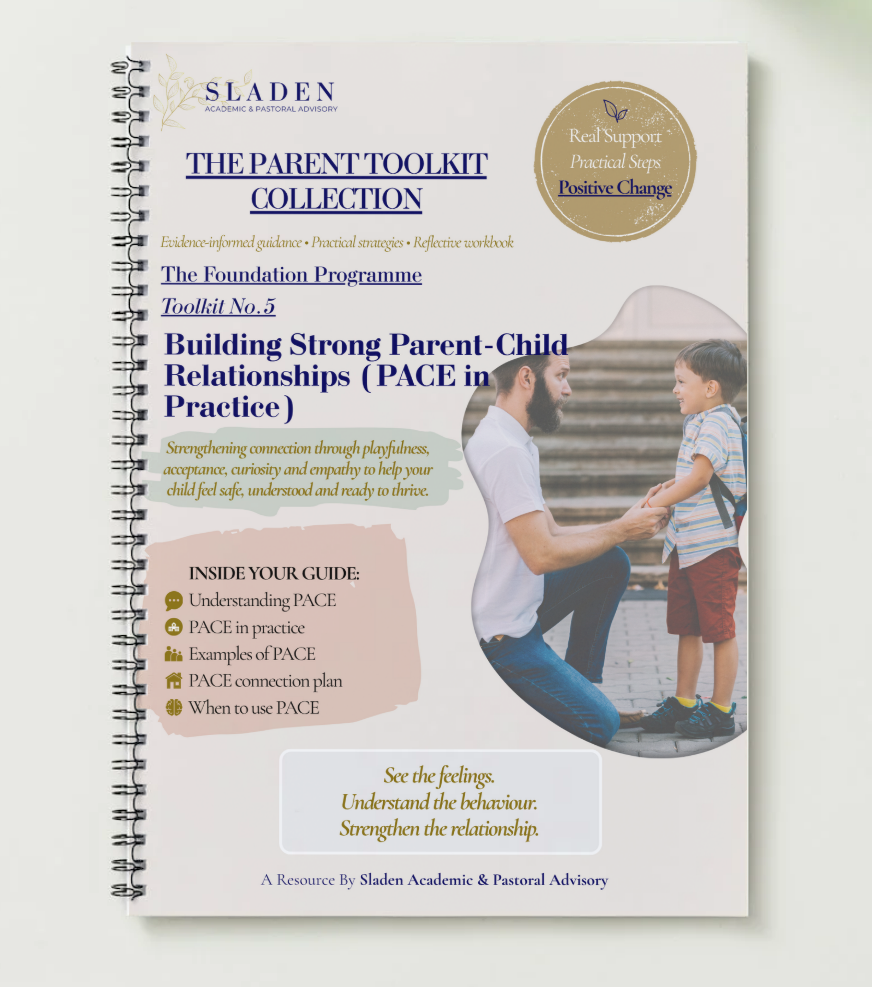
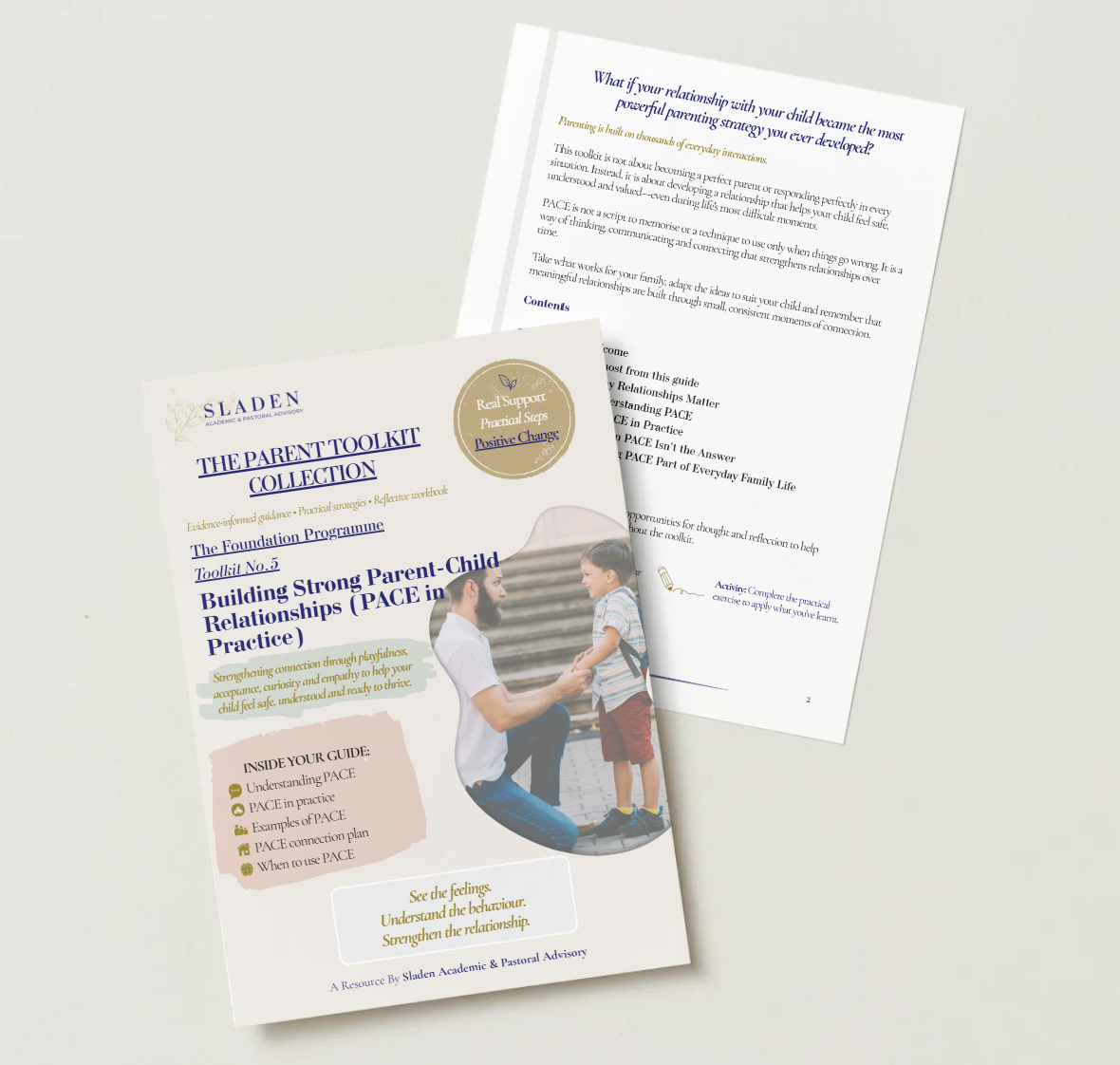
Building Strong Parent-Child Relationships: PACE in Practice is the fifth and final guide in the Parent Toolkit Collection Foundation Programme; a series of practical, evidence-informed resources designed to help parents better understand, support and positively influence their child's development.
Building on the previous four toolkits, this guide brings together everything you've learnt about behaviour, emotional regulation, co-regulation and positive discipline through one relationship-centred approach: PACE.
Developed by clinical psychologist Dr Dan Hughes, the PACE approach helps parents strengthen trust, build emotional safety and create meaningful connections through Playfulness, Acceptance, Curiosity and Empathy.
Rather than focusing on changing behaviour alone, this toolkit helps you understand how strong relationships create the foundation for emotional wellbeing, resilience and lifelong learning.
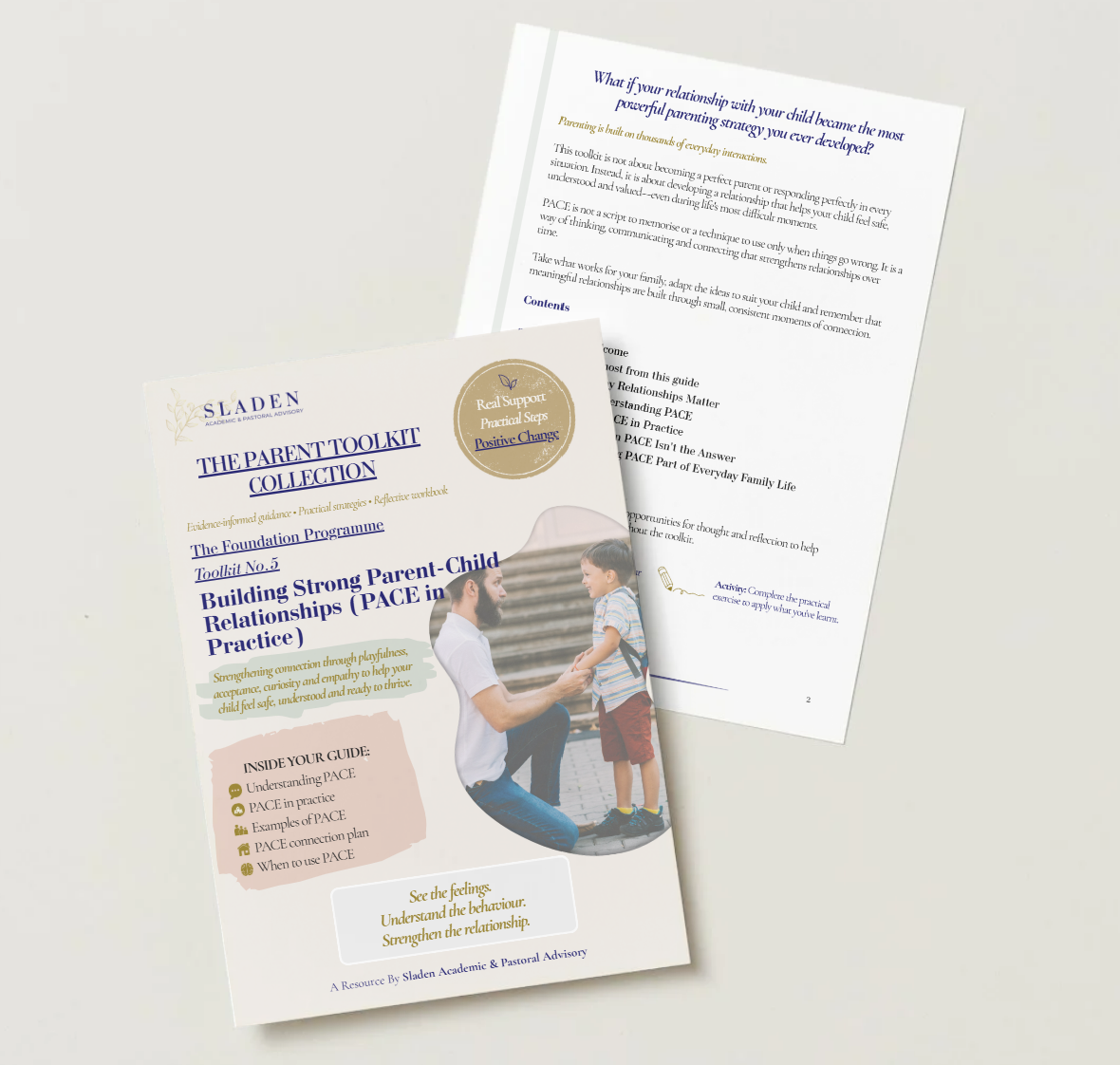
This toolkit includes 40+ pages split into two printable PDF downloads:
📘 Parent Guide
A professionally written guide combining research, practical strategies and real-life parenting examples to help you confidently apply the PACE approach within everyday family life. Drawing on attachment theory, developmental psychology and relationship-based practice, the guide explores when to use each element of PACE, when a different approach may be more appropriate and how strong relationships support children's emotional development.
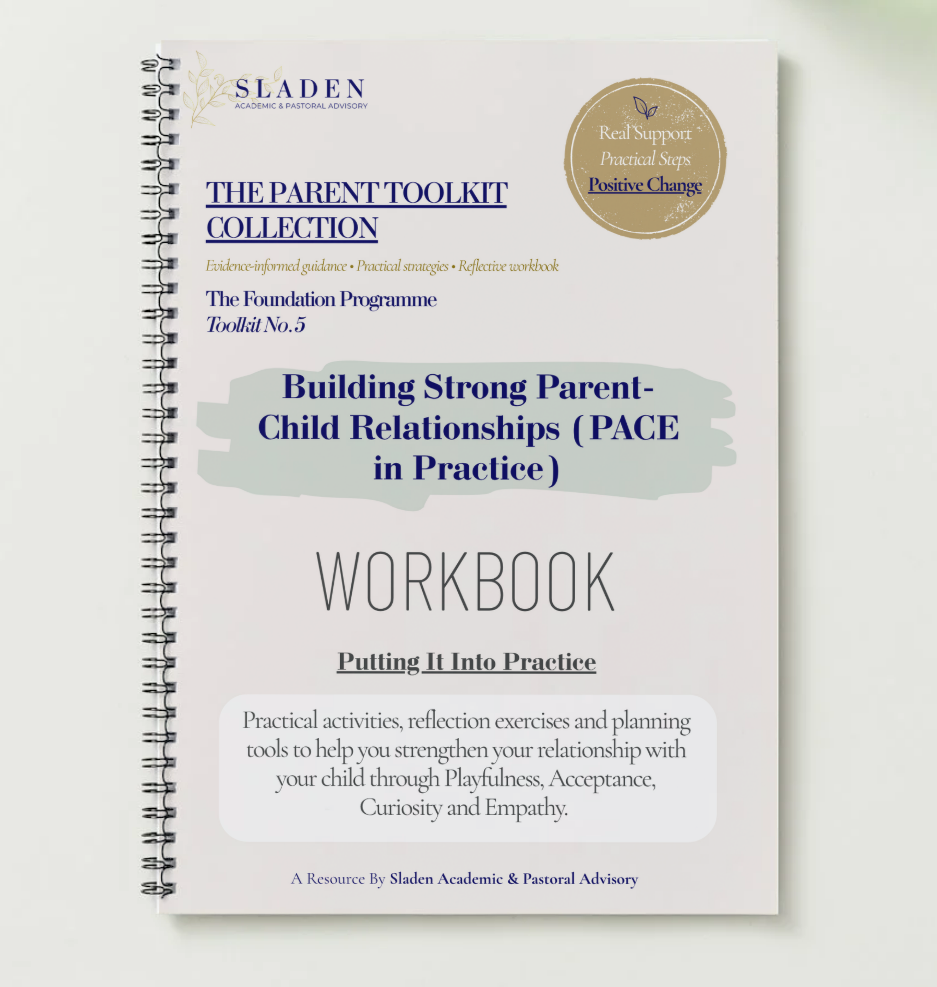
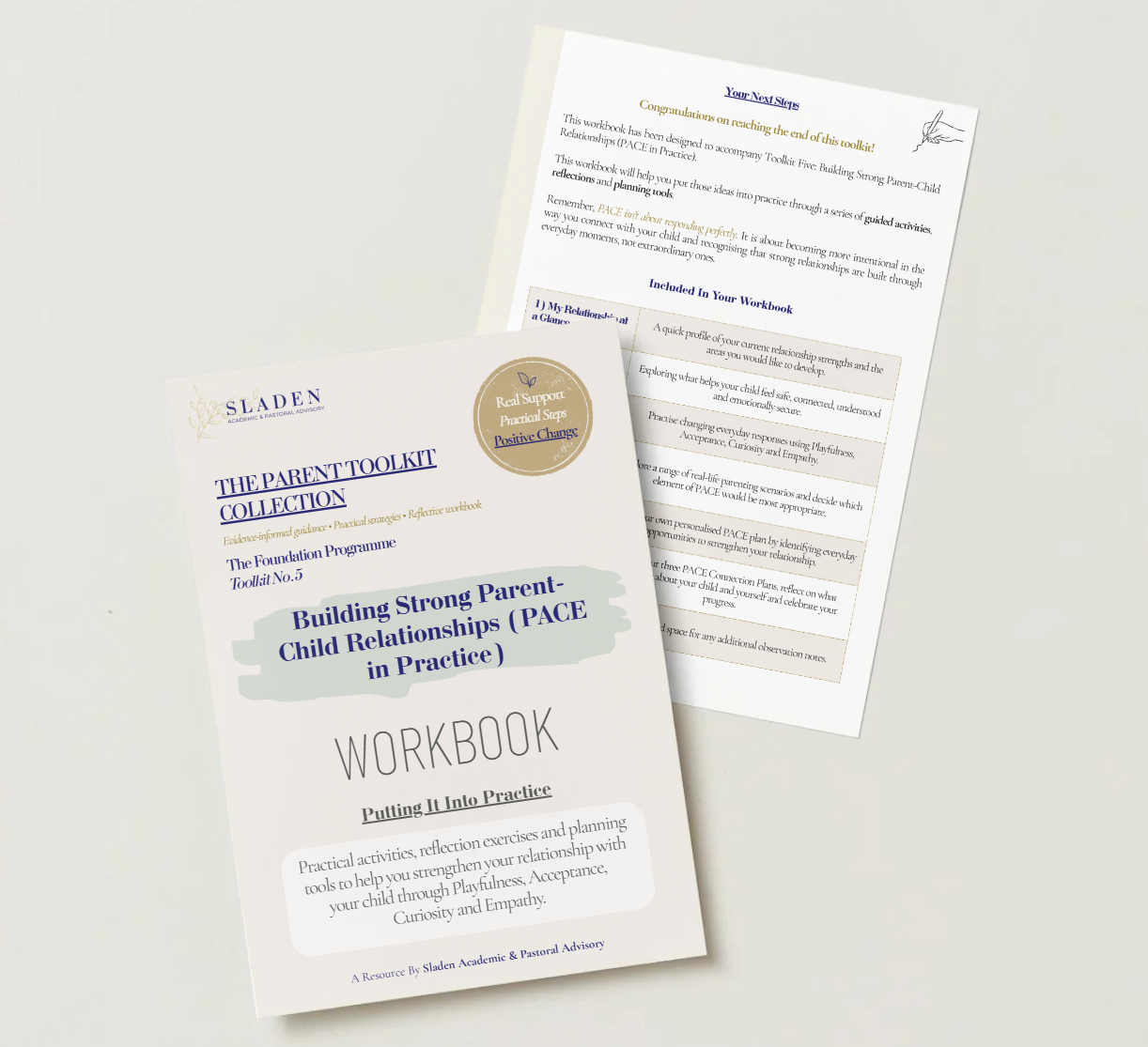
📖 Interactive Workbook
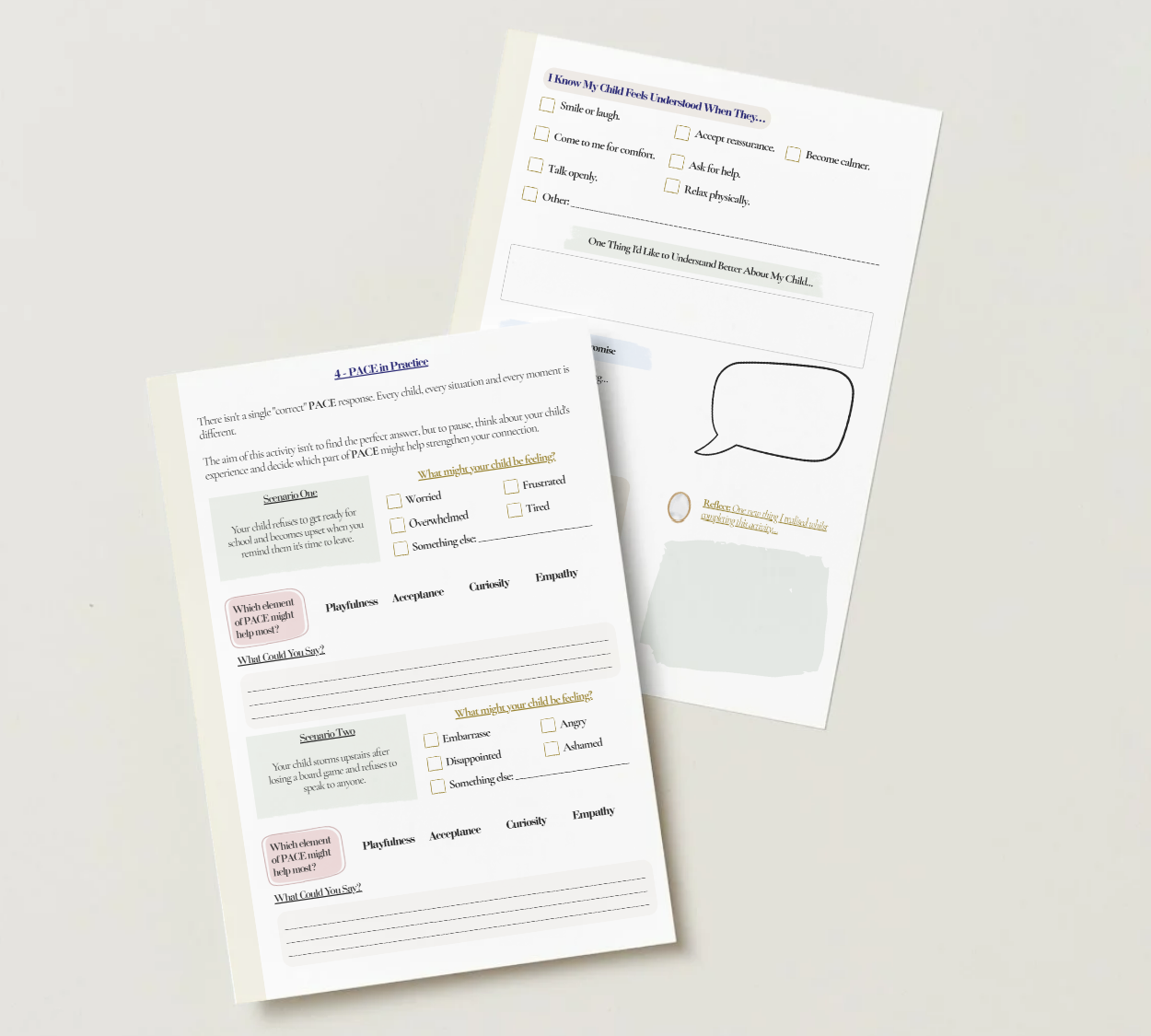
A companion workbook filled with practical activities, guided reflections and personalised planning tools designed to help you put PACE into practice. From understanding your child's emotional needs to creating your own PACE Connection Plans and reflecting on your parenting journey, the workbook supports you in developing stronger, more connected relationships with your child.
What the PACE approach is and why it works.
How Playfulness, Acceptance, Curiosity and Empathy strengthen relationships.
When each element of PACE is most effective.
Common misconceptions about PACE and when it may not be the most appropriate response.
Practical ways to build stronger relationships through everyday interactions.
How to confidently apply PACE whilst maintaining clear boundaries and expectations.
This resource is ideal for parents and carers who want to strengthen their relationship with their child whilst developing greater confidence in responding to emotions and behaviour. Whether you're supporting a child with additional needs, navigating challenging behaviour or simply looking to deepen your connection, this toolkit provides practical, evidence-informed strategies that can be adapted to every family.
A Personal Welcome
How to Get the Most from This Guide
Section One – Why Relationships Matter
Section Two – Understanding PACE
Section Three – PACE in Practice
Section Four – When PACE Isn't the Answer
Section Five – Living PACE Every Day
Take Ten
One Final Thought
Theories & Approaches Referenced
Further Reading
What Comes Next?
Templates and Notes (Workbook) Includes six practical activities:
My Relationship at a Glance
Getting to Know My Child
PACE in Everyday Conversations
PACE in Practice
My PACE Connection Plan
Reflecting on My PACE Journey
Strong relationships are at the heart of everything explored throughout the Parent Toolkit Collection.
By completing this final toolkit, you'll bring together the knowledge and skills developed across all five guides—helping you move beyond managing behaviour towards building lasting trust, emotional safety and connection with your child.
Because when children feel truly seen, understood and supported, they are better able to learn, grow and thrive.
✔ Printable PDF format
✔ Two professionally designed resources included (Guide + Workbook)
✔ Download immediately after purchase
✔ Complete at your own pace and revisit whenever you need it
Developed by Sladen Advisory using professional experience alongside recognised, evidence-informed approaches to behaviour, SEND and trauma-informed practice.


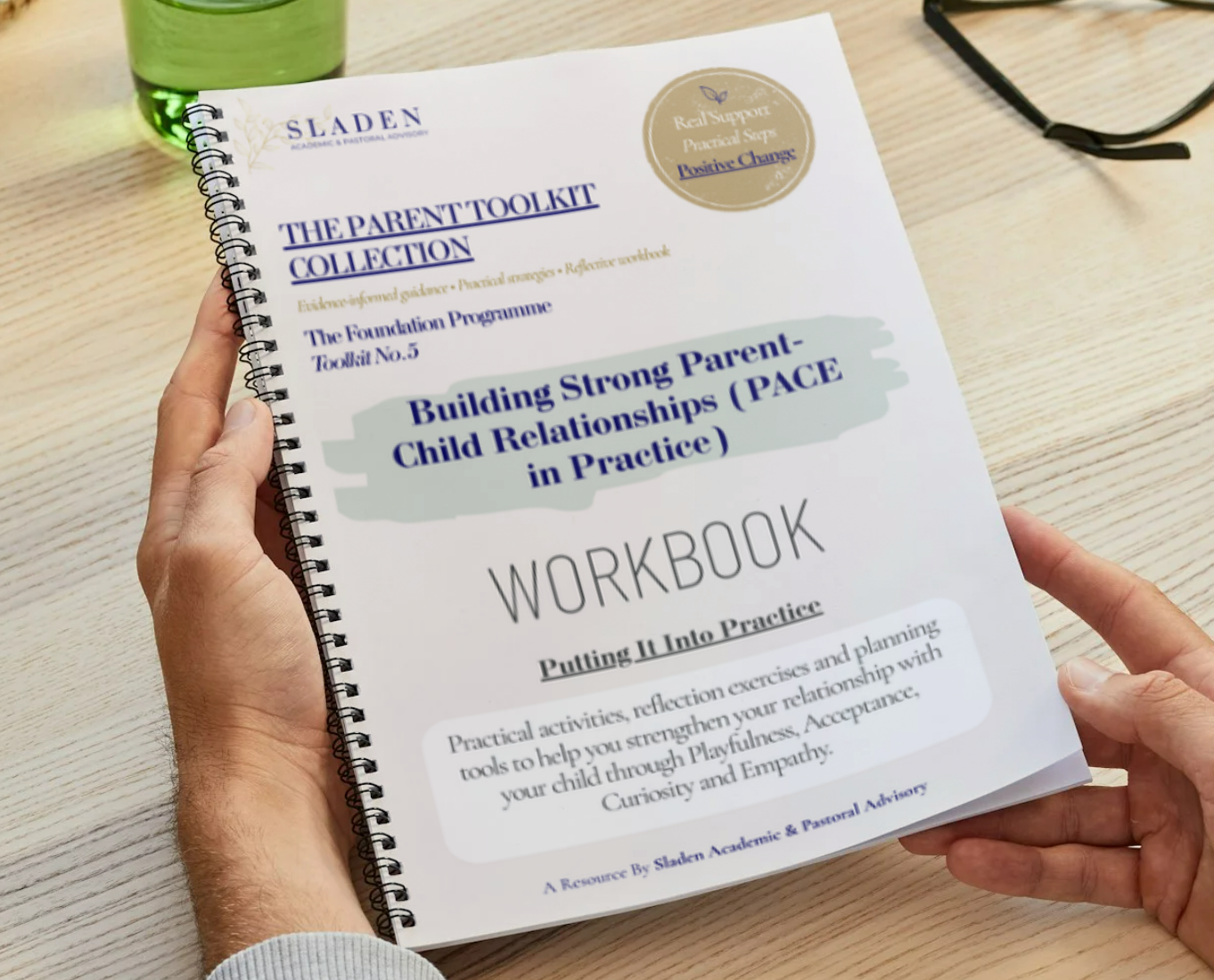
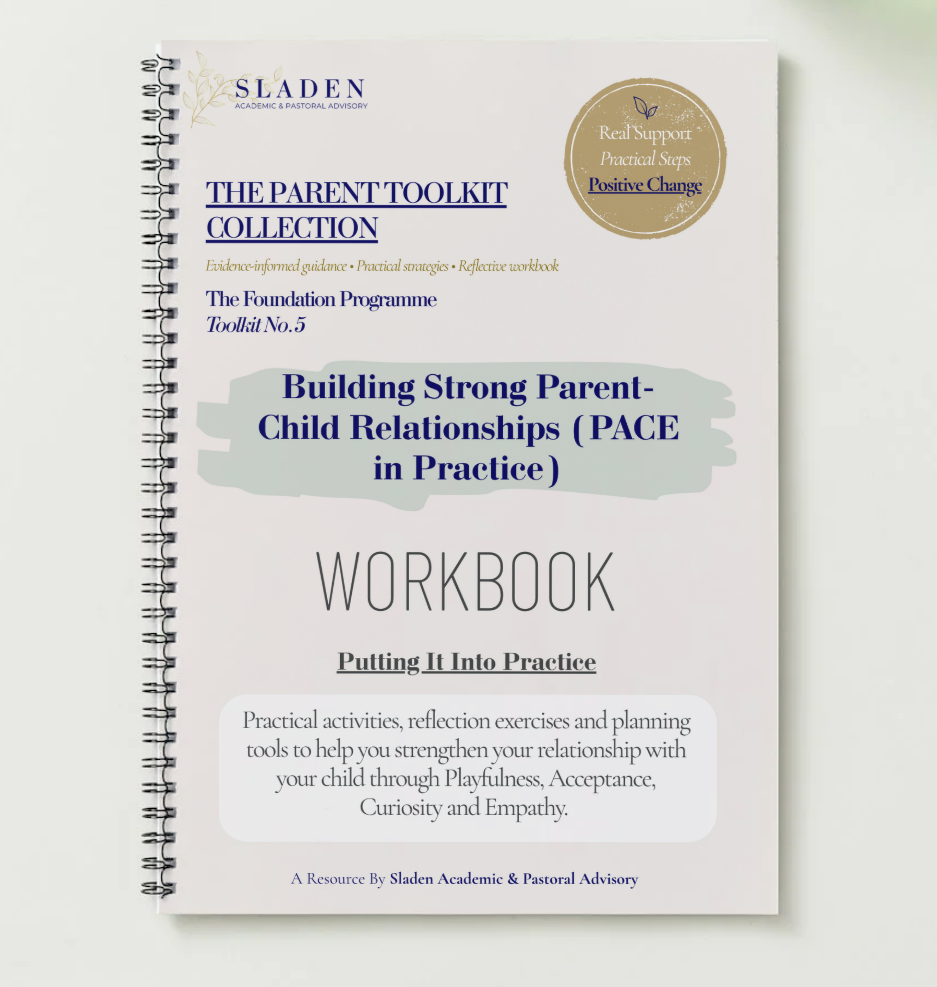
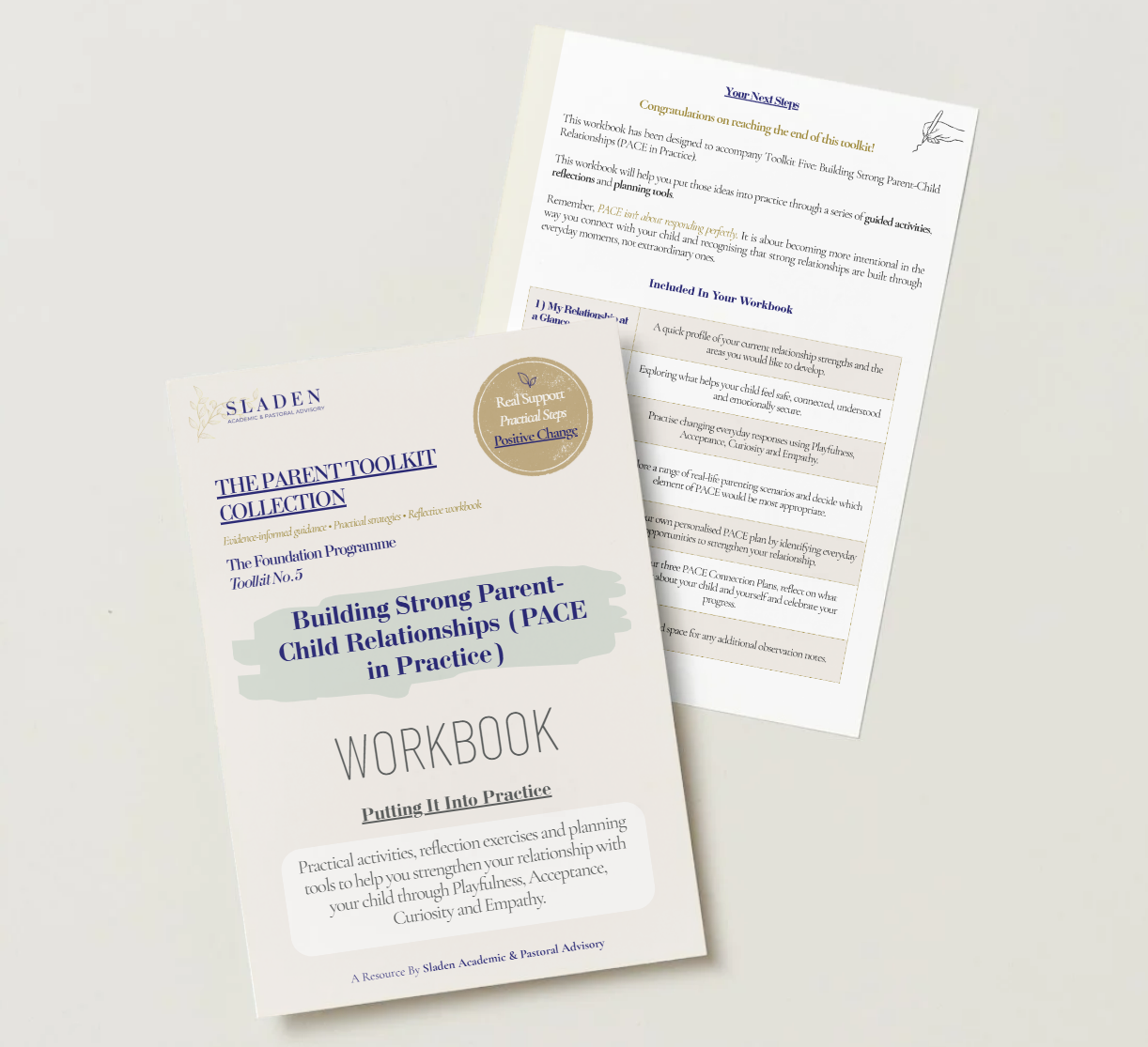


Foundation Programme - Toolkit Five
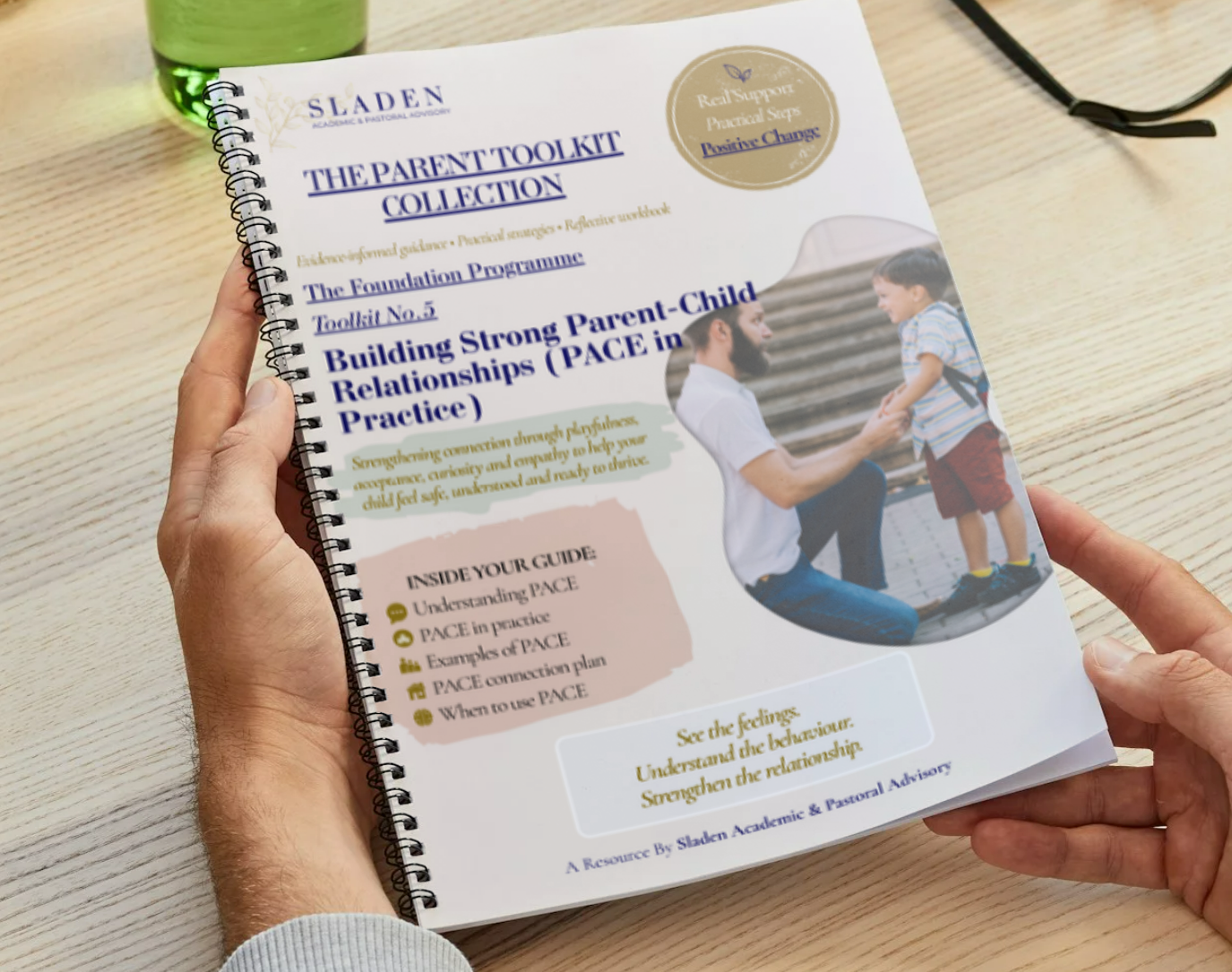
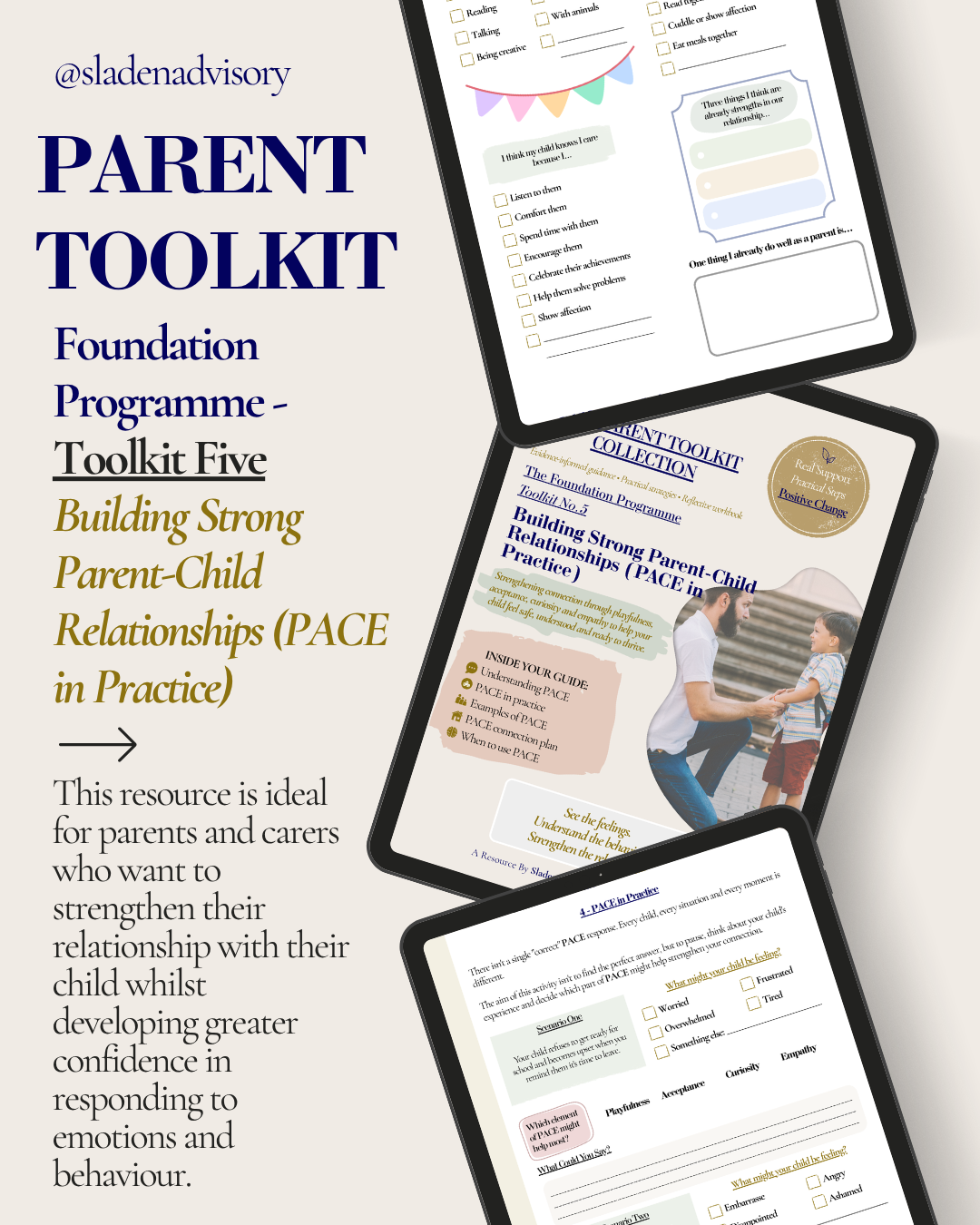
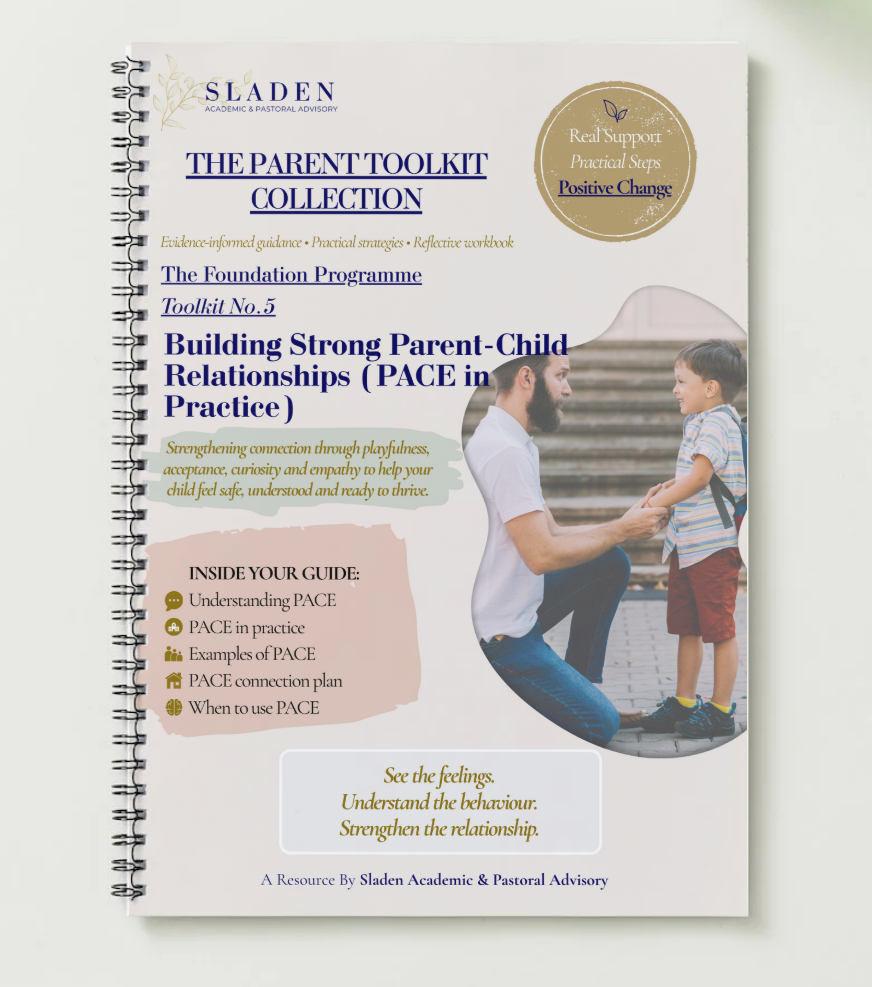
Building Strong Parent-Child Relationships: PACE in Practice is the fifth and final guide in the Parent Toolkit Collection Foundation Programme; a series of practical, evidence-informed resources designed to help parents better understand, support and positively influence their child's development.
Building on the previous four toolkits, this guide brings together everything you've learnt about behaviour, emotional regulation, co-regulation and positive discipline through one relationship-centred approach: PACE.
Developed by clinical psychologist Dr Dan Hughes, the PACE approach helps parents strengthen trust, build emotional safety and create meaningful connections through Playfulness, Acceptance, Curiosity and Empathy.
Rather than focusing on changing behaviour alone, this toolkit helps you understand how strong relationships create the foundation for emotional wellbeing, resilience and lifelong learning.
This toolkit includes 40+ pages split into two separate spiral-bound workbooks.
📘 Parent Guide
A professionally written guide combining research, practical strategies and real-life parenting examples to help you confidently apply the PACE approach within everyday family life. Drawing on attachment theory, developmental psychology and relationship-based practice, the guide explores when to use each element of PACE, when a different approach may be more appropriate and how strong relationships support children's emotional development.
📖 Interactive Workbook
A companion workbook filled with practical activities, guided reflections and personalised planning tools designed to help you put PACE into practice. From understanding your child's emotional needs to creating your own PACE Connection Plans and reflecting on your parenting journey, the workbook supports you in developing stronger, more connected relationships with your child.
What the PACE approach is and why it works.
How Playfulness, Acceptance, Curiosity and Empathy strengthen relationships.
When each element of PACE is most effective.
Common misconceptions about PACE and when it may not be the most appropriate response.
Practical ways to build stronger relationships through everyday interactions.
How to confidently apply PACE whilst maintaining clear boundaries and expectations.
This resource is ideal for parents and carers who want to strengthen their relationship with their child whilst developing greater confidence in responding to emotions and behaviour. Whether you're supporting a child with additional needs, navigating challenging behaviour or simply looking to deepen your connection, this toolkit provides practical, evidence-informed strategies that can be adapted to every family.
A Personal Welcome
How to Get the Most from This Guide
Section One – Why Relationships Matter
Section Two – Understanding PACE
Section Three – PACE in Practice
Section Four – When PACE Isn't the Answer
Section Five – Living PACE Every Day
Take Ten
One Final Thought
Theories & Approaches Referenced
Further Reading
What Comes Next?
Templates and Notes (Workbook) Includes six practical activities:
My Relationship at a Glance
Getting to Know My Child
PACE in Everyday Conversations
PACE in Practice
My PACE Connection Plan
Reflecting on My PACE Journey
Strong relationships are at the heart of everything explored throughout the Parent Toolkit Collection.
By completing this final toolkit, you'll bring together the knowledge and skills developed across all five guides—helping you move beyond managing behaviour towards building lasting trust, emotional safety and connection with your child.
Because when children feel truly seen, understood and supported, they are better able to learn, grow and thrive.
Delivery time is up to two weeks as items are made to order.
Developed by Sladen Advisory using professional experience alongside recognised, evidence-informed approaches to behaviour, SEND and trauma-informed practice.
No results match your search. Try removing a few filters.
We'll review your message and get back to you within 48 hours.